
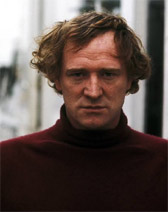
Richard Harris
The commanding Irish performer remembered for his powerful voice, volatile screen presence, and portrayal of Albus Dumbledore in the first two Harry Potter films
Born on October 1, 1930
Died on October 25, 2002
Age at death: 72
Profession: Actor, Film Director
Place of Birth: Limerick, Ireland
Place of Death: London, England
Richard Harris was an Irish film and stage actor, singer, director, and recording artist whose career extended from the British theatrical world of the 1950s to major international films at the beginning of the twenty-first century. Known for his resonant voice, physical intensity, rebellious personality, and ability to combine aggression with emotional vulnerability, he received two Academy Award nominations for This Sporting Life and The Field. He also won the Cannes Film Festival Award for Best Actor for This Sporting Life and a Golden Globe Award for his performance as King Arthur in Camelot. During the final years of his life, he introduced a new generation to his work by portraying Professor Albus Dumbledore in Harry Potter and the Philosopher’s Stone and Harry Potter and the Chamber of Secrets.
Early Life and Family Background
Richard Harris was born Richard St John Francis Harris on 1 October 1930 in Limerick, Ireland. He was raised in a large Roman Catholic family by Mildred Josephine Harty and Ivan John Harris. His father was associated with the family flour-milling business, and Richard Harris grew up in relatively comfortable circumstances in the Ennis Road area of Limerick.
Biographical accounts have differed over whether Richard Harris was one of eight or nine children, but he was raised in a crowded and energetic household that contributed to his competitive personality, powerful temperament, and desire to attract attention.
He was educated by the Jesuits at Crescent College, where he developed a strong interest in literature, poetry, performance, and rugby union. As a young player, Richard Harris represented his school in important Munster competitions and also played with Garryowen Football Club. Rugby remained one of his greatest lifelong interests.
A serious case of tuberculosis ended his ambition of pursuing rugby at a higher level. During his recovery, he spent long periods reading and reconsidering his future. The illness prevented him from continuing the athletic career he had imagined and ultimately pushed him toward literature, theatre, acting, and filmmaking.
Acting Education and Early Theatre Career
After recovering from tuberculosis, Richard Harris moved to London with the initial intention of becoming a theatre director. He applied to several drama schools but was rejected by the Royal Academy of Dramatic Art and the Central School of Speech and Drama, reportedly because he was considered too old to begin formal training at the age of 24.
He was eventually accepted by the London Academy of Music and Dramatic Art, commonly known as LAMDA, where he studied acting. His education helped him develop vocal control, physical discipline, stage technique, and a deeper understanding of classical and contemporary dramatic performance.
While still developing his craft, Richard Harris rented the small Irving Theatre and directed a production of Clifford Odets’s The Country Girl, presented under the title Winter Journey. He later joined Joan Littlewood’s influential Theatre Workshop, an institution known for socially engaged productions and a working-class approach to British theatre.
His early professional stage work included Brendan Behan’s The Quare Fellow, which transferred to London’s West End in 1956. During the following years, Richard Harris worked steadily in regional and London theatre, acquiring the discipline, vocal authority, and physical confidence that would later distinguish his film performances.
Early Film Roles
Richard Harris made his feature-film debut in Alive and Kicking in 1959. During the same year, he appeared in Shake Hands with the Devil alongside James Cagney and in The Wreck of the Mary Deare, which starred Gary Cooper and Charlton Heston.
These were relatively small roles, but they allowed Richard Harris to enter the British and American film industries during a period when Irish and British actors were becoming increasingly prominent in international cinema.
His profile grew through A Terrible Beauty, The Long and the Short and the Tall, and the large-scale war film The Guns of Navarone. Directed by J. Lee Thompson, The Guns of Navarone featured Gregory Peck, David Niven, Anthony Quinn, Stanley Baker, Anthony Quayle, and Irene Papas. Richard Harris played Squadron Leader Barnsby, the Australian pilot who explains that an aerial attack cannot destroy the German guns.
In Mutiny on the Bounty in 1962, he appeared as seaman John Mills opposite Marlon Brando and Trevor Howard. Disagreements during the difficult production contributed to his developing reputation as an ambitious, outspoken, and confrontational performer.
Breakthrough with This Sporting Life
The decisive breakthrough in the career of Richard Harris came with This Sporting Life in 1963. Directed by Lindsay Anderson and adapted by David Storey from his own novel, the film placed Richard Harris at the center of the British New Wave.
He portrayed Frank Machin, an aggressive Yorkshire coal miner who becomes a professional rugby league player but remains incapable of expressing his emotional needs without anger, physical domination, or self-destruction.
The character drew on the athletic experience, physicality, class anger, and emotional volatility that Richard Harris understood personally. His performance avoided presenting Machin simply as a violent sportsman; it revealed a man whose public strength concealed dependence, jealousy, insecurity, and a desperate need for affection.
Richard Harris won the Best Actor Award at the 1963 Cannes Film Festival and received his first Academy Award nomination for Best Actor. This Sporting Life established him as a major international performer and became one of the defining British films of its era.
European Cinema and Hollywood Expansion
After This Sporting Life, Richard Harris worked with Italian director Michelangelo Antonioni in Red Desert. He played Corrado Zeller opposite Monica Vitti in a visually radical study of industrial alienation, emotional isolation, and environmental anxiety.
The restrained, modernist production required a very different acting style from the explosive naturalism of Frank Machin. It demonstrated that Richard Harris could adapt his intense screen presence to the more controlled language of European art cinema.
He returned to historical and action cinema in The Heroes of Telemark, playing Norwegian resistance leader Knut Straud alongside Kırk Douglas. In Sam Peckinpah’s Major Dundee, he portrayed Confederate cavalry officer Captain Benjamin Tyreen opposite Charlton Heston.
Further major roles followed in John Huston’s The Bible: In the Beginning..., in which he played Cain, and Hawaii, where he appeared with Julie Andrews and Max von Sydow. During this period, Richard Harris became associated with characters driven by pride, ambition, anger, idealism, and divided loyalties.
Camelot and King Arthur
In 1967, Richard Harris portrayed King Arthur in the film adaptation of Camelot, based on the musical by Alan Jay Lerner and Frederick Loewe. He starred opposite Vanessa Redgrave as Guenevere and Franco Nero as Lancelot.
The production allowed him to combine his acting ability, singing voice, romantic leading-man image, and fascination with tragic authority. His interpretation presented Arthur as an idealistic ruler whose attempt to replace violence with law is destroyed by political rivalry and personal betrayal.
Richard Harris won the Golden Globe Award for Best Actor in a Motion Picture – Musical or Comedy for the performance. The role remained central to his artistic identity long after the film’s release.
He returned to King Arthur in a major Broadway revival of Camelot beginning in 1981, toured with the production, and appeared in a filmed stage version broadcast on television. He also performed the role in a later West End revival, making Arthur one of the characters most closely associated with his career.
Music Career and MacArthur Park
The success of Camelot increased public interest in the singing voice of Richard Harris. Although he was not conventionally trained as a popular vocalist, he approached songs as dramatic monologues, emphasizing narrative, emotional meaning, spoken rhythm, and theatrical intensity.
In 1968, he released the album A Tramp Shining, composed and produced by Jimmy Webb. The album included MacArthur Park, an unusually long and orchestrally elaborate song that became an international hit.
Richard Harris delivered the song with a dramatic, almost cinematic vocal style. Its surreal imagery, changing musical movements, and emotional excess made it one of the most distinctive popular recordings of the late 1960s.
He followed the album with another collection of Jimmy Webb compositions, The Yard Went On Forever, in 1969. His later musical releases included My Boy, Slides, The Prophet, and numerous singles and compilations.
Although his recording career never displaced acting as his principal profession, MacArthur Park gave Richard Harris an independent and lasting place in popular-music history.
Major Films of the 1970s
The 1970s became one of the most commercially active periods in the career of Richard Harris. In The Molly Maguires, he played detective James McParlan opposite Sean Connery. His character infiltrates a secret organization of Irish-American miners, placing personal loyalty, ethnic identity, and professional duty into direct conflict.
In A Man Called Horse, Richard Harris portrayed John Morgan, an English aristocrat captured by a Native American community. The film became one of his greatest commercial successes and demanded an intensely physical performance.
Its depiction of Indigenous culture and ceremonial practices later attracted criticism, but the film established a lasting adventure franchise and produced two sequels featuring Richard Harris.
He played the title role in Cromwell opposite Alec Guinness as King Charles I. The historical drama allowed Richard Harris to portray revolutionary conviction, military authority, religious certainty, and political ambition on an epic scale.
In 1971, he starred in and co-directed Bloomfield, a drama about an aging footballer confronting the end of his athletic career. The project demonstrated his continuing interest in directing and in stories concerning masculinity, sport, decline, and lost purpose.
His other significant films during the decade included Man in the Wilderness, The Deadly Trackers, Juggernaut, Robin and Marian, The Cassandra Crossing, Orca, Golden Rendezvous, and The Wild Geese.
During this period, Richard Harris worked with actors including Sean Connery, Audrey Hepburn, Sophia Loren, Burt Lancaster, Robert Shaw, Roger Moore, and Richard Burton.
Career Difficulties and Stage Renewal
The public image of Richard Harris during the 1960s and 1970s was inseparable from stories of heavy drinking, expensive celebrations, confrontations, gambling, and unpredictable behavior.
Together with Peter O’Toole, Richard Burton, and other celebrated actors of his generation, he became identified with a romanticized culture of theatrical excess.
This reputation enhanced his fame but damaged his health, personal relationships, and professional reliability. Some of the projects he accepted during the late 1970s and 1980s were commercially unsuccessful or critically weak, and his status as a major international leading actor declined.
Nevertheless, Richard Harris continued performing in film and theatre. His return to Camelot on stage demonstrated his enduring authority before a live audience and renewed interest in his work.
During the 1980s, he also appeared in productions including Tarzan, the Ape Man, Triumphs of a Man Called Horse, Martin’s Day, and the television adaptation Maigret.
The Field and Career Revival
A major artistic revival came with Jim Sheridan’s The Field in 1990. Richard Harris played “Bull” McCabe, an impoverished Irish farmer whose identity, pride, family history, and emotional survival are inseparable from a piece of land that he has cultivated for years but does not legally own.
The role returned Richard Harris to the landscape, class conflict, masculine rage, and emotional violence that had shaped his breakthrough in This Sporting Life. His performance communicated Bull McCabe’s brutality without eliminating the humiliation, grief, and historical dispossession beneath it.
Richard Harris received his second Academy Award nomination for Best Actor and a Golden Globe nomination for The Field. Nearly three decades after his first Oscar nomination, the film restored his reputation as one of Ireland’s most powerful dramatic actors.
Important Roles During the 1990s
Following The Field, Richard Harris entered a productive period as a distinguished character actor. In Patriot Games, he played Paddy O’Neil opposite Harrison Ford.
In Clint Eastwood’s Unforgiven, he portrayed English Bob, a theatrical and self-important gunfighter whose carefully constructed legend is destroyed by the brutal sheriff played by Gene Hackman.
He starred with Robert Duvall in Wrestling Ernest Hemingway, playing Frank, a retired sailor whose loud and boastful personality masks loneliness and fear of aging. The film gave Richard Harris an unusually tender role and allowed him to explore friendship, dignity, and emotional dependence.
His later 1990s projects included Silent Tongue, Cry, the Beloved Country, Trojan Eddie, Smilla’s Sense of Snow, The Hunchback, The Barber of Siberia, and To Walk with Lions.
He portrayed historical, religious, literary, and authoritarian figures while increasingly adopting the screen presence of an aging patriarch.
Gladiator and Renewed International Recognition
In 2000, Richard Harris played Roman Emperor Marcus Aurelius in Ridley Scott’s Gladiator. He appeared alongside Russell Crowe, Joaquin Phoenix, Connie Nielsen, Derek Jacobi, and Oliver Reed.
His Marcus Aurelius is an exhausted ruler who recognizes both the corruption of imperial power and the instability of his son Commodus. Hoping to restore political authority to the Roman Senate, he selects the general Maximus as the person capable of carrying out his final wishes.
Although the role occupies only the opening section of the film, the gravity, sadness, and moral authority of Richard Harris establish the dramatic conflict that drives the entire narrative.
The international success of Gladiator brought him renewed recognition among younger audiences and introduced his work to viewers who had not experienced the major films of his earlier career.
Albus Dumbledore in Harry Potter
In 2001, Richard Harris appeared as Professor Albus Dumbledore in Harry Potter and the Philosopher’s Stone, directed by Chris Columbus and adapted from the novel by J. K. Rowling.
The cast included Daniel Radcliffe, Rupert Grint, Emma Watson, Maggie Smith, Alan Rickman, Robbie Coltrane, and Ian Hart.
Richard Harris gave Dumbledore a gentle voice, deliberate manner, emotional warmth, and quiet authority. Rather than emphasizing the character’s power through physical force, he presented the headmaster of Hogwarts as an elderly figure whose intelligence, humor, compassion, and moral confidence controlled the room.
He returned to the role in Harry Potter and the Chamber of Secrets. The film was completed before his death and released internationally in November 2002.
Although Richard Harris had initially been reluctant to commit to a long-running fantasy franchise, he accepted the role after encouragement from his granddaughter.
After his death, Albus Dumbledore was played by Michael Gambon beginning with Harry Potter and the Prisoner of Azkaban. The two actors developed markedly different interpretations, and the softer, more reflective characterization created by Richard Harris retained a distinct place in the series.
Awards and Artistic Recognition
Richard Harris received two Academy Award nominations for Best Actor: the first for This Sporting Life and the second for The Field.
He won the Cannes Film Festival Award for Best Actor for This Sporting Life and the Golden Globe Award for Best Actor in a Motion Picture – Musical or Comedy for Camelot.
He also received an Emmy Award nomination for his performance as Philip Rhayader in The Snow Goose. His work extended across British New Wave cinema, European art film, Hollywood historical productions, musicals, westerns, television drama, fantasy franchises, and popular music.
The reputation of Richard Harris rests not only on the length of his career but on the intensity of his greatest performances. At his best, he made anger appear inseparable from fear, authority from insecurity, and masculine pride from emotional need.
Personal Life
Richard Harris married Welsh actress and socialite Elizabeth Rees-Williams on 9 February 1957. They had three sons: film director Damian Harris and actors Jared Harris and Jamie Harris.
The marriage ended in divorce in 1969. Elizabeth Rees-Williams later married actor Rex Harrison.
On 7 June 1974, Richard Harris married American actress Ann Turkel. They appeared together in several films and became a highly visible celebrity couple. Their marriage ended in divorce in 1982.
His son Jared Harris later achieved international recognition through productions including Mad Men, The Crown, Chernobyl, and Foundation. Damian Harris became a film director, while Jamie Harris established a long career as a supporting actor.
Richard Harris was known for generosity, storytelling, impulsiveness, loyalty, competitiveness, and a readiness to provoke disagreement. His public persona frequently blurred the boundary between performance and private life.
Stories about drinking and confrontation became part of his mythology, but colleagues also remembered his literary intelligence, humor, emotional sensitivity, and commitment when fully engaged by a role.
Illness and Death
In August 2002, Richard Harris was diagnosed with Hodgkin lymphoma after being hospitalized with pneumonia. At the time, he had completed his second appearance as Albus Dumbledore and was expected to continue in the Harry Potter series.
Richard Harris died at University College Hospital in London on 25 October 2002. He was 72 years old. His death occurred only weeks before the international theatrical release of Harry Potter and the Chamber of Secrets.
His body was cremated, and his ashes were scattered in the Bahamas, where he had owned a home. The death of Richard Harris was widely marked across Ireland, Britain, Hollywood, the theatrical world, and international rugby culture.
Films
- 1959 – Alive and Kicking – Lover
- 1959 – Shake Hands with the Devil – Terence O’Brien
- 1959 – The Wreck of the Mary Deare – Higgins
- 1960 – A Terrible Beauty – Sean Reilly
- 1961 – The Guns of Navarone – Squadron Leader Barnsby
- 1961 – The Long and the Short and the Tall – Corporal Edward “Johnno” Johnstone
- 1962 – Mutiny on the Bounty – Seaman John Mills
- 1963 – This Sporting Life – Frank Machin
- 1964 – Red Desert – Corrado Zeller
- 1965 – The Heroes of Telemark – Knut Straud
- 1965 – Major Dundee – Captain Benjamin Tyreen
- 1966 – The Bible: In the Beginning... – Cain
- 1966 – Hawaii – Rafer Hoxworth
- 1967 – Caprice – Christopher White
- 1967 – Camelot – King Arthur
- 1970 – The Molly Maguires – Detective James McParlan
- 1970 – A Man Called Horse – John Morgan
- 1970 – Cromwell – Oliver Cromwell
- 1971 – Bloomfield – Eitan; actor, director, and co-writer
- 1971 – Man in the Wilderness – Zachary Bass
- 1973 – The Deadly Trackers – Sheriff Sean Kilpatrick
- 1974 – 99 and 44/100% Dead – Harry Crown
- 1974 – Juggernaut – Lieutenant Commander Anthony Fallon
- 1976 – Echoes of a Summer – Eugene Striden; actor and executive producer
- 1976 – Robin and Marian – Richard the Lionheart
- 1976 – The Return of a Man Called Horse – Lord John Morgan; actor and executive producer
- 1976 – The Cassandra Crossing – Dr. Jonathan Chamberlain
- 1977 – Gulliver’s Travels – Gulliver
- 1977 – Orca – Captain Nolan
- 1977 – Golden Rendezvous – John Carter
- 1978 – The Wild Geese – Captain Rafer Janders
- 1979 – Ravagers – Falk
- 1979 – Game for Vultures – David Swansey
- 1980 – The Last Word – Danny Travis
- 1981 – Tarzan, the Ape Man – James Parker
- 1981 – Your Ticket Is No Longer Valid – Jason
- 1982 – Triumphs of a Man Called Horse – John Morgan
- 1984 – Highpoint – Lewis Kinney
- 1985 – Martin’s Day – Martin Steckert
- 1988 – Strike Commando 2 – Vic Jenkins
- 1990 – King of the Wind – King George II
- 1990 – Mack the Knife – Mr. Peachum
- 1990 – The Field – “Bull” McCabe
- 1992 – Patriot Games – Paddy O’Neil
- 1992 – Unforgiven – English Bob
- 1993 – Wrestling Ernest Hemingway – Frank
- 1994 – Silent Tongue – Prescott Roe
- 1995 – Cry, the Beloved Country – James Jarvis
- 1996 – Trojan Eddie – John Power
- 1997 – Savage Hearts – Sir Roger Foxley
- 1997 – Smilla’s Sense of Snow – Dr. Andreas Tork
- 1997 – This Is the Sea – Old Man Jacobs
- 1998 – The Barber of Siberia – Douglas McCraken
- 1999 – To Walk with Lions – George Adamson
- 1999 – Grizzly Falls – Old Harry
- 2000 – Gladiator – Marcus Aurelius
- 2001 – The Pearl – Dr. Karl
- 2001 – My Kingdom – Sandeman
- 2001 – Harry Potter and the Philosopher’s Stone – Professor Albus Dumbledore
- 2002 – The Count of Monte Cristo – Abbé Faria
- 2002 – Harry Potter and the Chamber of Secrets – Professor Albus Dumbledore; released after his death
- 2004 – Kaena: The Prophecy – Opaz; English-language voice performance released posthumously
Television Productions
- 1958 – ITV Play of the Week – Michael O’Riordan; episode: The Iron Harp
- 1958 – ITV Television Playhouse – Dan Galvin; episode: Rest in Violence
- 1958 – The DuPont Show of the Month – Performer; episode: The Hasty Heart
- 1960 – Armchair Theatre – Major Gaylord; episode: Come in Razor Red
- 1960 – The Art Carney Special – Performer; production: Victory
- 1971 – The Snow Goose – Philip Rhayader
- 1982 – Camelot – King Arthur; filmed stage musical
- 1988 – Maigret – Jules Maigret
- 1993 – Abraham – Abraham
- 1995 – The Great Kandinsky – Ernest Kandinsky
- 1997 – The Hunchback – Dom Frollo
- 2000 – The Apocalypse – John
- 2003 – Julius Caesar – Lucius Cornelius Sulla; miniseries released posthumously
Directing and Production Credits
- 1971 – Bloomfield – Director, co-writer, and lead actor
- 1976 – Echoes of a Summer – Executive producer and actor
- 1976 – The Return of a Man Called Horse – Executive producer and actor
Music Recordings
- 1968 – A Tramp Shining – Studio album
- 1968 – MacArthur Park – Single
- 1969 – The Yard Went On Forever – Studio album
- 1971 – My Boy – Studio album
- 1972 – Slides – Studio album
- 1974 – The Prophet – Spoken-word and musical album based on the work of Kahlil Gibran
Source: Biyografiler.com
Richard Harris Movies
Harry Potter and the Chamber of Secrets
Release Date: November 15, 2002
Director: Chris Columbus
Writer: Steve Kloves, J.K. Rowling
Cast: Daniel Radcliffe, Rupert Grint, Emma Watson, Kenneth Branagh, John Cleese, Robbie Coltrane, Warwick Davis, Tom Felton, Richard Griffiths, Richard Harris, Jason Isaacs, Alan Rickman, Fiona Shaw, Maggie Smith, Julie Walters
Harry Potter and the Sorcerer's Stone
Release Date: November 16, 2001
Director: Chris Columbus
Writer: Steve Kloves, J.K. Rowling
Cast: Daniel Radcliffe, Rupert Grint, Emma Watson, Robbie Coltrane, Richard Harris, Maggie Smith, Alan Rickman, John Hurt, Zoe Wanamaker, Richard Griffiths, Ian Hart
Gladiator
Release Date:
Director: Ridley Scott
Writer: John Logan, David H. Franzoni, William Nicholson
Cast: Russell Crowe, Joaquin Phoenix, Connie Nielsen, Oliver Reed, Richard Harris, Derek Jacobi, Djimon Hounsou, Tomas Arana
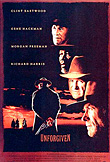
Unforgiven
Release Date: August 7, 1992
Director: Clint Eastwood
Writer: David Webb Peoples
Cast: Clint Eastwood, Gene Hackman, Morgan Freeman, Richard Harris, Jaimz Woolvett
Frequently asked questions about Richard Harris
Who is Richard Harris?, Richard Harris biography, Richard Harris life story, Richard Harris age, Richard Harris facts, Richard Harris birthplace, Richard Harris photos, Richard Harris videos, Richard Harris career
Related Biographies

Lamine Yamal
Professional footballer

Erling Haaland
Professional footballer

Austin Abrams
Actor

Keanu Reeves
Actor

Kylian Mbappe
Professional footballer

Brad Pitt
Actor


Hongjoong
Singer, Rapper, Songwriter, Composer

Ludacris
Rapper, Actor

Kwon Eunbi
Singer

Sarah Wayne Callies
Actress, Screenwriter, Producer, Director

LaTavia Roberson
Singer, Actress, Entrepreneur

Alice Weidel
Politician, Economist

Maria Corina Machado
Politician, Political Activist

Jodie Foster
Actress

Mackenzie Davis
Actress
Keanu Reeves
Actor

Kevin Warsh
Economist