
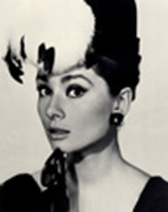
Audrey Hepburn
Born on May 4, 1929
Died on January 20, 1993
Age at death: 64
Profession: Actress
Place of Birth: Brussels, Belgium
Place of Death: Tolochenaz, Switzerland
Audrey Hepburn, also known as Eda van Heemstra, was a British–Dutch actress and humanitarian, widely regarded as one of the most influential figures in the history of cinema. Celebrated for her refined elegance, emotional intelligence, and understated beauty, she became a defining symbol of classic Hollywood while also reshaping global ideals of femininity, fashion, and compassion.
Audrey Hepburn was born on May 4, 1929, in Brussels, Belgium, as the daughter of an English father and a Dutch aristocratic mother. She spent much of her early youth in England at a boarding school. During World War II, she continued her education at a conservatory in Arnhem, Netherlands. Throughout the Nazi occupation, she experienced severe food shortages and trauma, and it was later reported that she assisted the Dutch resistance by acting as a courier. These wartime experiences profoundly shaped her lifelong empathy for displaced and vulnerable children.
After the war, Hepburn turned to dance, studying ballet in London and Amsterdam. Although physical limitations prevented a full ballet career, her discipline and movement training became defining elements of her screen presence. In 1948, she made her stage debut in London in the opera High Button Shoes. Her transition to film began with a small role in One Wild Oat (1950), followed by appearances in Young Wives’ Tales and The Lavender Hill Mob (1951).
At the age of twenty-two, Audrey Hepburn traveled to New York to star in the Broadway production Gigi. Within weeks of its opening, she attracted major Hollywood attention. Two years later, she achieved international stardom with Roman Holiday, portraying Princess Ann. Her performance captivated critics and audiences alike and earned her the Academy Award for Best Actress, marking one of the most iconic debuts in film history.
Following her breakthrough, Hepburn returned to Broadway to appear in Ondine alongside Mel Ferrer. Their professional collaboration evolved into a personal relationship, and the two married on September 25, 1954, in Switzerland. That same year, she received an Academy Award nomination for her role in Sabrina, a film that also marked the beginning of her legendary collaboration with fashion designer Hubert de Givenchy. Together, they redefined modern elegance, introducing minimalist silhouettes and the iconic “little black dress” that became inseparable from Hepburn’s image.
In 1956, she starred with Mel Ferrer and Henry Fonda in a cinematic adaptation of Leo Tolstoy’s War and Peace. The following year, she showcased her dance training in the musical Funny Face. In 1959, she earned another Academy Award nomination for her deeply restrained performance as Sister Luke in The Nun’s Story.
In 1960, Audrey Hepburn starred opposite Burt Lancaster in The Unforgiven, directed by John Huston. That same year, she gave birth to her first son, Sean Ferrer. Throughout the 1960s, she continued to deliver defining performances, starring with Cary Grant in Charade, appearing in My Fair Lady (1964), and earning her fifth Academy Award nomination for the psychological thriller Wait Until Dark (1967). That same year, she separated from Mel Ferrer.
In 1969, Hepburn married Italian psychiatrist Andrea Dotti, with whom she had her second son, Luca Dotti. As her film appearances became less frequent, she shifted toward more selective roles, appearing in Robin and Marian (1976) with Sean Connery, Bloodline (1979) with Ben Gazzara, and later They All Laughed (1981). Her final film role was in Always (1989), directed by Steven Spielberg.
From the early 1980s onward, Audrey Hepburn devoted her life almost entirely to humanitarian work. As a UNICEF Goodwill Ambassador, she traveled extensively to some of the world’s poorest regions, advocating tirelessly for children suffering from hunger, displacement, and war. Her compassion was widely regarded as genuine, shaped directly by her own childhood experiences during World War II.
Culturally, Hepburn stood apart from her contemporaries. Unlike the regal aristocratic elegance of Grace Kelly or the overt sensuality and tragic glamour of Marilyn Monroe, Hepburn introduced an image of intellectual beauty, emotional subtlety, and moral grace. Her influence continues to shape modern cinema, fashion, and humanitarian ideals.
On January 20, 1993, Audrey Hepburn passed away from colon cancer at her home in Tolochenaz, Switzerland. Following her death, her humanitarian legacy continued through foundations established by her sons, Sean Ferrer and Luca Dotti, ensuring that her commitment to helping others would endure far beyond her lifetime.
Awards & Honors:Academy Award – Best Actress (Roman Holiday)
Tony Award – Best Actress in a Play (Ondine)
BAFTA Award – Best British Actress
Golden Globe Awards – Multiple Wins
Grammy Award – Best Spoken Word Album (Posthumous)
Filmography:
1950 – One Wild Oat
1951 – Young Wives’ Tales
1951 – The Lavender Hill Mob
1953 – Roman Holiday
1954 – Sabrina
1956 – War and Peace
1957 – Funny Face
1959 – The Nun’s Story
1960 – The Unforgiven
1963 – Charade
1964 – My Fair Lady
1967 – Wait Until Dark
1976 – Robin and Marian
1979 – Bloodline
1981 – They All Laughed
1989 – Always
Source: Biyografiler.com
Frequently asked questions about Audrey Hepburn
Who is Audrey Hepburn?, Audrey Hepburn biography, Audrey Hepburn life story, Audrey Hepburn age, Audrey Hepburn facts, Audrey Hepburn birthplace, Audrey Hepburn photos, Audrey Hepburn videos, Audrey Hepburn career
Related Biographies

Lamine Yamal
Professional footballer

Erling Haaland
Professional footballer

Sam Altman
Entrepreneur, Investor, CEO

Kylian Mbappe
Professional footballer

Giorgia Meloni
Politician, Journalist

Alice Weidel
Politician, Economist


Hongjoong
Singer, Rapper, Songwriter, Composer

Ludacris
Rapper, Actor

Kwon Eunbi
Singer

Sarah Wayne Callies
Actress, Screenwriter, Producer, Director

LaTavia Roberson
Singer, Actress, Entrepreneur

Elena Andreyevna Rybakina
Professional Tennis Player
Alice Weidel
Politician, Economist
Sam Altman
Entrepreneur, Investor, CEO

Vin Diesel
Actor, Producer, Screenwriter

Lady Gaga
Singer, Musician, Songwriter, Actress, Producer
Lamine Yamal
Professional footballer