
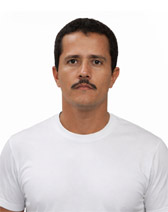
El Mencho
Founder of the Jalisco New Generation Cartel (CJNG)
Born on July 17, 1966
Died on February 22, 2026
Age at death: 60
Profession: Organized Crime Leader
Place of Birth: Aguililla, Michoacán, Mexico
Place of Death: Tapalpa, Jalisco, Mexico
Nemesio Rubén Oseguera Cervantes, widely known as El Mencho, was a Mexican organized crime leader and founder of the Jalisco New Generation Cartel (CJNG). During the 2000s and 2010s, he rose to prominence as one of Mexico’s most powerful and most wanted criminal figures. Under his leadership, CJNG became one of the fastest-growing and most violent drug trafficking organizations in the country, drawing sustained attention from Mexican authorities and the United States government.
Early Life and Background
Nemesio Rubén Oseguera Cervantes was born on July 17, 1966, in a rural community in Aguililla, Michoacán, Mexico. He was raised in a poor family engaged in avocado farming. His parents’ names are not widely documented in official public records. He had several siblings, including Juan Oseguera Cervantes, Miguel Oseguera Cervantes, Antonio Oseguera Cervantes, Marín Oseguera Cervantes, and Abraham Oseguera Cervantes.
He left school after the fifth grade and began working in agricultural fields. Reports indicate that during his adolescence he worked as a guard in marijuana plantations. These early experiences would later connect him to organized criminal networks in western Mexico.
Migration to the United States and Deportation
In the 1980s, seeking economic opportunity, El Mencho crossed illegally into the United States and settled in California. During this period, he reportedly used multiple aliases. In 1986, he was arrested in the San Francisco Bay Area on charges including possession of stolen property and illegal firearms. After multiple border crossings, he was deported to Mexico in the early 1990s.
Return to Mexico and Rise in Organized Crime
Upon returning to Mexico in the early 1990s, Nemesio Rubén Oseguera Cervantes briefly joined a local police force in Jalisco before becoming involved in organized criminal activity. He began working within the Milenio Cartel and, in 1996, married Rosalinda González Valencia, sister of cartel leader Armando Valencia Cornelio.
The arrest of Armando Valencia Cornelio in 2003 and subsequent internal fragmentation of the Milenio Cartel created a power vacuum. During the internal conflict that followed, El Mencho led a faction known as “Los Mata Zetas.” This group would eventually evolve into the Jalisco New Generation Cartel (CJNG) in 2009.
Formation and Expansion of CJNG
The Jalisco New Generation Cartel (CJNG), founded in 2009, rapidly emerged as one of Mexico’s most aggressive and expansionist criminal organizations. Under El Mencho’s leadership, the cartel became heavily involved in trafficking cocaine, heroin, methamphetamine, and, in later years, fentanyl.
CJNG gained notoriety not only for drug trafficking but also for its paramilitary structure, high-production propaganda videos, and direct attacks against security forces. The organization expanded its influence across Jalisco, Colima, Guanajuato, Nayarit, Veracruz, Morelos, Guerrero, and Michoacán, while maintaining reported international connections spanning the United States, Latin America, Europe, Asia, and Africa.
International Charges and Sanctions
The Drug Enforcement Administration (DEA) began closely tracking El Mencho in the 2000s. In 2014, a federal indictment was filed in the United States District Court for the District of Columbia, charging him with drug trafficking offenses and operating a continuing criminal enterprise.
In 2015, the United States Department of the Treasury sanctioned him under the Foreign Narcotics Kingpin Designation Act (“Kingpin Act”), freezing assets under U.S. jurisdiction and prohibiting U.S. persons from conducting business with him or affiliated entities. The U.S. Department of State later offered a reward of up to $15 million for information leading to his capture.
Security Operations and Violent Confrontations
From 2012 onward, Mexican security forces intensified efforts to capture El Mencho. On May 1, 2015, during a major federal operation in Jalisco, CJNG launched coordinated attacks that included road blockades, vehicle arsons, and the downing of a Mexican military helicopter using a rocket-propelled grenade. The scale of the violence highlighted the cartel’s operational capabilities.
He was widely reported to have hidden in mountainous areas of Jalisco, protected by former military-trained bodyguards and frequently changing locations. His limited public imagery and tight security circle contributed to a perception of secrecy and elusiveness.
Estimated Wealth and Assets
While no official audited financial records exist, DEA assessments estimated El Mencho’s personal fortune to range between $500 million and $1 billion. CJNG’s overall revenue has been estimated by various security analyses to reach tens of billions of dollars annually.
Revenue streams reportedly included cocaine trafficking, heroin production and distribution, methamphetamine manufacturing, fentanyl trafficking, fuel theft (huachicoleo), and extortion of local businesses. The fentanyl trade, in particular, became central to the cartel’s revenue structure amid the opioid crisis in the United States.
Reported assets linked to the organization included luxury properties, agricultural land, avocado plantations, vehicle fleets, gold-plated firearms, and businesses allegedly constructed for operational or logistical purposes. These claims were based largely on law enforcement seizures and investigative reports rather than direct personal disclosures.
Personal Life
Nemesio Rubén Oseguera Cervantes and Rosalinda González Valencia had three children: Jessica Johanna Oseguera González (born 1986), Rubén Oseguera González (born 1990), and Laisha Michelle Oseguera González (born 2001). The couple reportedly divorced in 2018.
Death
On February 22, 2026, El Mencho was killed during a Mexican Army operation in Tapalpa, Jalisco, approximately 130 kilometers south of Guadalajara. Following his death, CJNG-affiliated groups reportedly carried out violent reprisals, including road blockades and vehicle burnings across Jalisco and neighboring Michoacán.
Jalisco Governor Pablo Lemus Navarro announced a statewide “Red Code” emergency response. Mexican President Claudia Sheinbaum publicly urged citizens to remain calm amid the unrest.
Assessment
Nemesio Rubén Oseguera Cervantes is widely regarded as one of the most emblematic leaders of the post-2000 generation of Mexican cartel figures. His leadership style combined decentralized cell structures with paramilitary organization, transforming CJNG into one of Mexico’s most formidable criminal networks.
His trajectory reflects broader shifts within Mexico’s organized crime landscape, marked by fragmentation, rapid territorial expansion, and escalating violence. His rise and eventual death represent a significant chapter in the evolving dynamics of cartel power in Mexico.
Source: Biyografiler.com
Frequently asked questions about El Mencho
Who is El Mencho?, El Mencho biography, El Mencho life story, El Mencho age, El Mencho facts, El Mencho birthplace, El Mencho photos, El Mencho videos, El Mencho career
Related Biographies

Lamine Yamal
Professional footballer

Sam Altman
Entrepreneur, Investor, CEO

Kylian Mbappe
Professional footballer

Alice Weidel
Politician, Economist

Erling Haaland
Professional footballer

Giorgia Meloni
Politician, Journalist


Hongjoong
Singer, Rapper, Songwriter, Composer

Ludacris
Rapper, Actor

Kwon Eunbi
Singer

Sarah Wayne Callies
Actress, Screenwriter, Producer, Director

LaTavia Roberson
Singer, Actress, Entrepreneur
Lamine Yamal
Professional footballer

Claudia Sheinbaum
President, Politician, Scientist, Academic

Colman Domingo
Actor, Director, Producer

Austin Abrams
Actor

Pedro Sanchez
Politician

Kaia Gerber
Model, Actress