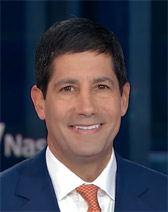
Kevin Warsh
Former Federal Reserve Governor and prominent critic of prolonged loose monetary policy
Born on April 13, 1970
Age: 56
Profession: Economist
Place of Birth: Albany, New York, United States
Kevin Maxwell Warsh is an American financier, former central banker, and policy intellectual who served as a member of the Federal Reserve Board of Governors from 2006 to 2011. He is widely known for his influential role during the 2008 global financial crisis and for his subsequent, outspoken criticism of prolonged accommodative monetary policies. On January 30, 2026, U.S. President Donald Trump announced Kevin Warsh as his nominee to succeed Jerome Powell as Chair of the Federal Reserve, framing the choice as a return to monetary discipline and institutional credibility.
Early Life and Background
Kevin Warsh was born on April 13, 1970, in Albany, New York, to Judith and Robert Warsh, and was the youngest of three children. He grew up in Loudonville, a suburb of Albany, and attended Shaker High School in nearby Latham. Warsh has frequently described his upbringing in upstate New York as formative, emphasizing that it exposed him to what he has called the “real economy” beyond financial markets and political institutions.
In 1992, he earned a bachelor’s degree in public policy from Stanford University, concentrating on economics and political science. He later received his Juris Doctor degree with honors from Harvard Law School in 1995. During his postgraduate years, Warsh also pursued advanced coursework in market economics and debt capital markets at MIT Sloan School of Management and Harvard Business School, developing an academic foundation that would later underpin his approach to financial regulation and monetary policy.
Career Beginnings
Between 1995 and 2002, Kevin Warsh worked at Morgan Stanley in New York, where he rose to the position of managing director in the mergers and acquisitions division. His tenure at the investment bank immersed him in complex capital markets transactions and exposed him to the inner workings of major financial institutions during the late-1990s expansion and the aftermath of the dot-com bubble.
In 2002, Warsh transitioned to public service, joining the White House as Special Assistant to the President for Economic Policy and Executive Secretary of the National Economic Council. In this role, he advised senior officials on capital markets, banking regulation, securities law, and insurance policy, and acted as the principal liaison between the executive branch and independent financial regulatory agencies.
Federal Reserve Board of Governors
On January 27, 2006, President George W. Bush nominated Kevin Warsh to fill a vacancy on the Federal Reserve Board of Governors. At just 35 years old, his appointment made him one of the youngest governors in the institution’s history, drawing both scrutiny and praise. Following Senate confirmation hearings on February 14, 2006, he officially assumed office on February 24, 2006.
Warsh joined the Federal Open Market Committee (FOMC) in March 2006. In the years leading up to the financial crisis, he repeatedly warned of fragile market liquidity and growing vulnerabilities in investor confidence. When the 2008 global financial crisis erupted, he became one of the Federal Reserve’s primary points of contact with Wall Street, while also serving as the Fed’s representative to the G20 and as the Board’s emissary to advanced and emerging Asian economies.
During the crisis, Kevin Warsh worked closely with then–Fed Chair Ben Bernanke and Vice Chair Don Kohn, playing a central role in emergency interventions affecting institutions such as Goldman Sachs, Morgan Stanley, Citigroup, and Wachovia. His background in investment banking allowed him to provide critical, real-time insight into market dynamics at the height of systemic stress.
Although he supported initial emergency measures, Warsh became increasingly identified with a “hard money” stance. He consistently cautioned against inflation risks, the entrenchment of quantitative easing, and the long-term distortions caused by an expanded central bank balance sheet. He argued that monetary policy alone could not resolve structural economic problems and warned that prolonged asset purchases risked undermining capital allocation.
In February 2011, Warsh informed President Barack Obama of his intention to leave the Federal Reserve, effective March 31, 2011. His departure reflected the completion of a planned term rather than a single policy dispute, though it coincided with growing internal debates over the future direction of U.S. monetary policy.
Post-Federal Reserve Career
After leaving the Fed, Kevin Warsh emerged as a prominent figure in academic and policy circles. He became a senior fellow at Stanford University’s Hoover Institution, served as the Shepard Family Distinguished Visiting Fellow in Economics, and taught at Stanford Graduate School of Business. His research and public commentary have focused on monetary policy frameworks, financial regulation, and global capital markets.
Warsh has also held influential institutional roles, including membership in the Group of Thirty, the Congressional Budget Office’s Panel of Economic Advisers, and the board of the Bilderberg Group. In the private sector, he served on the boards of Coupang and UPS, joined the advisory board of Rubicon Global, and later became a partner at Duquesne Family Office LLC alongside hedge fund manager Stanley Druckenmiller.
In April 2025, Warsh delivered a widely cited address to the International Monetary Fund and the Group of Thirty titled “Central Banking at a Crossroads,” in which he called for the restoration of monetary discipline and warned of the long-term consequences of persistent ultra-low interest rates.
Federal Reserve Chair Nomination
In January 2026, Bloomberg News reported that the administration of President Donald Trump was preparing to nominate Kevin Warsh as Chair of the Federal Reserve. The nomination was formally announced on January 30, 2026, with Trump citing Warsh’s crisis experience, academic credentials, and commitment to monetary credibility as decisive factors.
Financial markets and policy analysts widely interpreted the nomination as a signal of a more disciplined and less interventionist approach to monetary policy, particularly in contrast to the extended period of accommodative measures pursued in the years following the global financial crisis and the COVID-era stimulus programs.
Personal Life
Kevin Warsh married Jane Lauder in 2002. Jane Lauder is an American entrepreneur and executive, the granddaughter of Estée Lauder, and a senior leader at The Estée Lauder Companies. She previously served as president of Origins and has been Global Brand President of Clinique since 2014. Warsh’s father-in-law is businessman and philanthropist Ronald Lauder.
The couple resides in Manhattan. According to Forbes, Warsh’s net worth was estimated at approximately $2 billion as of 2017. In 2009, Fortune magazine named him to its “40 Under 40” list, reflecting his prominence in both financial markets and public policy at a relatively young age.
Source: Biyografiler.com
News about Kevin Warsh
U.S. Senate Clears Kevin Warsh for Federal Reserve Board Seat
The U.S. Senate has approved Kevin Warsh’s appointment to the Federal Reserve Board of Governors, marking a key step in President Donald Trump’s p...
Frequently asked questions about Kevin Warsh
Who is Kevin Warsh?, Kevin Warsh biography, Kevin Warsh life story, Kevin Warsh age, Kevin Warsh facts, Kevin Warsh birthplace, Kevin Warsh photos, Kevin Warsh videos, Kevin Warsh career
Related Biographies

Lamine Yamal
Professional footballer

Erling Haaland
Professional footballer

Kylian Mbappe
Professional footballer

Sam Altman
Entrepreneur, Investor, CEO

Giorgia Meloni
Politician, Journalist

Khabib Nurmagomedov
Professional Boxer

Hoyt Richards
Model, Actor

Dieter Schwarz
Businessperson, Entrepreneur

Giovanni Ferrero
Businessperson

Cynthia Erivo
Singer, Actress, Songwriter, Producer

Mike Markkula
Businessperson, Entrepreneur

Carol Burnett
Actress, Singer

Kevin Warsh
Economist
Lamine Yamal
Professional footballer

Scott Bessent
Politician, Investor
Erling Haaland
Professional footballer

Larry Fink
Business Leader, Investor, Entrepreneur
Kylian Mbappe
Professional footballer