
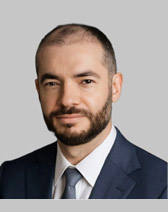
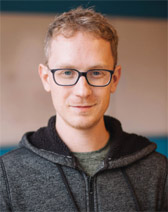
Ilya Sutskever
Architect of the deep learning revolution and AI safety visionary
Born on December 8, 1986
Age: 40
Profession: Computer Scientist, Researcher
Place of Birth: Nizhny Novgorod, Russian SFSR, Soviet Union
Ilya Efimovich Sutskever is a Canadian computer scientist and machine learning researcher widely regarded as one of the principal architects of the deep learning revolution. As a co-creator of AlexNet, a co-founder and former Chief Scientist of OpenAI, and the founder of Safe Superintelligence Inc. (SSI), Sutskever has played a defining role in shaping modern artificial intelligence. His work on large-scale neural networks, sequence learning, and artificial general intelligence (AGI) has become foundational to many of today’s most influential AI systems.
Early Life and Background
Ilya Sutskever was born on December 8, 1986, in Nizhny Novgorod, then part of the Soviet Union, to a Jewish family. In 1991, at the age of five, he emigrated with his family to Israel, where he spent most of his childhood. He lived in Jerusalem until the age of fifteen, before relocating with his family to Canada in 2002.
This layered migration experience exposed Sutskever early on to multiple cultures and languages. He is known to speak Russian, Hebrew, and English fluently. The combination of displacement, adaptation, and academic focus would later shape both his intellectual independence and his global perspective on technological progress.
Education and Academic Formation
Between 2000 and 2002, Ilya Sutskever studied at the Open University of Israel. After moving to Canada, he enrolled at the University of Toronto, where he completed a bachelor’s degree in mathematics in 2005 and a master’s degree in computer science in 2007.
He went on to pursue doctoral studies under the supervision of Geoffrey Hinton, completing his PhD in computer science in 2013. This period coincided with a critical turning point in artificial intelligence research, as neural networks—long viewed with skepticism—began to regain academic and industrial legitimacy. Sutskever’s doctoral work placed him at the center of this resurgence.
AlexNet and the Deep Learning Breakthrough
In 2012, Ilya Sutskever, together with Geoffrey Hinton and Alex Krizhevsky, developed AlexNet, a deep convolutional neural network that decisively won the ImageNet Large Scale Visual Recognition Challenge. The model outperformed all competing approaches by a wide margin, demonstrating that deep neural networks trained on large datasets using GPU acceleration could vastly exceed traditional computer vision methods.
AlexNet is widely regarded as the moment when deep learning transitioned from a promising research direction into the dominant paradigm of modern AI. Its success triggered a rapid shift across academia and industry, influencing fields ranging from image recognition to speech processing and natural language understanding.
Postdoctoral Work and Google Brain
Following his PhD, Ilya Sutskever conducted postdoctoral research at Stanford University with Andrew Ng. He later joined DNNResearch, a Toronto-based startup founded by Geoffrey Hinton. In 2013, the company was acquired by Google, after which Sutskever became a research scientist at Google Brain.
At Google, he worked with researchers such as Oriol Vinyals and Quoc Viet Le on sequence-to-sequence learning, a framework that became central to modern machine translation and language modeling. He also contributed to the early development of TensorFlow and was among the authors of the seminal AlphaGo paper, which marked another milestone in AI’s public and scientific impact.
Founding OpenAI and Large Language Models
In 2015, Ilya Sutskever left Google to co-found OpenAI alongside Sam Altman, Elon Musk, and Greg Brockman. As OpenAI’s Chief Scientist, he became one of the principal intellectual forces behind the organization’s research direction.
Sutskever played a central role in shaping the GPT family of models, including GPT-2 and GPT-3. He was a leading advocate of the idea that scaling model size, data, and compute would lead to qualitatively new and emergent capabilities in neural networks. This scaling hypothesis proved highly influential, underpinning the rapid rise of large language models as general-purpose AI systems.
AI Safety, Superalignment, and Philosophical Outlook
Beyond performance gains, Ilya Sutskever consistently emphasized concerns around AI safety, controllability, and alignment with human values. He warned early that increasingly capable AI systems could pose existential risks if developed without sufficient safeguards.
In 2023, he was announced as the leader of OpenAI’s Superalignment initiative, a research program dedicated to ensuring that future superintelligent systems remain aligned with human intentions. He argued that superintelligence should be treated not as distant science fiction, but as a plausible near-term development requiring urgent preparation.
OpenAI Governance Crisis
During the 2023 OpenAI governance crisis, Ilya Sutskever emerged as a central figure. As a member of the board, he participated in the decision to remove CEO Sam Altman, a move that sparked intense public and internal backlash. Shortly afterward, Sutskever publicly expressed regret over the decision.
Following Altman’s reinstatement, Sutskever stepped down from OpenAI’s board. The episode is widely interpreted as exposing deep internal tensions between commercial acceleration and long-term safety priorities within the organization.
Safe Superintelligence Inc. (SSI)
In May 2024, Ilya Sutskever announced his departure from OpenAI, stating that he intended to focus on a project of profound personal significance. In June 2024, he co-founded Safe Superintelligence Inc. (SSI) alongside Daniel Gross and Daniel Levy.
Sutskever has emphasized that SSI will not follow a conventional product roadmap. Instead, its sole objective is the development of superintelligent AI systems that are safe by design. He has described the company as a “straight-shot” effort: no side products, no consumer deployments, and no compromise on safety in pursuit of speed or profit.
Legacy and Influence
Ilya Sutskever stands apart not only for his technical achievements but also for his insistence on pairing rapid progress with deep caution. His work has left a lasting imprint on modern AI architectures, and his ideas continue to shape both academic research and industrial practice.
Regarded as both a builder and a philosopher of artificial intelligence, Sutskever represents a rare synthesis of scalability and restraint. The conceptual foundations he helped establish underpin much of today’s AI ecosystem, while his warnings and ethical framing increasingly define the debate over humanity’s technological future.
Source: Biyografiler.com
Frequently asked questions about Ilya Sutskever
Who is Ilya Sutskever?, Ilya Sutskever biography, Ilya Sutskever life story, Ilya Sutskever age, Ilya Sutskever facts, Ilya Sutskever birthplace, Ilya Sutskever photos, Ilya Sutskever videos, Ilya Sutskever career
Related Biographies

Lamine Yamal
Professional footballer

Sam Altman
Entrepreneur, Investor, CEO

Kylian Mbappe
Professional footballer

Alice Weidel
Politician, Economist

Erling Haaland
Professional footballer

Giorgia Meloni
Politician, Journalist


Hongjoong
Singer, Rapper, Songwriter, Composer

Ludacris
Rapper, Actor

Kwon Eunbi
Singer

Sarah Wayne Callies
Actress, Screenwriter, Producer, Director

LaTavia Roberson
Singer, Actress, Entrepreneur
Lamine Yamal
Professional footballer
Kylian Mbappe
Professional footballer

Kaia Gerber
Model, Actress

Austin Abrams
Actor
Sam Altman
Entrepreneur, Investor, CEO
Giorgia Meloni
Politician, Journalist