
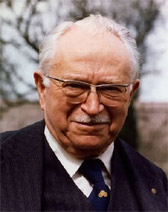
Ludwig Guttmann
Founder of the Stoke Mandeville Games and Pioneer of the Paralympic Movement
Born on July 3, 1899
Died on March 18, 1980
Age at death: 81
Profession: Neurologist
Place of Birth: Tost, Upper Silesia, German Empire (now Toszek, Poland)
Place of Death: Aylesbury, England
Ludwig Guttmann was a German–British neurologist whose pioneering work in spinal cord injury treatment and rehabilitation led to the creation of the Stoke Mandeville Games, the precursor to the modern Paralympic Games. Through his medical innovation and unwavering belief in the rehabilitative power of sport, Ludwig Guttmann transformed the lives of thousands of injured patients and reshaped global perceptions of disability. His legacy stands at the intersection of medicine, sport, and human dignity.
Early Life and Education
Ludwig Guttmann was born on July 3, 1899, in Tost, Upper Silesia, then part of the German Empire (now Toszek, Poland), into a German Jewish family. His mother was Dorothy Weissenberg and his father Bernard Guttmann. When he was three years old, in 1902, the family moved to Königshütte (now Chorzów, Poland), a city in Silesia. He received his education in a humanist-oriented primary and secondary school, graduating successfully in 1917.
Immediately after graduation, he volunteered at a hospital treating injured coal miners. During this period, he cared for a miner with a fractured spine. When he began documenting the patient’s condition, his supervisor reportedly told him, “Don’t bother, he will die within a few weeks.” The patient indeed passed away, but the experience left a lasting imprint on Ludwig Guttmann. As later recalled in an article by Cobus Rademeyer, he described the image of that young man as unforgettable, an early moment that shaped his lifelong dedication to spinal injury treatment.
In April 1918, Ludwig Guttmann began studying medicine at the University of Breslau. He later transferred to the University of Freiburg in 1919 and earned his medical degree in 1924. His doctoral research focused on tracheal cancer. Though he initially wished to specialize in pediatrics, financial considerations led him back to Breslau, where he accepted a position in the Neurology Department under the renowned Professor Otfrid Foerster.
Professional Development in Germany
At the time, Otfrid Foerster was internationally recognized as a leading neurologist and neurosurgeon, known notably for treating Vladimir Lenin upon invitation from the Soviet government. Working alongside Foerster, Ludwig Guttmann gained extensive experience in neurology and neurosurgery.
In 1928, he became a practicing neurosurgeon at a 300-bed psychiatric clinic at the University of Hamburg. A year later, he returned to Breslau as Foerster’s assistant. By 1930, he had completed his habilitation and became a lecturer in neurology at the University of Breslau, while also serving as chief physician at the Wenzel-Hancke Hospital.
The political landscape changed dramatically in January 1933 when Adolf Hitler became Chancellor of Germany. Anti-Jewish legislation soon prohibited Jewish physicians from practicing medicine professionally. Ludwig Guttmann was dismissed from his hospital position. In 1937, he became medical director of the Breslau Jewish Hospital. Following the events of Kristallnacht in November 1938, he treated numerous injured Jewish victims at his hospital. Shortly thereafter, the Gestapo confiscated his passport and forbade him from leaving Breslau.
Escape to Britain and Medical Innovation
In early 1939, Ludwig Guttmann and his family were granted permission to travel to Portugal to treat a friend of dictator António de Oliveira Salazar. Although he was expected to return to Germany via London, he seized the opportunity to escape. With assistance from the Council for Assisting Refugee Academics (CARA), he and his family arrived in Oxford, England, on March 14, 1939.
At the Radcliffe Infirmary in Oxford, he continued his research into spinal cord injuries within the Nuffield Department of Neurosurgery. In September 1943, the British government asked him to establish the National Spinal Injuries Centre at Stoke Mandeville Hospital in Buckinghamshire. The initiative, prompted by the Royal Air Force, aimed to improve treatment and rehabilitation for pilots suffering spinal injuries from aircraft crashes. The center opened on February 1, 1944, with Ludwig Guttmann as its director, a position he held until 1966. He became a British citizen in 1945.
The Birth of the Stoke Mandeville Games
Ludwig Guttmann believed that sport was a vital therapeutic tool, essential for restoring physical strength and self-respect among injured servicemen. On July 29, 1948, the same day as the opening of the London Olympic Games, he organized the first Stoke Mandeville Games for disabled war veterans at the hospital.
Sixteen injured servicemen and women, all with spinal cord injuries, competed in wheelchair archery. He referred to the event as the “Paraplegic Games,” encouraging patients to see themselves as athletes capable of national participation. The event grew annually. In 1952, Dutch veterans joined, marking the beginning of international participation. By then, over 130 competitors from multiple countries were involved.
The movement eventually evolved into the Paralympic Games. In 1960, alongside the official Rome Summer Olympics, the International Stoke Mandeville Games were held in Rome with 400 athletes from 23 countries. These games are now recognized as the first official Paralympics, a term retroactively adopted by the International Olympic Committee in 1984.
Recognition, Honors, and Institutional Legacy
In 1950, Ludwig Guttmann was appointed Officer of the Order of the British Empire (OBE). He was promoted to Commander of the Order of the British Empire (CBE) in 1960 and was knighted by Queen Elizabeth II in 1966. In 1956, he received the Sir Thomas Fearnley Cup from the International Olympic Committee in recognition of his contributions to the Olympic movement.
In 1961, he founded the International Medical Society of Paraplegia, now known as the International Spinal Cord Society (ISCoS), serving as its first president until 1970. That same year, he established the British Sports Association for the Disabled, later renamed the English Federation of Disability Sport.
Personal Life and Death
Ludwig Guttmann married Else Samuel in 1927. The couple had two children: Dennis Guttmann (born 1929) and Eva Loeffler (born 1933).
After retiring from Stoke Mandeville Hospital in 1966, he remained an influential figure in international rehabilitation medicine and disability sport. Following a heart attack in October 1979, Ludwig Guttmann died on March 18, 1980, at the age of 80 in Aylesbury, England. He was buried at the Bushey Jewish Cemetery, northwest of London.
Cultural Recognition
In August 2012, the BBC broadcast the television film The Best of Men, written by Lucy Gannon, depicting Ludwig Guttmann’s work during and after World War II. The film starred Eddie Marsan as Dr. Guttmann and Rob Brydon as one of his patients. In 2013, Russia featured his image on a postage stamp in its “Sports Legends” series. In 2024, a statue of Ludwig Guttmann at Stoke Mandeville Hospital was added to Buckinghamshire’s protected Local Heritage List.
Source: Biyografiler.com
Frequently asked questions about Ludwig Guttmann
Who is Ludwig Guttmann?, Ludwig Guttmann biography, Ludwig Guttmann life story, Ludwig Guttmann age, Ludwig Guttmann facts, Ludwig Guttmann birthplace, Ludwig Guttmann photos, Ludwig Guttmann videos, Ludwig Guttmann career
Related Biographies

Lamine Yamal
Professional footballer

Erling Haaland
Professional footballer

Kylian Mbappe
Professional footballer

Bad Bunny
Rapper, Songwriter

Austin Abrams
Actor

Brad Pitt
Actor


Hongjoong
Singer, Rapper, Songwriter, Composer

Ludacris
Rapper, Actor

Kwon Eunbi
Singer

Sarah Wayne Callies
Actress, Screenwriter, Producer, Director

LaTavia Roberson
Singer, Actress, Entrepreneur

Winston Churchill
Statesman, Writer, Historian

Sydney Sweeney
Actress

Abbie Cornish
Actress

Mackenzie Davis
Actress
Austin Abrams
Actor

David Lynch
Film Director, Screenwriter, Producer