
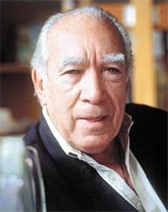
Anthony Quinn
One of cinema’s greatest embodiments of primal strength, honor, and elemental humanity
Born on April 21, 1915
Died on June 3, 2001
Age at death: 86
Profession: Actor, Director
Place of Birth: Chihuahua, Mexico
Place of Death: Boston, Massachusetts, United States
Anthony Quinn stands as one of the most imposing and versatile figures in the history of world cinema. Across a career spanning more than six decades and nearly 100 films, he embodied peasants and revolutionaries, painters and prophets, boxers and bullfighters, gangsters and cowboys—always infusing each role with his own raw physicality, emotional depth, and unmistakable personal force. Few actors have so convincingly portrayed figures as varied as Aristotle Onassis, Quasimodo, Paul Gauguin, Pope Kiril, or Hamza ibn Abd al-Muttalib, earning Quinn a unique status as a true cinematic universal.
Early Life and Origins
Anthony Quinn was born on 21 April 1915 in Chihuahua, Mexico. Shortly after his birth, his family relocated to Los Angeles, United States. He was nine years old when his father died, an event that forced Quinn into early responsibility and hardship.
His origins are famously complex. His mother was Mexican, and his father was of Irish descent. Accounts of their lives vary: his mother is often described as a fierce woman who fought alongside Pancho Villa as a “soldadera,” while his father has been alternately described as a cameraman, a seasonal laborer, or an early Hollywood adventurer who helped establish a zoo during cinema’s infancy. This blend of Latin and Anglo-Saxon heritage would later enable Quinn to portray characters of almost any ethnicity with rare authenticity.
Entry into Cinema and Early Roles
After performing on stage in the United States, Anthony Quinn made his film debut in Parole. In the 1930s and early 1940s, he appeared primarily in supporting roles, often cast as Native Americans, Mexicans, or morally ambiguous figures in films such as The Plainsman, Blood and Sand, and They Died with Their Boots On.
Despite his striking screen presence, leading roles remained elusive. Even his marriage to Katharine DeMille, the adopted daughter of legendary director Cecil B. DeMille, whom he met while appearing in DeMille’s films such as The Buccaneer and Union Pacific, did not immediately elevate his career. Fame would come slowly and through persistence.
Broadway and Breakthrough
Frustrated by limited opportunities in Hollywood, Anthony Quinn turned to Broadway, where he achieved a major breakthrough by replacing Marlon Brando in *A Streetcar Named Desire*. His success on stage reaffirmed his stature as a serious actor.
Returning to Hollywood in 1951, Quinn’s fortunes changed decisively. He delivered a powerful performance in The Brave Bulls before being cast by Elia Kazan as Eufemio Zapata in Viva Zapata!, opposite Marlon Brando. The role earned Quinn his first Academy Award for Best Supporting Actor in 1952.
Oscar Success and International Stardom
Four years later, Quinn won his second Academy Award for Best Supporting Actor for his portrayal of painter Paul Gauguin in Lust for Life, directed by Vincente Minnelli. Although Brando would later surpass him in leading-actor Oscars, Quinn’s achievements secured his place among cinema’s elite.
From this point forward, Anthony Quinn became an international star. He worked extensively in European cinema, delivering unforgettable performances as Zampanò in La Strada for Federico Fellini, Quasimodo in The Hunchback of Notre Dame opposite Gina Lollobrigida, and Attila the Hun in Attila. These roles showcased his extraordinary ability to blend brutality, vulnerability, and tragic dignity.
The Zorba Persona and Iconic Roles
Quinn’s screen persona reached its apex with his portrayal of Alexis Zorba in Zorba the Greek, directed by Michael Cacoyannis and based on the novel by Nikos Kazantzakis. His exuberant, life-affirming performance earned him his final Academy Award nomination and immortalized him as cinema’s ultimate embodiment of earthy wisdom and joie de vivre.
Equally memorable were his roles as the Bedouin leader Auda Abu Tayi in Lawrence of Arabia, the defiant protagonist of Barabbas, Hamza ibn Abd al-Muttalib in The Message, and Omar Mukhtar in Lion of the Desert. These performances cemented his legendary status among international and Middle Eastern audiences alike.
Later Career and Enduring Presence
Though many of his films in the 1970s and 1980s were uneven, Anthony Quinn never ceased working. He appeared in major productions such as The Guns of Navarone, The Secret of Santa Vittoria, The Greek Tycoon, and television projects like Onassis: The Richest Man in the World.
In his later years, Quinn revitalized his career by appearing in films by younger directors, including Spike Lee’s Jungle Fever, John McTiernan’s Last Action Hero, and Alfonso Arau’s A Walk in the Clouds. His presence consistently added gravitas and authenticity.
Personal Life
Anthony Quinn married three times. His first marriage to Katherine DeMille in 1937 lasted until 1965 and produced five children. In 1966, he married Jolanda Addolori, with whom he had three sons before divorcing in 1997. That same year, he married Kathy Benvin, with whom he had two children.
In total, Quinn fathered 13 children through his marriages and other relationships. He was also an accomplished painter and author, publishing his autobiography *The Original Sin* in 1972.
Death
Anthony Quinn died on 3 June 2001 at the age of 86 at Brigham and Women’s Hospital in Boston, Massachusetts, due to respiratory failure. His death was confirmed by close friend Vincent “Buddy” Cianci, then mayor of Providence, Rhode Island.
Awards and Honors
1952 – Academy Awards – Best Supporting Actor – Viva Zapata!
1956 – Academy Awards – Best Supporting Actor – Lust for Life
1987 – Golden Globe Awards – Cecil B. DeMille Award – Lifetime Achievement
Anthony Quinn endures as a towering figure of cinema—a world actor in the fullest sense, whose elemental performances transcended nationality, genre, and era, transforming him into a permanent legend of the silver screen.
Filmography
Anthony Quinn appeared in nearly 100 films over a career that spanned more than 60 years. His filmography reflects an extraordinary range, from classical Hollywood studio productions to European art cinema, historical epics, westerns, religious dramas, and late-career character roles in modern American films and television. Below is a comprehensive chronological selection of his most significant screen work.
1936 – The Milky Way
1937 – Daughter of Shanghai
1938 – The Buccaneer
1938 – Dangerous to Know
1940 – Road to Singapore
1940 – The Ghost Breakers
1940 – City for Conquest
1941 – Blood and Sand
1941 – They Died with Their Boots On
1942 – Larceny, Inc.
1942 – Road to Morocco
1942 – The Black Swan
1943 – The Ox-Bow Incident
1944 – Buffalo Bill
1945 – Where Do We Go from Here?
1945 – Back to Bataan
1947 – Sinbad the Sailor
1952 – Viva Zapata!
1952 – The World in His Arms
1952 – Against All Flags
1953 – Ride, Vaquero!
1954 – The Long Wait
1954 – La Strada
1954 – Attila
1955 – Ulysses
1956 – Lust for Life
1956 – The Hunchback of Notre Dame (Notre Dame de Paris)
1957 – The River’s Edge
1957 – Wild Is the Wind
1958 – The Black Orchid
1958 – The Buccaneer (Director only)
1959 – Warlock
1959 – Last Train from Gun Hill
1960 – The Savage Innocents
1960 – Portrait in Black
1961 – The Guns of Navarone
1961 – Barabbas
1962 – Requiem for a Heavyweight
1962 – Lawrence of Arabia
1964 – The Visit
1964 – Behold a Pale Horse
1964 – Zorba the Greek
1965 – A High Wind in Jamaica
1967 – The 25th Hour (La Vingt-cinquième Heure)
1967 – The Happening
1968 – The Shoes of the Fisherman
1968 – The Magus
1969 – The Secret of Santa Vittoria
1970 – A Walk in the Spring Rain
1972 – Across 110th Street
1976 – The Message
1978 – The Greek Tycoon
1978 – Sanchez’in Çocukları
1981 – Lion of the Desert
1983 – Circle of Power (Associate Producer only)
1988 – Stradivari
1988 – Onassis: The Richest Man in the World – TV Film
1990 – Ghosts Can’t Do It
1990 – Revenge
1991 – Only the Lonely
1991 – Jungle Fever
1991 – Mobsters
1993 – Last Action Hero
1994 – Hercules and the Amazon Women – TV Film
1994 – Hercules and the Lost Kingdom – TV Film
1994 – Hercules and the Circle of Fire – TV Film
1994 – Hercules in the Underworld – TV Film
1994 – Hercules in the Maze of the Minotaur – TV Film
1995 – A Walk in the Clouds
1996 – Gotti – TV Film
1996 – Seven Servants
1999 – Oriundi
2002 – Avenging Angelo
Source: Biyografiler.com
Frequently asked questions about Anthony Quinn
Who is Anthony Quinn?, Anthony Quinn biography, Anthony Quinn life story, Anthony Quinn age, Anthony Quinn facts, Anthony Quinn birthplace, Anthony Quinn photos, Anthony Quinn videos, Anthony Quinn career
Related Biographies

Lamine Yamal
Professional footballer

Erling Haaland
Professional footballer

Austin Abrams
Actor

Keanu Reeves
Actor

Kylian Mbappe
Professional footballer

Bad Bunny
Rapper, Songwriter


Hongjoong
Singer, Rapper, Songwriter, Composer

Ludacris
Rapper, Actor

Kwon Eunbi
Singer

Sarah Wayne Callies
Actress, Screenwriter, Producer, Director

LaTavia Roberson
Singer, Actress, Entrepreneur
Kylian Mbappe
Professional footballer
Lamine Yamal
Professional footballer

John Healey
Politician

Mao Zedong
Revolutionary Leader, Politician

Luiz Inacio Lula da Silva
Politician, President

Nicki Minaj
Rapper, Singer, Songwriter, Actress