
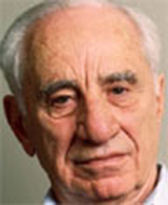
Elia Kazan
Born on September 7, 1909
Died on September 28, 2003
Age at death: 94
Profession: Film Director
Place of Birth: Istanbul, Ottoman Empire (present-day Turkey)
Place of Death: Manhattan, New York City, United States
Elia Kazan was one of the most powerful and controversial figures in 20th-century American cinema and theatre. A master director who reshaped film acting through realism, psychological intensity, and moral conflict, he was instrumental in discovering and shaping legendary talents while also leaving behind one of the most divisive legacies in Hollywood history. His work bridged theatre and cinema, Europe and America, art and politics.
Early Life and Origins
Elia Kazan was born on 7 September 1909 in Istanbul to a Greek (Rum) family originally from Kayseri. His birth name was Elias Kazancıoğlu. His father was George Kazancıoğlu, and his mother Athena Şişmanoğlu, whose family originated from the village of Germir near Kayseri. Ethnically Greek and culturally Anatolian, Kazan would later describe himself as a man shaped by displacement and identity conflict.
In 1913, when Kazan was only four years old, his family emigrated to the United States. He grew up in New Rochelle, New York, where he attended New Rochelle High School. He later completed his undergraduate education at Williams College in Massachusetts and went on to study theatre at Yale University, laying the intellectual and artistic foundations of his future career.
Theatre Beginnings and the Group Theatre
In 1932, Elia Kazan began his professional career as an actor with the legendary Group Theatre in New York. He remained with the company until 1939, absorbing its socially conscious, Stanislavski-influenced acting philosophy. By 1940, Kazan transitioned into directing, quickly earning a reputation as one of Broadway’s most innovative and demanding theatre directors.
His stage work made him a national figure, and by the early 1940s he was widely regarded as one of the most important theatre directors in America. His ability to extract raw, emotionally truthful performances from actors would soon redefine American acting itself.
Transition to Cinema and Rise to Prominence
Elia Kazan began directing feature films in 1944. His early Hollywood success included socially engaged works such as Boomerang! and Gentleman’s Agreement, the latter addressing antisemitism in American society and earning critical acclaim.
In 1947, Kazan co-founded the legendary Actors Studio together with Cheryl Crawford and Robert Lewis. Through this institution, he helped develop Method Acting and mentored performers who would redefine screen realism. Among those he guided were Marlon Brando and James Dean, both of whom became icons through Kazan’s films.
Defining Films and Artistic Legacy
Kazan directed a series of masterpieces that permanently altered American cinema. With A Streetcar Named Desire and On the Waterfront, he transformed Marlon Brando into a cultural phenomenon. With East of Eden, he introduced James Dean as the embodiment of youthful rebellion and emotional vulnerability.
Kazan had a particular talent for recognizing raw, unpolished performers and elevating them into stars. Actors such as Rod Steiger, Natalie Wood, Lee Remick, and Warren Beatty achieved stardom after working under his direction. He preferred unknown or underestimated actors, believing authenticity emerged from emotional risk rather than polish.
HUAC Testimony and Controversy
In 1952, Elia Kazan was summoned before the House Un-American Activities Committee (HUAC). During his testimony, he named several colleagues with alleged communist affiliations, a decision that led to the effective blacklisting and career destruction of multiple artists, including screenwriter Abraham Polonsky.
The decision permanently divided opinion about Kazan. While many viewed his actions as betrayal, Kazan never expressed regret. In a 1997 interview, he stated: “I did what I believed was right. I am not ashamed. I do not apologize.”
When he received an Honorary Academy Award in 1999 at the 71st Academy Awards, the ceremony was marked by visible protests and audience members refusing to applaud.
Later Career and Turn to Writing
Between 1960 and 1964, Elia Kazan served as a director at the Lincoln Center Repertory Theatre in New York. By the mid-1960s, he gradually withdrew from theatre and filmmaking, devoting more time to writing novels, essays, and autobiographical works.
In 1988, he served as jury president at the 7th International Istanbul Film Festival. That same year, he appeared in a small guest role in Sis, directed by Zülfü Livaneli, marking a rare on-screen appearance late in life.
Personal Life
Elia Kazan married three times. His first marriage was to playwright Molly Day Thatcher in 1932; they had four children and remained together until her death in 1963. In 1967, he married actress Barbara Loden, with whom he had one son; she died in 1980. In 1982, he married writer Frances Rudge, remaining with her until his death.
Death
Elia Kazan died on 28 September 2003 in Manhattan, New York City, at the age of 94. His death marked the end of an era in American theatre and cinema.
Awards and Honors
1956 – Golden Globe Awards – Best Motion Picture – East of Eden
1957 – Golden Globe Awards – Best Director – Baby Doll
1964 – Golden Globe Awards – Best Director – America America
1999 – Academy Awards – Honorary Award for Lifetime Achievement
Filmography (Director)
1945 – A Tree Grows in Brooklyn
1947 – Boomerang!
1947 – Gentleman’s Agreement
1949 – Pinky
1950 – Panic in the Streets
1951 – A Streetcar Named Desire
1952 – Viva Zapata!
1953 – Man on a Tightrope
1954 – On the Waterfront
1955 – East of Eden
1956 – Baby Doll
1957 – A Face in the Crowd
1960 – Wild River
1961 – Splendor in the Grass
1963 – America America
1969 – The Arrangement
1972 – The Visitors
1976 – The Last Tycoon
Books
1962 – America America
1967 – The Arrangement
1973 – Kazan on Kazan
1988 – Elia Kazan: A Life
2009 – Kazan on Directing
Source: Biyografiler.com
Frequently asked questions about Elia Kazan
Who is Elia Kazan?, Elia Kazan biography, Elia Kazan life story, Elia Kazan age, Elia Kazan facts, Elia Kazan birthplace, Elia Kazan photos, Elia Kazan videos, Elia Kazan career
Related Biographies

Lamine Yamal
Professional footballer

Erling Haaland
Professional footballer

Keanu Reeves
Actor

Kylian Mbappe
Professional footballer

Austin Abrams
Actor

Bad Bunny
Rapper, Songwriter


Hongjoong
Singer, Rapper, Songwriter, Composer

Ludacris
Rapper, Actor

Kwon Eunbi
Singer

Sarah Wayne Callies
Actress, Screenwriter, Producer, Director

LaTavia Roberson
Singer, Actress, Entrepreneur

Carlos Slim Helu
Businessperson, CEO
Austin Abrams
Actor
Kylian Mbappe
Professional footballer

Nicki Minaj
Rapper, Singer, Songwriter, Actress

Alexander Hamilton
Statesman, Lawyer, Economist

Bruce Lee
Actor, Philosopher