
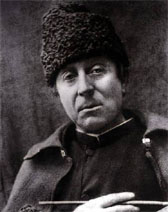
Paul Gauguin
Pioneer of Post-Impressionism and Founder of Synthetism
Born on June 7, 1848
Died on May 8, 1903
Age at death: 55
Profession: Painter
Place of Birth: Paris, France
Place of Death: Atuona, Marquesas Islands (French Polynesia)
Paul Gauguin was a French painter, one of the pioneers of the Post-Impressionist movement and the founder of Synthetism. He spent a large part of his life far from his native France, living among peoples whom Europe of his time regarded as “primitive.” By bringing the visual language, symbolism, and spiritual depth of these cultures into European art, he opened a radically new path for 20th-century modern art.
Paul Gauguin was born on June 7, 1848, in Paris, into a family with roots in Spain and Peru. His father, Clovis Gauguin, was a journalist, while his mother, Aline Maria Chazal, was the daughter of Flora Tristan, a renowned writer, early socialist thinker, and one of the founders of socialist feminism who devoted her life to the rights of women and workers. After the coup led by Napoleon III in France, the family decided to move to Peru in 1851. During the journey, Gauguin’s father died suddenly, leaving Aline Maria alone with her two children. She sought refuge in Lima, the capital of Peru, where Gauguin spent part of his early childhood.
In 1855, Paul Gauguin returned to France with his mother and began school in Orléans. His lifelong passion for travel emerged during these years. At the age of sixteen, he secretly boarded a merchant ship and joined the merchant navy, later serving in the French navy and spending six years at sea. In 1871, he returned to France only to learn that his mother had died. Determined to live a stable life, he became a stockbroker.
Soon afterward, Gauguin married a Danish woman, Mette Gad. The couple had five children. During this period, Gauguin became increasingly involved in the Parisian art world, buying and selling works by Impressionist painters and immersing himself in Bohemian life. Although deeply interested in painting, his demanding work and family responsibilities limited him to painting mostly on weekends. His early works focused on landscapes and portraits of children.
In 1876, Gauguin submitted a painting to the Salon exhibition, where it received considerable attention. That same year, he met Camille Pissarro, one of the leading figures of Impressionism. Influenced by artists such as Claude Monet, Alfred Sisley, and Pissarro, Gauguin participated in four Impressionist exhibitions between 1880 and 1886. In 1883, at the age of thirty-five, he made a decisive break with his former life, abandoning banking to devote himself entirely to painting.
This choice plunged his family into severe financial hardship. Unable to adapt to Gauguin’s Bohemian lifestyle, his wife took their children and moved to Copenhagen. Gauguin followed them briefly but failed to establish himself there. He returned to Paris with his nine-year-old son Clovis Gauguin, but lacking the means to support him, he was forced to send the child back to his mother.
In 1886, driven by poverty and a desire to escape the noise and pressure of city life, Paul Gauguin settled in the Pont-Aven region of northern France. There, he devoted himself entirely to painting and produced many significant works focused on rural life and peasant portraits. In Pont-Aven, together with the young artist Émile Bernard, he developed a new style they called Synthetism, characterized by simplified forms, bold colors, and symbolic content.
Restless and driven by a thirst for adventure, Gauguin left France in 1887 for Panama, where he worked briefly on the construction of the Panama Canal, hoping to earn enough money to continue traveling. He then went to Martinique, where he contracted a severe tropical illness, forcing him to return to France.
After months of extreme poverty in Paris, Gauguin managed to sell a few paintings with the help of an old friend and returned once again to Pont-Aven. The works he produced during this period clearly revealed his break from Impressionism and his growing interest in folk art and so-called primitive art.
In 1888, Paul Gauguin traveled to Arles to work alongside Vincent Van Gogh, whom he had previously met in Paris. The two artists spent long days painting the countryside together, but intense disagreements eventually led to a dramatic rupture, and Gauguin left Arles.
Although he had gained recognition in Parisian art circles, Gauguin felt an irresistible longing for distant lands. In 1891, he left France for Tahiti, seeking a life far removed from European civilization. Living among the local population, he painted their daily life, myths, and spiritual world. In Tahiti, his style evolved fully into Post-Impressionism, and he created many of his most celebrated works.
Although he briefly returned to Paris in July 1893, Gauguin soon felt compelled to return to Tahiti. During his second stay, he produced his monumental masterpiece Where Do We Come From? What Are We? Where Are We Going? (1897), in which he explored the origins of life and the meaning of existence, love, and death. Influenced by indigenous art, he also created numerous wooden sculptures.
Paul Gauguin, whose work profoundly shaped the course of 20th-century modern art, died on May 8, 1903, in Atuona, in the Marquesas Islands, without ever returning to France. He died from complications related to syphilis.
Selected Works:
Nude Sewing, 1880
Sleeping Child, 1884
Profile of Charles Laval and Still Life, 1886
Portrait of Madeleine Bernard, 1888
Self-Portrait “Les Misérables”, 1888
Madame Roulin, 1888
Van Gogh Painting Sunflowers, 1888
The Café at Arles, 1888
The Schuffenecker Family, 1889
Portrait of Two Children (Paul and Jean Schuffenecker), 1889
La Belle Angèle, 1889
Self-Portrait, 1889
Christ in the Garden of Olives, 1889
Nirvana – Portrait of Meyer de Haan, 1890
Self-Portrait with the Yellow Christ, 1890
The Meal, 1891
Te Faaturama (The Brooding Woman), 1891
Nafea Faa Ipoipo? (When Will You Marry?), 1892
Two Women on the Beach, 1891–1892
Aha Oe Feii? (What! Are You Jealous?), 1892
Vahine no te Vi (Woman with Mango), 1892
Merahi Metua no Tehamana, 1893
Where Are You Going?, 1893
Old Man with a Cane, 1893
Self-Portrait with Hat, 1893
Portrait of Annah the Javanese, 1893–1894
Breton Woman Praying, 1894
Savage Tales, 1896
Portrait of the Artist Dedicated to His Friend Daniel, 1896
Vairumati, 1897
Where Do We Come From? What Are We? Where Are We Going?, 1897
Three Tahitians, 1898
Tahitian Woman and Child, 1899
Gold of Their Bodies, 1901
Woman with a Fan, 1902
Primitive Tales, 1902
Self-Portrait, 1903
Source: Biyografiler.com
Frequently asked questions about Paul Gauguin
Who is Paul Gauguin?, Paul Gauguin biography, Paul Gauguin life story, Paul Gauguin age, Paul Gauguin facts, Paul Gauguin birthplace, Paul Gauguin photos, Paul Gauguin videos, Paul Gauguin career
Related Biographies

Lamine Yamal
Professional footballer

Kylian Mbappe
Professional footballer

Sam Altman
Entrepreneur, Investor, CEO

Erling Haaland
Professional footballer

Alice Weidel
Politician, Economist

Giorgia Meloni
Politician, Journalist


Hongjoong
Singer, Rapper, Songwriter, Composer

Ludacris
Rapper, Actor

Kwon Eunbi
Singer

Sarah Wayne Callies
Actress, Screenwriter, Producer, Director

LaTavia Roberson
Singer, Actress, Entrepreneur

Snoop Dogg
Rapper, Singer, Actor

Eliezer Yudkowsky
Researcher, Writer

Leonardo DiCaprio
Actor

Josh Duhamel
Actor

Florence Pugh
Actress

Sergio Perez
Formula 1 Driver