
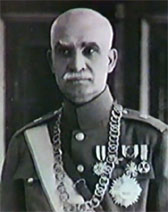
Reza Pahlavi
Founder of the Pahlavi Dynasty and Architect of Modern Iran
Born on March 15, 1878
Died on July 26, 1944
Age at death: 66
Profession: Military Officer, Monarch
Place of Birth: Alasht, Iran
Place of Death: Johannesburg, South Africa
Reza Pahlavi, later known as Reza Shah Pahlavi, was the Shah of Iran from 1925 to 1941 and the founder of the Pahlavi dynasty, which ruled Iran until the 1979 Iranian Revolution. He rose from a modest military background to become one of the most powerful and transformative figures in modern Iranian history, reshaping the country through authoritarian modernization, secular reforms, and nation-building policies.
Reza Pahlavi was born on March 15, 1878, in the town of Alasht in northern Iran. His father was Abbas Ali Khan, and his mother was Nushafarin Ayromlu. He entered military life at a young age and became a non-commissioned officer at sixteen. He served in the armed forces until 1920, steadily rising through the ranks and eventually attaining the rank of Brigadier General.
On February 21, 1921, Reza Pahlavi carried out a coup d’état in cooperation with Seyyed Ziaeddin Tabatabai. His troops positioned themselves in Qazvin, approximately 150 kilometers west of Tehran, and forced the government to resign without bloodshed. Following the successful coup, Tabatabai became Prime Minister, while Reza Pahlavi was appointed commander of the army. The government they formed lasted only one hundred days. Soon afterward, Reza Pahlavi consolidated power and assumed the office of Prime Minister himself.
On October 26, 1923, Reza Khan effectively seized full control of the state. Ahmad Shah Qajar, the last ruler of the Qajar dynasty, first sought refuge at the British embassy and later fled to Europe. As prime minister, Reza Khan sought to neutralize potential threats from the Qajar crown prince and family members. For years, he had envisioned establishing a republic in Iran and attempted to realize this goal by promoting republican propaganda nationwide through his forces.
However, the establishment of a republic conflicted with British strategic interests and was also opposed by the religious establishment. British influence over the clergy played a significant role in mobilizing opposition, and many religious leaders strongly resisted the idea of a republic. Large segments of the largely uneducated population followed the clerics’ lead, effectively blocking Reza Khan’s republican ambitions.
Recognizing that a republic was unattainable and determined not to lose power or jeopardize national unity, Reza Khan pursued a different path. In 1925, he secured unanimous approval from the Iranian parliament to establish a monarchy, despite opposition from clerics and certain members of parliament.
On December 15, 1925, Reza Pahlavi was formally crowned Shah of Iran, deposing Ahmad Shah Qajar and founding the Pahlavi dynasty. The regime he established was secular, nationalist, militarist, and strongly anti-communist. His rule marked a decisive break from the Qajar era and aimed to transform Iran into a centralized and modern nation-state.
As part of his nation-building project, Reza Shah officially changed the international name of the country from “Persia” to “Iran” on March 21, 1935, emphasizing the concept of Iran as the “land of the Aryans.”
Reza Shah implemented sweeping reforms across the country. He expanded modern education, established secular schools, and effectively ended the traditional madrasa-based system. These reforms provoked intense criticism from the religious establishment. Clerics openly denounced modern education, claiming from mosque pulpits that schools were designed to make boys irreligious and girls immoral. Among the clerics opposing him was Ayatollah Ruhollah Khomeini, who would later play a central role in dismantling the Pahlavi system.
Believing that Iran’s survival depended on an educated and disciplined population, Reza Shah pressed forward with reforms despite resistance. However, his refusal to collaborate closely with British interests ultimately sealed his fate.
On September 16, 1941, under pressure from Britain during World War II, Reza Shah was forced to abdicate the throne in favor of his son Mohammad Reza Shah Pahlavi. He was taken into British custody and deported from Iran by ship from Bandar Abbas. The British first sent him to Mauritius, where the tropical climate severely affected his health. After prolonged negotiations, he was allowed to relocate to Johannesburg, South Africa.
Reza Shah Pahlavi died in Johannesburg on July 26, 1944, at the age of sixty-six. After his death, his body was mummified in Egypt and kept at the Al-Rifa'i Mosque in Cairo. Years later, his remains were returned to Iran and ceremonially buried in a mausoleum constructed in the city of Rey. Following the 1979 Iranian Revolution, the mausoleum was destroyed with the approval of Ayatollah Ruhollah Khomeini.
Reza Shah married four times. His first wife was Maryam Khanum, whom he married in 1894; she died in 1904. They had one daughter, Hamdamsaltaneh Pahlavi (1903–1992).
His second wife was Tadj ol-Molouk (1896–1982), with whom he had five children:
– Shams Pahlavi (1917–1996)
– Mohammad Reza Shah Pahlavi (1919–1980), his crown prince and successor
– Ashraf Pahlavi (born 1919), twin sister of Mohammad Reza Shah
– Ali Reza Pahlavi (1922–1954)
In 1922, Reza Shah married his third wife, Turan (Qamar al-Molk) Emir Soleimani (1904–1995). The couple separated in 1923 and had one son, Gholam Reza Pahlavi (born 1923).
His fourth and final marriage was to Esmat Dowlatshahi (1904–1995) in 1924. They had five children:
– Abdolreza Pahlavi (1924–2004)
– Ahmad Reza Pahlavi (1925–1981)
– Mahmud Reza Pahlavi (1926–2001)
– Fatemeh Pahlavi (1928–1987)
– Hamid Reza Pahlavi (1932–1992)
Reza Shah Pahlavi remains a deeply polarizing figure in Iranian history, remembered both as the founder of modern Iran and as an authoritarian ruler whose legacy continues to shape political debates about monarchy, secularism, and national identity.
Source: Biyografiler.com
News about Reza Pahlavi
Iran’s Supreme Leader Ali Khamenei Dismisses Protesters as Trump Supporters
Iran’s Supreme Leader Ali Khamenei has dismissed ongoing anti-government protests as acts of vandalism carried out by “troublemakers” seeking to...
Protests Intensify in Tehran After Exiled Prince Reza Pahlavi Calls for Mass Demonstrations
Protests in Iran’s capital escalated sharply after exiled crown prince Reza Pahlavi (2) urged citizens to take to the streets. Late Thursday night, ...
Frequently asked questions about Reza Pahlavi
Who is Reza Pahlavi?, Reza Pahlavi biography, Reza Pahlavi life story, Reza Pahlavi age, Reza Pahlavi facts, Reza Pahlavi birthplace, Reza Pahlavi photos, Reza Pahlavi videos, Reza Pahlavi career
Related Biographies

Lamine Yamal
Professional footballer

Erling Haaland
Professional footballer

Kylian Mbappe
Professional footballer

Bad Bunny
Rapper, Songwriter

Austin Abrams
Actor

Keanu Reeves
Actor


Hongjoong
Singer, Rapper, Songwriter, Composer

Ludacris
Rapper, Actor

Kwon Eunbi
Singer

Sarah Wayne Callies
Actress, Screenwriter, Producer, Director

LaTavia Roberson
Singer, Actress, Entrepreneur
Kylian Mbappe
Professional footballer
Lamine Yamal
Professional footballer

Sydney Sweeney
Actress
Austin Abrams
Actor

Jodie Foster
Actress

Che Guevara
Physician, Military Commander