
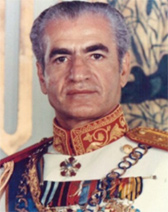
Mohammad Reza Shah Pahlavi
Last Shah of Iran, Architect of State-Led Modernization
Born on October 26, 1919
Died on July 27, 1980
Age at death: 61
Profession: Monarch, Statesman
Place of Birth: Tehran, Iran
Place of Death: Cairo, Egypt
Mohammad Reza Shah Pahlavi was one of the Shahs of Iran and the eldest son of Reza Pahlavi, the founder of the Pahlavi dynasty. His reign represented one of the most transformative and controversial eras in modern Iranian history.
Mohammad Reza Shah Pahlavi was born on 26 October 1919 in Tehran, Iran. His mother was Tadj ol-Molouk, and his father was Reza Pahlavi. After completing part of his education in Switzerland, he returned to Iran in 1935 and studied at the Iranian Military Academy between 1935 and 1938. In 1938, he joined the army with the rank of lieutenant.
Following the joint occupation of Iran by Britain and the Soviet Union during World War II, his father was forced to abdicate the throne. As a result, Mohammad Reza Shah Pahlavi ascended to the throne on 16 September 1941.
In 1943, Iran declared war on Germany, a move that helped stabilize the Shah’s authority with British support. After the war, Iran’s oil resources were opened to foreign companies, a policy that later contributed to the rise of nationalist opposition.
This opposition culminated in the emergence of a strong nationalist movement led by Prime Minister Mohammad Mossadegh. Tensions between the Shah and Mossadegh escalated after Mossadegh took office in 1951. In August 1953, the Shah attempted to dismiss him but failed and was forced to flee the country. After unrest organized by Mossadegh’s opponents with backing from the United States, the Shah returned to Iran and regained power. He appointed Fazlollah Zahedi as prime minister and ended the nationalization policies, seeking to strengthen political and economic cooperation with Western powers.
In 1955, Iran joined the Baghdad Pact, and in 1956 the Shah established the secret police organization SAVAK. With strong U.S. support, he launched the White Revolution, a state-led national development program that included land reform, expansion of road, rail, and air networks, construction of dams and irrigation systems, industrial development, and the extension of health and education services into rural areas.
Mohammad Reza Shah Pahlavi was strongly supported by Western countries, particularly the United States, while suppressing all forms of political opposition. In June 1963, nationwide protests were violently crushed, resulting in approximately 4,000 deaths. In April 1965, he survived an assassination attempt.
During the 1960s and 1970s, the Shah pursued a more independent foreign policy, developing closer relations with the Soviet Union and Eastern European countries. In 1967, he adopted the imperial title “Shahanshah.” In 1971, he organized an extravagant celebration marking the 2,500th anniversary of the Persian Empire, during which his wife Farah Diba was crowned Empress.
In 1975, the Shah abolished the two-party system and established a single political party, the Rastakhiz (National Resurgence) Party. He also granted certain rights and freedoms to Sunni Muslims, allowing the establishment of Hanafi religious schools.
Despite these reforms, conservative Shiite clerics strongly opposed his Western-oriented policies. Opposition forces gradually united around the exiled Shiite leader Ayatollah Ruhollah Khomeini, who was based in Paris. Encouraged by Khomeini, mass protests erupted across Iran’s major cities in 1978. These events led to the collapse of four successive governments, widespread bloodshed, and ultimately the fall of the monarchy and the establishment of a Shiite Islamic Republic.
Mohammad Reza Shah Pahlavi left Iran on 16 January 1979 with his wife Farah Diba and their children. He lived in exile in Egypt, Morocco, the Bahamas, and Mexico. On 22 October 1979, he traveled to the United States for treatment of lymphoma.
On 4 November 1979, Iranian militants seized the U.S. Embassy in Tehran, taking more than 50 Americans hostage and demanding the Shah’s extradition. He subsequently left the United States for Panama and later moved to Egypt at the invitation of President Anwar Sadat.
Mohammad Reza Shah Pahlavi died of lymphoma on 27 July 1980 at the age of 61 in Cairo, Egypt.
Marriages and Children
His first marriage took place in 1939 with Princess Fawzia of Egypt, daughter of King Fuad I and sister of King Farouk. They divorced in 1948 due to the absence of a male heir. They had one daughter, Shahnaz Pahlavi (born 1940).
His second marriage was to Princess Soraya Esfandiary-Bakhtiari on 12 February 1951. This marriage ended in divorce in 1958, again due to the lack of a male heir.
On 21 December 1959, he married Farah Diba. They had four children: Farahnaz Pahlavi (born 1963), Reza Pahlavi (born 1960), Ali Reza Pahlavi (born 1967), and Leila Pahlavi (born 1970).
Ali Reza Pahlavi died by suicide in the United States on 4 January 2011. Leila Pahlavi died in London in 2001 after a fatal combination of prescription medication and cocaine.
Source: Biyografiler.com
Frequently asked questions about Mohammad Reza Shah Pahlavi
Who is Mohammad Reza Shah Pahlavi?, Mohammad Reza Shah Pahlavi biography, Mohammad Reza Shah Pahlavi life story, Mohammad Reza Shah Pahlavi age, Mohammad Reza Shah Pahlavi facts, Mohammad Reza Shah Pahlavi birthplace, Mohammad Reza Shah Pahlavi photos, Mohammad Reza Shah Pahlavi videos, Mohammad Reza Shah Pahlavi career
Related Biographies

Lamine Yamal
Professional footballer

Erling Haaland
Professional footballer

Kylian Mbappe
Professional footballer

Bad Bunny
Rapper, Songwriter

Austin Abrams
Actor

Keanu Reeves
Actor


Hongjoong
Singer, Rapper, Songwriter, Composer

Ludacris
Rapper, Actor

Kwon Eunbi
Singer

Sarah Wayne Callies
Actress, Screenwriter, Producer, Director

LaTavia Roberson
Singer, Actress, Entrepreneur
Kylian Mbappe
Professional footballer
Lamine Yamal
Professional footballer
Austin Abrams
Actor

Sydney Sweeney
Actress

Jodie Foster
Actress

Charles Leclerc
Formula 1 Driver