
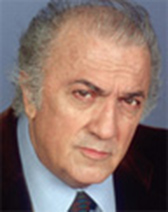
Federico Fellini
The Maestro of Dreams, Memory, and Spectacle
Born on January 20, 1920
Died on October 31, 1993
Age at death: 73
Profession: Screenwriter, Film Director, Producer
Place of Birth: Rimini, Italy
Place of Death: Rome, Italy
Federico Fellini was one of the most celebrated screenwriters and directors of Italian cinema. Throughout his lifetime, he directed 27 films and was nominated for the Academy Awards seven times, winning the Oscar on three occasions. In addition to the Academy Awards, he received numerous prestigious honors from the Cannes, Moscow, and Venice Film Festivals.
Federico Fellini was born on January 20, 1920, in Rimini, a town he would later use frequently and symbolically in his films. He spent most of his childhood and youth there. Before World War II, Rimini was a quiet seaside town; after the war, it suffered devastating destruction from heavy bombardments and was left in ruins. Although many directors later used the city as a filming location, only Fellini imbued it with metaphorical and emotional meaning in his works.
From an early age, he showed a strong interest in drawing and illustration. His years in religious boarding schools were among the most difficult periods of his student life. One of the most influential elements on his later artistic vision—circuses, clowns, and tent theaters—were passions he developed during childhood. His youth coincided with the height of fascism in Italy. During this period, he worked in many professions, including policing, journalism, and comic strip illustration.
In addition to directing films, he wrote radio shows and short comedy sketches for the famous actor Aldo Fabrizi. He also produced caricature-style pencil drawings. Although he became famous as a director, his first work that brought him recognition was actually a film poster. During Benito Mussolini’s fascist regime, he was able to express his avant-garde style openly. He wrote his earliest screenplays while working at Alleanza Cinematografica Italiana, where he met Roberto Rossellini and Ingrid Bergman. He later contributed screenplays to several Rossellini films.
After the fall of Benito Mussolini in 1944, he opened a small shop in Rome to sell his drawings. The shop was called The Funny Face Shop. He consistently cited Johann Wolfgang von Goethe as one of his greatest sources of inspiration.
In 1943, he married actress Giulietta Masina, with whom he collaborated extensively in his films. Among the actors he worked with most frequently were Marcello Mastroianni, Alberto Sordi, and Anita Ekberg.
In 1950, he co-directed his first film, Variety Lights, with Alberto Lattuada. The screenplay belonged to Fellini himself. This was followed by his first solo directorial effort, The White Sheik (1952). Starring Alberto Sordi and Brunella Bovo, the screenplay was co-written with the renowned director Michelangelo Antonioni. During the production of this film, Fellini met composer Nino Rota, who would go on to create the music for many of his films. This meeting marked a turning point in both of their careers.
Subsequent films included La Strada (1954), Il Bidone (1955), and Nights of Cabiria (1957). In 1960, he directed one of his most influential works, La Dolce Vita. Starring Marcello Mastroianni and Anita Ekberg, the film depicted the life of a young journalist navigating the decadent world of wealthy and high-society figures. With its sharp critique of moral decay and intellectual emptiness, the film drew widespread attention. It was nominated for four Academy Awards and won one.
His later masterpieces included 8½ (1963), Fellini Satyricon (1969), Roma (1972), and Amarcord (1973). In 8½, he explored the inner and outer worlds of a film director, blending reality with imagination. Fellini Satyricon offered an unconventional portrayal of the decline of the Roman Empire. In Amarcord, he emphasized humor while depicting memories from his own childhood. This succession of acclaimed films firmly established Fellini among the masters of world cinema.
Fellini often stated that his films were fragments of a whole, and that when assembled together, they revealed his own life story. He described his artistic aim as creating flawless worlds composed of light, space, and people. Although he was initially associated with the Italian Neorealist movement, he later gravitated toward fantasy-driven narratives. Known for his meticulous approach, he personally oversaw every stage of his films. His formal education was inconsistent, and he completed high school externally during the production of Amarcord.
In 1993, shortly after receiving the Academy Honorary Award, Federico Fellini passed away from a heart attack on October 31, 1993.
Films and Television Works
Screenwriter:
1990 – The Voice of the Moon
1987 – Intervista
1986 – Ginger and Fred
1983 – And the Ship Sails On
1980 – City of Women
1978 – Orchestra Rehearsal
1976 – Casanova
1973 – Amarcord
1972 – Roma
1970 – The Clowns
1969 – Block-notes of a Film Director
1969 – Fellini Satyricon
1969 – Sweet Charity
1965 – Juliet of the Spirits
1963 – 8½
1962 – Boccaccio ’70
1960 – La Dolce Vita
1957 – Nights of Cabiria
1955 – Il Bidone
1954 – La Strada
1953 – I Vitelloni
1952 – The White Sheik
1952 – The Bandit of Tacca del Lupo
1950 – Variety Lights
1950 – The Flowers of St. Francis
1950 – Path of Hope
1949 – Il Mulino del Po
1948 – Without Pity
1948 – Ways of Love
1946 – Paisan
1945 – Rome, Open City
1943 – L'ultima carrozzella
Director:
1993 – The King of Ads
1990 – The Voice of the Moon
1987 – Intervista
1986 – Ginger and Fred
1983 – And the Ship Sails On
1980 – City of Women
1978 – Orchestra Rehearsal
1976 – Casanova
1973 – Amarcord
1972 – Roma
1970 – The Clowns
1969 – Block-notes of a Film Director
1969 – Fellini Satyricon
1968 – Spirits of the Dead
1965 – Juliet of the Spirits
1963 – 8½
1962 – Boccaccio ’70
1960 – La Dolce Vita
1957 – Nights of Cabiria
1955 – Il Bidone
1954 – La Strada
1953 – I Vitelloni
1953 – Love in the City
1952 – The White Sheik
1950 – Variety Lights
Actor:
2000 – Fellini: I’m a Born Liar
1974 – We All Loved Each Other So Much
1970 – The Clowns
1970 – Alex in Wonderland
1966 – Michelangelo Antonioni: The Story of an Auteur
1948 – Ways of Love
Producer:
1950 – Variety Lights
Source: Biyografiler.com
Frequently asked questions about Federico Fellini
Who is Federico Fellini?, Federico Fellini biography, Federico Fellini life story, Federico Fellini age, Federico Fellini facts, Federico Fellini birthplace, Federico Fellini photos, Federico Fellini videos, Federico Fellini career
Related Biographies

Lamine Yamal
Professional footballer

Erling Haaland
Professional footballer

Keanu Reeves
Actor

Kylian Mbappe
Professional footballer

Austin Abrams
Actor

Bad Bunny
Rapper, Songwriter


Hongjoong
Singer, Rapper, Songwriter, Composer

Ludacris
Rapper, Actor

Kwon Eunbi
Singer

Sarah Wayne Callies
Actress, Screenwriter, Producer, Director

LaTavia Roberson
Singer, Actress, Entrepreneur

Carlos Slim Helu
Businessperson, CEO
Austin Abrams
Actor
Kylian Mbappe
Professional footballer

Nicki Minaj
Rapper, Singer, Songwriter, Actress

Alexander Hamilton
Statesman, Lawyer, Economist

Bruce Lee
Actor, Philosopher