
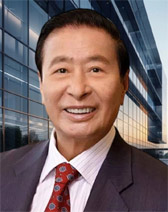
Lee Shau Kee
One of Hong Kong’s most powerful real estate tycoons and a defining architect of the city’s property empire.
Born on February 20, 1928
Died on March 17, 2025
Age at death: 97
Profession: Businessperson, Investor
Place of Birth: Shunde, Guangdong, China
Place of Death: Hong Kong
Lee Shau Kee, also known by his Chinese name Li Zhaoji, was a Hong Kong billionaire businessman, investor, and philanthropist who rose from modest beginnings to become one of Asia’s most influential property magnates. Recognized for his strategic foresight in real estate development and financial investments, he built a commercial empire that reshaped Hong Kong’s skyline. Frequently ranked among the wealthiest individuals in Asia alongside figures such as Li Ka-shing, Lee Shau Kee became synonymous with Hong Kong’s post-war economic transformation.
Early Life and Background
Lee Shau Kee was born on February 20, 1928, in Shunde, Guangdong Province, China, into a financially struggling family. His childhood was marked by economic hardship; at times, the family could afford fish or meat only twice a month. From an early age, he assisted in his family’s small business, gaining firsthand exposure to trade and financial discipline. These formative years cultivated in him an acute sense of market awareness and risk calculation.
In 1948, amid political and economic upheaval in mainland China, Lee Shau Kee relocated to Hong Kong. The move proved decisive. At the time, Hong Kong was emerging as a commercial hub attracting entrepreneurs from across China. Like many migrants of his generation, including contemporaries who would later shape Asia’s economic landscape, he began rebuilding his life from scratch in a rapidly transforming colonial city.
Career Beginnings
During the 1950s, Hong Kong experienced an unprecedented construction boom fueled by population growth and industrial expansion. Recognizing the enormous potential of property development, Lee Shau Kee entered the real estate sector. In 1958, he co-founded Sun Hung Kai Properties alongside two partners, establishing what would become one of Hong Kong’s largest property development companies. The firm played a crucial role in shaping residential and commercial infrastructure during a period of explosive urban growth.
His strategic instincts and long-term vision quickly distinguished him within the competitive market. Known for meticulous planning and disciplined capital allocation, he developed a reputation as a cautious yet ambitious investor, capable of navigating both boom cycles and downturns.
Henderson Land Development and Expansion
In 1976, Lee Shau Kee founded Henderson Land Development, marking a new chapter in his entrepreneurial career. The company rapidly grew into one of Hong Kong’s leading real estate conglomerates, with a vast portfolio spanning residential complexes, shopping malls, office towers, and mixed-use developments. Henderson became a central pillar of Hong Kong’s property sector and contributed significantly to the city’s urban density and architectural profile.
Often referred to by the affectionate nickname “Fourth Uncle” due to being the fourth among his siblings, Lee Shau Kee cultivated an image of both authority and approachability within business circles. His investments extended beyond property. He held major stakes in Miramar Hotel and Investment and Hong Kong and China Gas Company, diversifying his wealth across hospitality, utilities, and infrastructure. This diversification strategy insulated his empire from volatility in any single sector.
In 2019, he retired from active management, transferring leadership of Henderson Land Development to his two sons. The succession marked the continuation of a family-controlled business structure that had defined his corporate philosophy for decades.
Wealth and Global Recognition
For many years, Lee Shau Kee appeared prominently in Forbes billionaire rankings. In February 2025, he was listed with an estimated net worth of $29.2 billion, making him the second richest individual in Hong Kong after Li Ka-shing and ranking him 89th globally. His fortune symbolized not only personal achievement but also the immense scale of Hong Kong’s real estate economy.
Media frequently described him as “Hong Kong’s biggest property tycoon,” a title reflecting his influence in shaping land use, urban expansion, and investment patterns in one of the world’s most densely populated cities.
Philanthropy and Public Honors
Beyond commerce, Lee Shau Kee became widely respected for his philanthropic initiatives. He donated extensively to educational institutions in Hong Kong and mainland China, establishing scholarships, research funds, and development programs aimed at empowering young professionals. His contributions supported universities, academic research centers, and entrepreneurship initiatives designed to strengthen future generations.
In recognition of his service to society, he was awarded the Grand Bauhinia Medal in 2007, Hong Kong’s highest civilian honor. The award acknowledged not only his economic contributions but also his sustained commitment to public welfare and education.
Personal Life
Lee Shau Kee married Lau Wai-kuen, a Hong Kong beauty pageant winner, in 1958. The marriage ended in divorce in 1985. Together, they had five children: three daughters—Pui Ling Lee, Pui Man Lee, and Pui Yee Lee—and two sons, Martin Lee Ka-shing and Peter Lee Ka-kit. His sons later assumed significant leadership roles within the family’s corporate empire, ensuring continuity of management and strategic direction.
Despite his immense wealth and influence, Lee Shau Kee maintained a relatively private personal life following his divorce and did not remarry.
Death
Lee Shau Kee passed away on March 17, 2025, in Hong Kong at the age of 97. His death marked the end of an era in Hong Kong’s property industry. He left behind a powerful conglomerate, a multibillion-dollar fortune, and a philanthropic legacy that continued to shape educational and social development initiatives long after his passing.
Source: Biyografiler.com
Frequently asked questions about Lee Shau Kee
Who is Lee Shau Kee?, Lee Shau Kee biography, Lee Shau Kee life story, Lee Shau Kee age, Lee Shau Kee facts, Lee Shau Kee birthplace, Lee Shau Kee photos, Lee Shau Kee videos, Lee Shau Kee career
Related Biographies

Lamine Yamal
Professional footballer

Erling Haaland
Professional footballer

Kylian Mbappe
Professional footballer

Bad Bunny
Rapper, Songwriter

Austin Abrams
Actor

Brad Pitt
Actor


Hongjoong
Singer, Rapper, Songwriter, Composer

Ludacris
Rapper, Actor

Kwon Eunbi
Singer

Sarah Wayne Callies
Actress, Screenwriter, Producer, Director

LaTavia Roberson
Singer, Actress, Entrepreneur

Winston Churchill
Statesman, Writer, Historian

Kim Jong-un
Politician
Austin Abrams
Actor

Sydney Sweeney
Actress
Bad Bunny
Rapper, Songwriter

Jensen Huang
Entrepreneur, CEO