
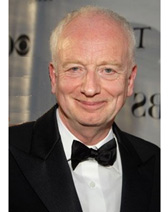
Ian McDiarmid
Scottish actor and Tony Award winner, internationally known for portraying Emperor Palpatine and Darth Sidious in the Star Wars franchise.
Born on August 11, 1944
Age: 82
Profession: Actor
Place of Birth: Carnoustie, Angus, Scotland, United Kingdom
Ian McDiarmid (born August 11, 1944) is a Scottish film, television, and theater actor and director. He is internationally recognized for portraying Emperor Palpatine, also known as Darth Sidious, in the Star Wars franchise, beginning with Star Wars: Episode VI – Return of the Jedi (1983). A classically trained actor, he has performed extensively in productions of plays by William Shakespeare, including Hamlet, The Tempest, King Lear, and The Merchant of Venice. He also served as joint artistic director of London's Almeida Theatre from 1990 to 2002. His theatrical achievements include the Laurence Olivier Award for Best Actor and the 2006 Tony Award for Best Featured Actor in a Play for Faith Healer.
Early Life and Background
Ian McDiarmid was born on August 11, 1944, in Carnoustie, Angus, Scotland. He developed an interest in theater during childhood and became fascinated with live performance after attending a production of King Lear when he was approximately five years old.
Although acting attracted his interest from an early age, his initial university education was not in the performing arts. He attended the University of St Andrews, where he studied psychology and graduated with a Master of Arts degree.
After completing his university education, McDiarmid decided to pursue professional acting. He enrolled at the Royal Scottish Academy of Music and Drama in Glasgow, the institution now known as the Royal Conservatoire of Scotland.
During his training, he studied acting techniques, voice, movement, dramatic interpretation, and classical theater. He received the academy's Gold Medal in recognition of his performance during his studies.
Early Theater Career
Ian McDiarmid began his professional theater career in 1972 with a production of Hamlet at the Open Space Theatre in London.
In 1974, he joined the Royal Shakespeare Company (RSC), one of Britain's principal classical theater institutions. His work with the company provided opportunities to perform in productions of Shakespearean plays and other classical dramas.
During the following years, McDiarmid appeared in productions of The Tempest, King Lear, The Merchant of Venice, and other works by William Shakespeare.
His theatrical repertoire also included modern and contemporary drama. He became known for performing characters involving complicated motivations, political authority, psychological conflict, and moral ambiguity.
McDiarmid worked with major British theater companies and appeared in productions in London and other cities. His experience in repertory theater formed the foundation of a career that continued alongside his later film and television work.
Royal Shakespeare Company and Classical Theater
Throughout the 1970s and 1980s, Ian McDiarmid continued his involvement in classical theater, particularly through productions associated with the Royal Shakespeare Company.
His experience included Shakespearean tragedies and comedies, with performances requiring different approaches to dramatic language, characterization, and staging.
He also appeared in theatrical productions of works by dramatists such as Anton Chekhov, Christopher Marlowe, and Brian Friel.
In the early 1980s, McDiarmid gained recognition for his performance in Insignificance, a play by Terry Johnson that imagines an encounter among fictionalized versions of historical figures.
He received the Laurence Olivier Award for Best Actor in a New Play in 1982 for his work in the production.
The recognition reflected his established position in British theater before he became internationally associated with the Star Wars films.
Star Wars: Return of the Jedi (1983)
In 1983, Ian McDiarmid appeared as Emperor Palpatine in Star Wars: Episode VI – Return of the Jedi, directed by Richard Marquand and produced by George Lucas.
The film was the concluding installment of the original Star Wars trilogy, following Star Wars: Episode IV – A New Hope (1977) and Star Wars: Episode V – The Empire Strikes Back (1980).
McDiarmid portrayed the Galactic Emperor, the ruler of the Empire and the Sith master of Darth Vader. His character attempts to persuade Luke Skywalker, played by Mark Hamill, to embrace the dark side of the Force.
The film's cast also included Harrison Ford as Han Solo, Carrie Fisher as Princess Leia, David Prowse as the physical performer of Darth Vader, and James Earl Jones as Vader's voice.
Although McDiarmid was only thirty-seven when he was cast, extensive makeup transformed him into an elderly, disfigured ruler. The character's visual appearance, distinctive voice, and controlling personality became central elements of his portrayal.
The Emperor's confrontation with Luke Skywalker and Darth Vader formed a principal part of the film's conclusion.
Return of the Jedi introduced McDiarmid to an international cinema audience and established his association with one of the franchise's principal antagonists.
Emperor Palpatine and Darth Sidious
The character portrayed by Ian McDiarmid in the Star Wars films has two closely connected identities: Emperor Palpatine and Darth Sidious.
Palpatine begins his political career as a senator representing Naboo in the Galactic Republic. Through political manipulation and the exploitation of military crises, he becomes Supreme Chancellor before eventually establishing the Galactic Empire.
Darth Sidious is his identity as a Sith Lord, a practitioner of the dark side of the Force who secretly directs events intended to destroy the Jedi Order and consolidate political power.
McDiarmid developed distinctions between the character's public political personality and his concealed identity as a Sith master. His portrayal uses changes in vocal tone, facial expression, posture, and behavior to distinguish the different aspects of the character.
The role became one of the defining performances of his screen career and continued across several decades of Star Wars productions.
Return to Star Wars: The Phantom Menace (1999)
Sixteen years after his appearance in Return of the Jedi, Ian McDiarmid returned to the franchise in Star Wars: Episode I – The Phantom Menace (1999).
The film was written and directed by George Lucas and introduced a prequel trilogy exploring events preceding the establishment of the Galactic Empire.
McDiarmid portrayed Senator Palpatine of Naboo and his concealed Sith identity, Darth Sidious. The story follows Palpatine's political maneuvering during a crisis involving the Trade Federation and the Galactic Republic.
The cast included Liam Neeson, Ewan McGregor, Natalie Portman, Jake Lloyd, and Samuel L. Jackson.
McDiarmid's return allowed him to portray a younger version of the character, without the extensive aging makeup required for his appearance in the original trilogy.
His performance established the connection between Palpatine's political ambitions and the larger conflict between the Jedi and the Sith.
Attack of the Clones (2002)
In Star Wars: Episode II – Attack of the Clones (2002), Ian McDiarmid reprised the role of Supreme Chancellor Palpatine and Darth Sidious.
The film takes place during a period of political instability in the Galactic Republic. Palpatine uses the growing conflict between the Republic and separatist movements to obtain expanded emergency powers.
The story also follows Anakin Skywalker, played by Hayden Christensen, whose relationship with Palpatine becomes increasingly significant.
The film starred Ewan McGregor, Natalie Portman, Christopher Lee, and Samuel L. Jackson.
McDiarmid's portrayal emphasized Palpatine's outward appearance as a statesman while revealing his secret involvement in the conflict threatening the Republic.
Revenge of the Sith (2005)
In 2005, Ian McDiarmid returned for Star Wars: Episode III – Revenge of the Sith, the concluding installment of the prequel trilogy.
The film follows the collapse of the Galactic Republic, the destruction of the Jedi Order, and Anakin Skywalker's transformation into Darth Vader.
Palpatine plays a central role in these events by manipulating Anakin and presenting himself as the only person capable of helping him prevent personal tragedy.
McDiarmid's character reveals his identity as Darth Sidious and confronts Jedi Master Mace Windu, portrayed by Samuel L. Jackson.
Following the confrontation, Palpatine declares the reorganization of the Republic into the Galactic Empire and assumes the position of Emperor.
McDiarmid performed scenes involving lightsaber combat, political speeches, and the character's physical transformation.
His work in Revenge of the Sith connected the earlier political portrayal of Palpatine with the elderly Emperor introduced in Return of the Jedi.
He received a Saturn Award nomination for Best Supporting Actor for his performance.
The Empire Strikes Back: Special Edition
Although Emperor Palpatine appeared in the original theatrical release of Star Wars: Episode V – The Empire Strikes Back in 1980, Ian McDiarmid did not portray the character in that version.
The Emperor's original appearance used footage of actress Marjorie Eaton, with the character voiced by Clive Revill.
For the film's 2004 DVD release, the scene was revised, and McDiarmid recorded a new performance as Emperor Palpatine.
The revised sequence established greater visual and performance continuity between the original Star Wars trilogy and the prequel films.
The Rise of Skywalker (2019)
In 2019, Ian McDiarmid returned as Emperor Palpatine in Star Wars: The Rise of Skywalker, directed by J. J. Abrams and released as the final installment of the Star Wars sequel trilogy.
The film reunited characters introduced in Star Wars: The Force Awakens (2015) and Star Wars: The Last Jedi (2017).
McDiarmid portrayed a resurrected version of Palpatine who operates from the hidden Sith world of Exegol and attempts to regain control over the galaxy.
The principal cast included Daisy Ridley as Rey, Adam Driver as Kylo Ren, John Boyega as Finn, and Oscar Isaac as Poe Dameron.
The film revealed Palpatine's relationship to Rey and connected the character to events involving the First Order and the Sith Eternal.
McDiarmid's appearance marked his return to the role sixteen years after the conclusion of the prequel trilogy.
Star Wars Television and Voice Acting
In addition to his film appearances, Ian McDiarmid has portrayed or voiced Emperor Palpatine in several Star Wars television productions.
In 2018, he provided the character's voice for Star Wars Rebels, an animated series set during the years preceding the original Star Wars trilogy.
His voice work included episodes involving Ezra Bridger and the Emperor's attempts to exploit the mysterious World Between Worlds.
In 2022, McDiarmid appeared as Emperor Palpatine in the final episode of Obi-Wan Kenobi, the live-action Disney+ series starring Ewan McGregor and Hayden Christensen.
That same year, he voiced Darth Sidious in an episode of Star Wars: Tales of the Jedi.
He also voiced Palpatine in episodes of Star Wars: The Bad Batch during the period from 2021 to 2024, with new dialogue recorded for appearances in 2023 and 2024.
His contributions to the franchise have also included video games and other related media, including voice work in Angry Birds Star Wars II (2013).
Other Film Roles
Outside the Star Wars franchise, Ian McDiarmid has appeared in several films across different genres.
In 1981, he portrayed Brother Jacopus in Dragonslayer, a fantasy adventure film directed by Matthew Robbins.
In 1983, he played Professor Andreev in Gorky Park, a mystery thriller directed by Michael Apted and starring William Hurt and Lee Marvin.
In 1988, he appeared as Arthur in Dirty Rotten Scoundrels, a comedy starring Steve Martin and Michael Caine.
In 1995, McDiarmid portrayed Ambrose in Restoration, a historical drama directed by Michael Hoffman and starring Robert Downey Jr..
In 1999, he played Dr. Thomas Lancaster in Sleepy Hollow, a supernatural horror film directed by Tim Burton and starring Johnny Depp and Christina Ricci.
He subsequently appeared as Sir George Goldie in The Lost City of Z (2016), directed by James Gray and starring Charlie Hunnam, Robert Pattinson, and Sienna Miller.
These roles formed part of a screen career that developed alongside his continuing involvement in British theater.
Television Career Beyond Star Wars
Ian McDiarmid has also portrayed historical and fictional characters in British television dramas.
In 2003, he played Sir Edward Hyde in Charles II: The Power and the Passion, a historical drama about the reign of King Charles II.
In 2004, he appeared as Professor Fred Roberts in Spooks, the British espionage series also known internationally as MI-5.
In 2005, he portrayed Lord Burghley in Elizabeth I, an HBO and Channel 4 historical miniseries starring Helen Mirren as Queen Elizabeth I.
In 2008, McDiarmid starred as Henry Fielding in City of Vice, a historical crime drama examining the development of policing in eighteenth-century London.
In 2009, he portrayed Denis Thatcher, husband of British Prime Minister Margaret Thatcher, in Margaret, a television film examining the final stages of Thatcher's premiership.
In 2014, McDiarmid played British Foreign Secretary Edward Grey in 37 Days, a historical miniseries depicting the diplomatic crisis preceding World War I.
That same year, he appeared as Anton, also known as Philip Carvel, in Utopia, a British conspiracy thriller.
In 2018, he portrayed King Pellenor in Britannia, a historical fantasy series set during the Roman conquest of Britain.
Artistic Director of the Almeida Theatre
From 1990 to 2002, Ian McDiarmid served as joint artistic director of the Almeida Theatre in Islington, London, alongside director Jonathan Kent.
The Almeida became an established venue for productions of classical and contemporary drama during their leadership.
McDiarmid and Kent developed a theatrical program that included British and international playwrights, attracting prominent actors and directors to the venue.
The theater presented productions of works by Harold Pinter, Edward Albee, Eugene O'Neill, Tennessee Williams, and other major dramatists.
The Almeida's productions during this period received recognition from theater critics and awards organizations. Several productions transferred to London's West End or toured internationally.
McDiarmid also continued acting while participating in the theater's management and artistic planning.
His work as joint artistic director formed a substantial part of his professional career beyond his film performances.
Faith Healer and the Tony Award
In 2006, Ian McDiarmid appeared on Broadway in a revival of Faith Healer, a play by Irish dramatist Brian Friel.
The production was directed by Jonathan Kent and starred Ralph Fiennes as Francis Hardy, a traveling faith healer, Cherry Jones as Grace, and McDiarmid as Teddy, Hardy's manager.
The play consists of monologues in which the characters offer different perspectives on their shared experiences and personal relationships.
McDiarmid's portrayal of Teddy received substantial recognition from American theater critics.
At the 60th Tony Awards in June 2006, he won the Tony Award for Best Featured Actor in a Play.
He also received the Theatre World Award for his Broadway debut.
The production marked an important stage in his international theater career, bringing his work before Broadway audiences after decades of professional performances in Britain.
Later Stage Productions
Following his Broadway success, Ian McDiarmid continued appearing in major theatrical productions.
In 2012, he appeared in Timon of Athens at the Royal National Theatre in London, portraying the title character in Shakespeare's tragedy.
The production was directed by Nicholas Hytner and presented the story in a contemporary setting emphasizing financial power, personal relationships, and social inequality.
In 2016, McDiarmid portrayed Enoch Powell in What Shadows, a play by Chris Hannan examining the British politician's controversial 1968 Rivers of Blood speech and its effects on British society.
The production premiered at the Birmingham Repertory Theatre and subsequently toured.
In 2017, he appeared in The Lemon Table, a theatrical adaptation of stories by Julian Barnes. The production involved monologues and reflections on aging, relationships, and memory.
His theater work continued to include contemporary drama as well as productions of classical plays.
Acting Style and Theatrical Work
Ian McDiarmid's professional background combines classical theatrical training with film and television performance.
His stage work has frequently involved characters requiring complex interpretation of dramatic language and psychological motivation.
In the Star Wars films, his portrayal of Palpatine incorporated theatrical elements such as controlled vocal delivery, deliberate movement, and changes in facial expression.
His experience with Shakespearean drama and classical theater provided a basis for portraying characters associated with political power, ambition, deception, and conflict.
Alongside acting, his work as an artistic director involved selecting plays, overseeing productions, and collaborating with directors, designers, and performers.
Personal Life
Ian McDiarmid has generally maintained a private personal life and has rarely discussed family or romantic relationships publicly.
He has continued to divide his professional activities between theater, television, film, and appearances associated with the Star Wars franchise.
His participation in fan conventions and public events has brought him into contact with audiences familiar with his portrayal of Emperor Palpatine, while his professional theater work remains an important part of his career.
Filmography
2024 – Star Wars: The Bad Batch (Emperor Palpatine / Darth Sidious; voice acting, animated television series)
2023 – Star Wars: The Bad Batch (Emperor Palpatine / Darth Sidious; voice acting, animated television series)
2022 – Star Wars: Tales of the Jedi (Darth Sidious; voice acting, animated television series)
2022 – Obi-Wan Kenobi (Emperor Palpatine / Darth Sidious; television miniseries)
2021 – Star Wars: The Bad Batch (Emperor Palpatine; archival audio, animated television series)
2020 – Star Wars: The Clone Wars (Darth Sidious; archival audio, animated television series)
2019 – Star Wars: The Rise of Skywalker (Emperor Palpatine / Darth Sidious; feature film)
2018 – Britannia (King Pellenor; television series)
2018 – Star Wars Rebels (Emperor Palpatine / Darth Sidious; voice acting, animated television series)
2016 – The Lost City of Z (Sir George Goldie; feature film)
2014 – Utopia (Anton / Philip Carvel; television series)
2014 – 37 Days (Sir Edward Grey; television miniseries)
2009 – Margaret (Denis Thatcher; television film)
2008 – City of Vice (Henry Fielding; television series)
2005 – Elizabeth I (Lord Burghley; television miniseries)
2005 – Star Wars: Episode III – Revenge of the Sith (Supreme Chancellor Palpatine / Emperor Palpatine / Darth Sidious; feature film)
2004 – Spooks (Professor Fred Roberts; television series)
2004 – Star Wars: Episode V – The Empire Strikes Back (Emperor Palpatine; revised DVD version of the 1980 film)
2003 – Charles II: The Power and the Passion (Sir Edward Hyde; television miniseries)
2002 – Star Wars: Episode II – Attack of the Clones (Supreme Chancellor Palpatine / Darth Sidious; feature film)
1999 – Sleepy Hollow (Dr. Thomas Lancaster; feature film)
1999 – Star Wars: Episode I – The Phantom Menace (Senator Palpatine / Darth Sidious; feature film)
1999 – Great Expectations (Jaggers; television film)
1995 – Annie: A Royal Adventure! (Dr. Eli Eon; television film)
1995 – Restoration (Ambrose; feature film)
1988 – Dirty Rotten Scoundrels (Arthur; feature film)
1983 – Gorky Park (Professor Andreev; feature film)
1983 – Star Wars: Episode VI – Return of the Jedi (Emperor Palpatine; feature film)
1981 – Dragonslayer (Brother Jacopus; feature film)
1980 – The Awakening (Dr. Richter; feature film)
1980 – Richard's Things (Burglar; feature film)
1980 – Sir Henry at Rawlinson End (Reg Smeeton; feature film)
Selected Theater Productions
2017 – The Lemon Table (Stage adaptation of stories by Julian Barnes)
2016 – What Shadows (Enoch Powell)
2012 – Timon of Athens (Timon)
2006 – Faith Healer (Teddy; Broadway production)
1990s–2002 – Various productions at the Almeida Theatre, London
1982 – Insignificance (The Professor)
1970s–1980s – Productions of Hamlet, The Tempest, King Lear, and The Merchant of Venice
1972 – Hamlet (Professional stage debut, Open Space Theatre)
Major Awards and Honors
2006 – Tony Award, Best Featured Actor in a Play – Faith Healer
2006 – Theatre World Award – Faith Healer
1998 – Evening Standard Theatre Award, Special Award for Theatrical Achievement (jointly with Jonathan Kent)
1982 – Laurence Olivier Award, Best Actor in a New Play – Insignificance
Gold Medal – Royal Scottish Academy of Music and Drama
Source: Biyografiler.com
Ian McDiarmid Movies

Star Wars: The Rise of Skywalker
Release Date: December 20, 2019
Director: J.J. Abrams
Writer: Chris Terrio, J.J. Abrams
Cast: Daisy Ridley, Adam Driver, Oscar Isaac, John Boyega, Mark Hamill, Ian McDiarmid, Billy Dee Williams, Carrie Fisher, Keri Russell, Harrison Ford

Star Wars: Episode III - Revenge of the Sith
Release Date: May 19, 2005
Director: George Lucas
Writer: George Lucas
Cast: Ewan McGregor, Natalie Portman, Hayden Christensen, Ian McDiarmid, Samuel L. Jackson, Jimmy Smits, Frank Oz, Anthony Daniels, Christopher Lee

Star Wars: Episode II - Attack Of the Clones
Release Date: May 16, 2002
Director: George Lucas
Writer: George Lucas
Cast: Ewan McGregor, Natalie Portman, Hayden Christensen, Christopher Lee, Samuel L. Jackson, Frank Oz, Ian McDiarmid, Pernilla August

Star Wars: Episode I - The Phantom Menace
Release Date: May 19, 1999
Director: George Lucas
Writer: George Lucas
Cast: Liam Neeson, Ewan McGregor, Natalie Portman, Jake Lloyd, Pernilla August, Frank Oz (Sesiyle), Ian McDiarmid, Oliver Ford Davies, Hugh Quarshie
Frequently asked questions about Ian McDiarmid
Who is Ian McDiarmid?, Ian McDiarmid biography, Ian McDiarmid life story, Ian McDiarmid age, Ian McDiarmid facts, Ian McDiarmid birthplace, Ian McDiarmid photos, Ian McDiarmid videos, Ian McDiarmid career
Related Biographies





Lamine Yamal
Professional footballer

Erling Haaland
Professional footballer

Keanu Reeves
Actor

Kylian Mbappe
Professional footballer

Austin Abrams
Actor

Bad Bunny
Rapper, Songwriter

Ian Fleming
Novelist, Journalist

Ian Holm
Actor, Voice Actor

Ian McDiarmid
Actor

Ian McKellen
Actor, Voice Actor

Hyung-ki Joo
Pianist, Musician, Composer

Hosni Mubarak
Former President, Military Officer

Adewale Akinnuoye-Agbaje
Actor, Former Model

John Healey
Politician
Erling Haaland
Professional footballer
Lamine Yamal
Professional footballer

Ursula von der Leyen
Politician, Physician

Leonardo DiCaprio
Actor