
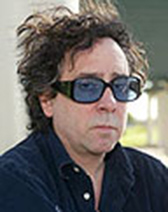
Tim Burton
Born on August 25, 1958
Age: 68
Profession: Film Director, Producer, Screenwriter
Place of Birth: Burbank, California, United States
Timothy William Burton is an American director, writer, and the creator of a highly distinctive cinematic style. He is especially known for his stop-motion animation films and for creating exaggerated, gothic, and fantastical characters that retain deeply human qualities. Among his most notable works are Beetlejuice (1988), Edward Scissorhands (1990), and The Nightmare Before Christmas (1993).
Timothy William Burton was born on August 25, 1958, as the first son of Bill Burton and Jean Erickson. From early childhood, his extraordinary imagination set him apart. Finding both home and school life difficult, he escaped the realities of everyday life by watching horror films and low-budget movies. One of the most influential figures in his early cinematic imagination was Vincent Price, whose performances in classic low-budget horror films would later strongly shape Burton’s artistic direction.
During his high school years, Burton won a Disney scholarship to attend the California Institute of the Arts, where he studied animation for three years. After completing his education, he joined Walt Disney Studios as an animator trainee. The first film project he worked on was a Ralph Bakshi adaptation of The Lord of the Rings, although he was uncredited. He later contributed artwork for The Fox and the Hound, a project that did not align with his artistic sensibilities. His darker, unconventional character designs were rejected by Disney, leaving Burton dissatisfied with his time at the studio. However, during this period, he created the poems and illustrations that would later form the foundation of The Nightmare Before Christmas.
In 1982, Burton directed his first six-minute stop-motion short film about a young boy who imagines himself to be Vincent Price. This was followed by the short film Frankenweenie (1984), starring Barret Oliver, Daniel Stern, and Shelley Duvall. Shot in black and white and inspired by James Whale’s Frankenstein, the film told the story of a child who brings his dog back to life after a fatal accident. Although praised at festivals, Disney considered it too frightening for children and shelved the project, later releasing it on video in 1992.
Despite his films not yet reaching wide audiences, Burton attracted the attention of the film industry. Actor and producer Griffin Dunne approached him to direct After Hours, but Burton withdrew voluntarily when Martin Scorsese expressed interest in directing the project due to financial difficulties during the production of The Last Temptation of the Christ.
Shortly afterward, Burton directed Pee-Wee’s Big Adventure (1985) with a budget of $7 million, achieving over $40 million in box office revenue. A fan of the band Oingo Boingo, Burton invited the group’s songwriter and lead vocalist Danny Elfman to compose the film’s music. From that point on, Burton and Elfman collaborated on every Burton film except Ed Wood (1994).
After directing television series such as Alfred Hitchcock Presents and Shelley Duvall’s Faerie Tale Theatre, Burton accepted his next major project. In 1988, he directed Beetlejuice, an unconventional comedy about a young couple struggling with the afterlife after their home is invaded by an eccentric family. Starring Alec Baldwin, Geena Davis, and Michael Keaton, the film grossed over $80 million and won the Academy Award for Best Makeup.
Burton’s ability to create visually striking films with modest budgets impressed producers, leading him to accept his first major big-budget project, Batman (1989). The London-based production faced numerous conflicts, particularly regarding casting choices. Burton insisted on casting Michael Keaton as Batman, despite criticism of Keaton’s physical appearance and comedic background. Burton argued that a heavily built actor beneath a bat costume would be illogical. He also cast Jack Nicholson as the Joker, broadening the film’s appeal to adult audiences. Upon release, Batman earned $250 million in the United States and over $400 million worldwide, redefining the superhero genre with its psychological depth and dark tone.
In 1989, Burton married German artist Lena Gieseke, but the marriage ended shortly after the filming of Batman Returns. In 1990, Burton began his long-standing collaboration with Johnny Depp by directing Edward Scissorhands, written with Caroline Thompson. Depp portrayed Edward, an artificial man left incomplete after his creator’s sudden death, leaving him with scissors for hands. The suburban setting, inspired by Burton’s hometown of Burbank, symbolically represented Burton’s own childhood alienation.
Burton returned to the Batman universe with full creative control in Batman Returns (1992). Once again starring Michael Keaton, the film featured villains portrayed by Danny DeVito (Penguin), Michelle Pfeiffer (Catwoman), and Christopher Walken. Though criticized for its dark tone and sensual imagery, the film earned $160 million worldwide. Burton subsequently stepped away from the franchise, later describing his role as producer on Batman Forever (1995) as “like a tattoo you get while drunk.”
In 1993, Burton wrote and produced The Nightmare Before Christmas, though he did not direct it due to scheduling conflicts. Directed by Henry Selick, the film was rewritten by Michael McDowell and Caroline Thompson in accordance with Burton’s original vision. His next film, Ed Wood (1994), received critical acclaim despite poor initial promotion and revived public interest in the films of Ed Wood Jr.. Due to Burton’s intense creative demands on The Nightmare Before Christmas, Danny Elfman declined to compose the score, which was instead created by Howard Shore.
Burton reunited with Elfman for Mars Attacks! (1996), a satirical science-fiction film referencing 1950s B-movies while parodying modern blockbusters like Independence Day. Despite an ensemble cast including Jack Nicholson, Pierce Brosnan, Michael J. Fox, Sarah Jessica Parker, and Rod Steiger, the film was harshly criticized in the United States but gained popularity internationally and later through television broadcasts and DVD sales.
In 1999, Burton released Sleepy Hollow, starring Johnny Depp, Michael Gough, Jeffrey Jones, Christopher Walken, and Christina Ricci. The film received generally positive reviews and won the Academy Award for Best Art Direction, marking a major turning point in Burton’s career. He followed this with Planet of the Apes (2001), a stylistic departure that achieved strong opening-week box office numbers but was critically panned. Conflicts with the studio during production fueled debates about Burton’s creative autonomy.
Burton continued his career with Big Fish (2003), Charlie and the Chocolate Factory (2005), and Corpse Bride (2005), all of which received Academy Award nominations for Best Animated Feature. In addition to filmmaking, he authored the book The Melancholy Death of Oyster Boy and Other Stories, featuring his signature outsider characters.
From 1992 to 2001, Burton was engaged to model and actress Lisa Marie. Since 2001, he has lived in London with actress Helena Bonham Carter. The couple has a son, Billy-Ray Burton, born in November 2003.
Source: Biyografiler.com
Tim Burton Movies
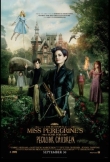
Miss Peregrine's Home For Peculiar Children
Release Date: September 30, 2016
Director: Tim Burton
Writer: Jane Goldman
Cast: Eva Green, Asa Butterfield, Samuel Jackson, Judi Dench, Rupert Everett, Allison Janney, Ella Purnell, Terence Stamp
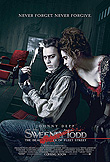
Sweeney Todd: The Demon Barber of Fleet Street
Release Date: December 21, 2007
Director: Tim Burton
Writer: Stephen Sondheim, Christopher Bond, John Logan
Cast: Johnny Depp, Helena Bonham Carter, Alan Rickman, Sacha Baron Cohen, Timothy Spall, Jamie Campbell Bower, Jayne Wisener
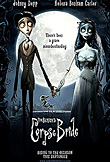
Corpse Bride
Release Date: September 23, 2005
Director: Tim Burton, Mike Johnson
Writer: John August, Pamela Pettler, Caroline Thompson
Cast: Johnny Depp, Helena Bonham Carter, Emily Watson, Tracey Ullman
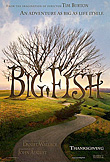
Big Fish
Release Date: December 10, 2003
Director: Tim Burton
Writer: Daniel Wallace, John August
Cast: Ewan McGregor, Albert Finney, Helena Bonham Carter, Marion Cotillard, Steve Buscemi, Billy Crudup
Frequently asked questions about Tim Burton
Who is Tim Burton?, Tim Burton biography, Tim Burton life story, Tim Burton age, Tim Burton facts, Tim Burton birthplace, Tim Burton photos, Tim Burton videos, Tim Burton career
Related Biographies


Lamine Yamal
Professional footballer

Erling Haaland
Professional footballer

Kylian Mbappe
Professional footballer

Bad Bunny
Rapper, Songwriter

Austin Abrams
Actor

Keanu Reeves
Actor


Hongjoong
Singer, Rapper, Songwriter, Composer

Ludacris
Rapper, Actor

Kwon Eunbi
Singer

Sarah Wayne Callies
Actress, Screenwriter, Producer, Director

LaTavia Roberson
Singer, Actress, Entrepreneur

Sydney Sweeney
Actress

Jodie Foster
Actress

Hayley Atwell
Actress
Austin Abrams
Actor

Benjamin Netanyahu
Politician, Statesman

Charles Leclerc
Formula 1 Driver