
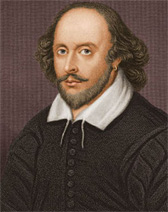
William Shakespeare
the Bard of Avon
Born on April 29, 1564
Age: 462
Profession: Poet
Place of Birth: Stratford-upon-Avon, England
William Shakespeare was born on April 29, 1564, in Stratford-upon-Avon, England.
Regarded as one of the greatest playwrights of all time, the English poet William Shakespeare reflected the most enduring characteristics of human nature through a unique poetic language in the characters he created. For this reason, he has been the most frequently staged playwright in every era and in every country since his lifetime. Despite Shakespeare’s immense fame, there are very few definite documents and reliable records concerning his life.
His father was a businessman engaged in trade. As a Renaissance poet, William Shakespeare most likely received his education at the grammar school in Stratford. At the age of eighteen, he married Anne Hathaway, who was approximately eight years older than him. Before their marriage, they had a daughter, and later twins—one boy and one girl—were born. Around this time, Shakespeare left Stratford, and there is no information about his life until 1592.
In that year, a pamphlet written by another playwright mentioned Shakespeare and even accused him of stealing other writers’ plays. From this reference, it is understood that William Shakespeare was working as both a writer and an actor in a theater company at the time. Writing an average of two plays per year, he also performed small roles in his own works. By 1594, he had become one of the leading actors of the Lord Chamberlain’s Men. In the same year, his plays began to be published.
As the success of his plays—bearing all the characteristics of the period—increased, Shakespeare’s income grew steadily. Toward the end of the reign of Queen Elizabeth I, William Shakespeare was living a prosperous life, and it is known that he purchased shares in the Globe Theatre, which was built in London in 1599 for his acting company.
After remaining in London for several more years, William Shakespeare later returned to Stratford, where he began to live again and most likely wrote his final plays. Shakespeare’s Sonnets, some of which praise a noble young man and others express his love for a woman, are poems written in an extremely sensitive and rich language.
William Shakespeare wrote many comedies and tragedies, each different from the other. In the comedy A Midsummer Night’s Dream, the inability of some simple-minded characters to put two words together after attempting to stage a play to entertain the duke reveals Shakespeare’s unique talent for comedy. In his tragedies, however, he was able to create a tension that made audiences shiver with fear.
Many other writers were skilled at writing witty comedies, romantic plays, frightening murder and revenge tragedies, or grand stories. However, none of them were as successful as Shakespeare in all of these forms at once.
In addition to this extraordinary diversity, one of the aspects audiences and readers admire most in Shakespeare’s plays is that his characters do not appear as mere “book characters.” On the contrary, these characters are so lifelike that they would be instantly recognizable if encountered in real life rather than on stage.
In fact, some of Shakespeare’s heroes are known even by people who have never seen the plays in which they appear. One of these is Sir John Falstaff, a large, sociable, and friendly man who loves pleasure and wine. He is a companion of Prince Hal in the first and second parts of the play Henry IV. In Henry V, Shakespeare included a scene describing Falstaff’s death; however, because Queen Elizabeth I wished to see this character again in another play, Falstaff reappeared in the comedy The Merry Wives of Windsor.
Among Shakespeare’s characters, one of the most famous is the Prince of Denmark, Hamlet, a personality who, just like in real life, can never be fully understood and remains open to interpretation in every era. Shakespeare expressed Hamlet’s dilemma—his hesitation between enduring suffering and ending it through suicide—with the famous line, “To be, or not to be! That is the question!”
In tragedies such as Hamlet, Macbeth, and King Lear, the central problem of the heroes is their own flaws or weaknesses. These are often unpleasant traits such as cruelty, ambition, jealousy, and selfishness. Nevertheless, William Shakespeare creates such vivid characters and presents their inner worlds and suffering with such compassion that audiences feel close to them and grieve for what happens to them.
William Shakespeare died on April 23, 1616, in Stratford, after attending a banquet together with Ben Jonson. Many of his works have been translated into Turkish and staged in Türkiye, and some have also been adapted into motion pictures.
Comedies
A Midsummer Night’s Dream is a comedy of magic and mistaken identities. Four lovers who lose their way in a forest near Athens fall under the spell of the Fairy King Oberon and his quarrelsome servant Puck. A group of craftsmen from the city also come to the forest to rehearse a play in a secluded place. They too become entangled with the fairies, leading to many confusions and comic situations. The funniest scene is when the craftsmen perform their play at Duke Theseus’s wedding feast.
Twelfth Night is also a comedy of mistaken identities. The ship of the female protagonist Viola sinks off the coast of a foreign country. Disguising herself as a man and taking the name “Cesario,” Viola enters the service of Duke Orsino. While dressed as a man, she falls in love with the Duke. The situation becomes complicated when the wealthy Countess Olivia falls in love with “Cesario.” The funniest scenes involve Sir Toby Belch and his friends playing tricks on Olivia’s steward Malvolio.
The Merchant of Venice is also a comedy, though it contains serious elements. The villain of the play is the Jewish moneylender Shylock. When the merchant Antonio cannot repay his debt, Shylock demands half a kilogram of flesh from Antonio’s body. After a tense trial scene, Antonio is saved thanks to the intelligence of a young lawyer.
Tragedies
Romeo and Juliet is the most frequently staged of all Shakespeare’s plays. It tells the tragic love story of Romeo and Juliet, the children of two hostile families living in Verona, Italy.
In Hamlet, Prince Hamlet learns that his uncle Claudius, who married his mother after his father’s death, is actually his father’s murderer. Although Hamlet decides to take revenge, he cannot bring himself to act. The play ends with the deaths of Claudius, the queen, and Hamlet himself.
King Lear is the most terrifying and perhaps the most important of Shakespeare’s tragedies. The proud and selfish King Lear banishes his loyal daughter Cordelia and divides his kingdom between Goneril and Regan. Betrayed and driven mad by regret, Lear dies holding Cordelia’s body.
Historical Plays
William Shakespeare also wrote plays based on English history. The Tragedy of King Richard III portrays the cruel and hunchbacked King Richard III. On the night before the Battle of Bosworth Field, the ghosts of his victims appear to him.
Some of the historical plays form a series: Richard II, the two parts of Henry IV, and Henry V. Prince Hal eventually becomes King Henry V and leads England to victory in France, marrying a French princess and bringing peace between the two nations.
One of Shakespeare’s most famous plays based on Roman history is Julius Caesar. In this play, the honorable Brutus joins a conspiracy to assassinate Julius Caesar in the name of freedom but later takes his own life.
Plays with Happy Endings
In his later years, William Shakespeare wrote plays that end not with death but with forgiveness. In The Winter’s Tale, King Leontes unjustly accuses his wife Hermione and abandons their daughter Perdita. Years later, the family is reunited and forgiven.
In The Tempest, the magician Prospero lives on an island with his daughter Miranda, controlling the spirit Ariel and the creature Caliban. Prospero forgives his enemies and allows Miranda to marry Prince Ferdinand. The play ends with reconciliation and return.
Hamlet / William Shakespeare
One of the unquestioned classics of world literature, Hamlet tells the story of Prince Hamlet. His father, the king, has been murdered by his brother, who then marries Hamlet’s mother. When Hamlet learns the truth from his father’s ghost, the story begins. The play explores human nature in all its complexity and includes the famous “to be or not to be” dilemma.
Excerpt
“Doubt thou the stars are fire, Doubt that the sun doth move, Doubt truth to be a liar, But never doubt I love.”
“Does love pursue fate, or does fate pursue love? No one has solved this riddle yet. The fallen great man is forgotten by those he loved, While the rising poor man finds enemies turning into friends.”
Source: Biyografiler.com
William Shakespeare Movies
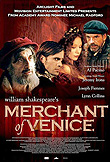
Merchant Of Venice
Release Date: February 18, 2005
Director: Michael Radford
Writer: Michael Radford, William Shakespeare
Cast: Al Pacino, Jeremy Irons, Joseph Fiennes, Lynn Collins, Zuleikha Robinson
Frequently asked questions about William Shakespeare
Who is William Shakespeare?, William Shakespeare biography, William Shakespeare life story, William Shakespeare age, William Shakespeare facts, William Shakespeare birthplace, William Shakespeare photos, William Shakespeare videos, William Shakespeare career
Related Biographies


Lamine Yamal
Professional footballer

Kylian Mbappe
Professional footballer

Erling Haaland
Professional footballer

Sam Altman
Entrepreneur, Investor, CEO

Bad Bunny
Rapper, Songwriter

Brad Pitt
Actor


Hongjoong
Singer, Rapper, Songwriter, Composer

Ludacris
Rapper, Actor

Kwon Eunbi
Singer

Sarah Wayne Callies
Actress, Screenwriter, Producer, Director

LaTavia Roberson
Singer, Actress, Entrepreneur
Erling Haaland
Professional footballer

Tim Berners Lee
Computer Scientist, Professor

Amber Heard
Actress, Model

Tim Roth
Actor, Director

Vladimir Putin
Politician, , Head of State
Brad Pitt
Actor