
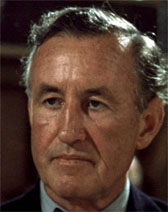
Ian Fleming
British author and former naval intelligence officer, creator of James Bond 007, and one of the most commercially successful spy fiction writers of the twentieth century.
Born on May 28, 1908
Died on August 12, 1964
Age at death: 56
Profession: Novelist, Journalist
Place of Birth: Mayfair, London, England, United Kingdom
Place of Death: Canterbury, Kent, England, United Kingdom
Ian Fleming, born Ian Lancaster Fleming on May 28, 1908, was a British novelist, journalist, and former naval intelligence officer best known for creating the fictional British secret agent James Bond, identified by the code number 007. Between 1953 and 1966, fourteen original Bond books were published under his name, comprising twelve novels and two short-story collections, with the final two books appearing after his death. His fiction has sold more than 100 million copies worldwide, making him one of the commercially successful British authors of the twentieth century. Fleming also wrote the children's novel Chitty Chitty Bang Bang and nonfiction works including The Diamond Smugglers and Thrilling Cities. His intelligence work during World War II influenced the characters, locations, and espionage operations depicted in his novels. The James Bond film franchise began with Dr. No in 1962 and had reached 25 official Eon Productions films by 2021, becoming one of cinema's longest-running franchises.
Early Life and Family Background
Ian Fleming, whose full name was Ian Lancaster Fleming, was born on May 28, 1908, in Mayfair, London, England. He came from a wealthy British family with connections to banking, finance, and politics.
His father, Valentine Fleming, was a Conservative politician and Member of Parliament for Henley. His mother, Evelyn St. Croix Rose, came from a prominent family and was involved in London society.
Fleming was the second of four sons. His brothers were Peter Fleming, Richard Fleming, and Michael Fleming. Peter later became known as a travel writer, journalist, and military officer.
The family also included a half-sister, Amaryllis Fleming, born from his mother's later relationship with the painter Augustus John. Amaryllis became a professional cellist.
Actor Christopher Lee, who later portrayed the villain Francisco Scaramanga in the James Bond film The Man with the Golden Gun, was a step-cousin of Fleming through their family connections.
In 1917, Fleming's father was killed while serving in the British Army during World War I. His death was formally announced in a notice written by Winston Churchill, who had known him through parliamentary and military circles.
Fleming was eight years old at the time of his father's death. The event affected the family and contributed to the circumstances of his upbringing.
Education at Durnford, Eton and Sandhurst
Ian Fleming began his education at Durnford School, a preparatory boarding school on the Isle of Purbeck in Dorset. He also attended Sunningdale School before entering Eton College in Berkshire.
At Eton, Fleming distinguished himself in athletics. He was particularly successful in running and won the Victor Ludorum, a school athletic distinction awarded for exceptional performance in sporting competitions.
His academic record was less consistent than his sporting achievements, and he frequently demonstrated a greater interest in athletics and extracurricular activities than in formal classroom study.
Following Eton, Fleming entered the Royal Military College, Sandhurst, intending to pursue a military career.
He eventually concluded that military training was not suited to his interests and left the institution without completing the officer-training program.
Language Studies in Europe
After leaving Sandhurst, Ian Fleming continued his education in continental Europe.
He attended educational institutions in Kitzbühel, Austria, where he studied languages and prepared for possible work in the British diplomatic service.
He subsequently pursued further studies at the University of Munich in Germany and the University of Geneva in Switzerland.
During this period, Fleming developed proficiency in French and German and became familiar with European languages, cities, and cultural environments.
His experience living and traveling outside Britain later influenced the international settings of his James Bond novels.
Early Career at Reuters
In 1931, Ian Fleming joined the Reuters news agency as a journalist.
He worked in financial and international reporting and developed experience in gathering information, interviewing sources, and writing under deadlines.
In 1933, Reuters assigned him to Moscow to cover the trial of British engineers accused of industrial espionage and sabotage by Soviet authorities.
The assignment exposed Fleming to Soviet political institutions and security procedures during the early years of Joseph Stalin's rule.
His reporting experience contributed to his knowledge of international politics, intelligence-related controversies, and the activities of foreign governments.
Fleming left Reuters in 1933 and subsequently worked in banking and stockbroking, including positions with Cull & Co. and Rowe and Pitman.
Although his financial career provided professional opportunities, journalism and international affairs remained central interests.
World War II and British Naval Intelligence
In May 1939, shortly before the outbreak of World War II, Ian Fleming was recruited into British naval intelligence.
He became personal assistant to Rear Admiral John Henry Godfrey, Director of Naval Intelligence at the British Admiralty.
Fleming served in the Royal Naval Volunteer Reserve and eventually reached the rank of commander.
His responsibilities included intelligence planning, administrative coordination, and participation in the development of special operations involving British naval and Allied intelligence organizations.
He worked with classified material and maintained professional contacts with military officials, intelligence officers, and representatives of Allied governments.
His wartime responsibilities exposed him to espionage methods, covert operations, deception techniques, and the organization of intelligence networks.
30 Assault Unit and T-Force
During World War II, Ian Fleming was involved in the development of specialized military intelligence units intended to capture sensitive documents, scientific information, and enemy intelligence material.
One such organization was 30 Assault Unit, originally associated with the designation 30 Commando.
The unit consisted of specially trained personnel whose missions involved entering enemy-controlled locations and recovering classified information, communications equipment, and technical materials.
Fleming played a significant role in planning and coordinating the unit's intelligence objectives, although he was not its regular field commander.
Members of the unit participated in operations connected with Allied military campaigns in North Africa, Sicily, Italy, and northwestern Europe.
Fleming was also involved in planning T-Force, a specialist organization tasked with identifying and securing German scientific, technological, and intelligence resources as Allied forces advanced into occupied territory.
These activities provided him with knowledge of military operations, interrogation, intelligence collection, secret documents, and the work of specialized operatives.
Elements of these experiences later appeared in his James Bond fiction, although Bond was a fictional character rather than a direct representation of Fleming's own wartime service.
Postwar Journalism and The Sunday Times
Following the end of World War II, Ian Fleming returned to journalism.
In 1945, he joined Kemsley Newspapers as foreign manager of The Sunday Times, one of Britain's leading Sunday newspapers.
His responsibilities included supervising the newspaper's international correspondents and maintaining contacts in foreign cities.
Fleming established and managed a worldwide network of journalists who provided information about international politics, economics, diplomacy, and other developments.
He remained associated with the newspaper during the years in which he began writing the James Bond novels.
His journalistic work continued to influence his interest in foreign travel, international relations, intelligence agencies, and political conflict.
Goldeneye and Life in Jamaica
During the Second World War, Ian Fleming visited Jamaica and developed a strong attachment to the island.
In 1946, he purchased land near Oracabessa on Jamaica's northern coast and built a residence that he named Goldeneye.
The property became an important part of his personal and professional life. Fleming spent extended periods there, particularly during the winter months.
He established a regular writing routine in Jamaica, where he completed much of his James Bond fiction.
The tropical landscape, beaches, and Caribbean environment influenced the settings of several Bond novels, including Live and Let Die and Dr. No.
The name Goldeneye was connected to Fleming's wartime intelligence experience, including a British contingency operation concerning Spain and Gibraltar.
The Jamaican residence later became associated with the history of James Bond and Fleming's literary career.
Creation of James Bond 007
Ian Fleming created James Bond in 1952 while staying at his Jamaican home, Goldeneye.
Bond was conceived as a fictional British intelligence officer employed by the Secret Intelligence Service, commonly known as MI6.
He was assigned the code number 007, identifying him as an agent authorized to use lethal force under certain circumstances.
Fleming developed Bond as a professional operative involved in international espionage, counterintelligence, organized crime investigations, and conflicts involving hostile foreign organizations.
The character's personality incorporated aspects of Fleming's interests in travel, automobiles, food, clothing, gambling, and military intelligence.
Fleming selected the name James Bond from that of an American ornithologist, James Bond, whose book Birds of the West Indies he had encountered in Jamaica.
He preferred the name because it sounded straightforward and unremarkable, contrasting with the dangerous situations in which the fictional agent would operate.
Casino Royale (1953)
On April 13, 1953, Ian Fleming published his first James Bond novel, Casino Royale, through British publisher Jonathan Cape.
The novel introduced James Bond as a British secret agent assigned to confront Le Chiffre, a financier associated with Soviet intelligence.
Much of the story takes place in a fictional French casino resort, where Bond attempts to defeat Le Chiffre in a high-stakes gambling contest.
The novel also introduced Vesper Lynd, a British intelligence associate whose relationship with Bond becomes central to the story.
Casino Royale combined espionage, gambling, violence, romance, and psychological tension.
Its publication marked the beginning of a literary series that Fleming continued almost annually for the remainder of his life.
Development of the James Bond Novels
Following Casino Royale, Ian Fleming published Live and Let Die in 1954 and Moonraker in 1955.
The subsequent novels expanded Bond's fictional world and introduced recurring elements such as his superior M, the secretary Miss Moneypenny, and relationships with fellow intelligence officers.
In 1956, Fleming published Diamonds Are Forever, followed by From Russia with Love in 1957.
From Russia with Love became one of his best-known novels and involved Soviet intelligence operations intended to discredit and eliminate Bond.
Its international reputation grew after the novel appeared on a list of books admired by American President John F. Kennedy.
In 1958, Fleming published Dr. No, featuring a criminal scientist operating from a remote Caribbean island.
Goldfinger followed in 1959, introducing the wealthy antagonist Auric Goldfinger and a plot involving the American gold reserve at Fort Knox.
Fleming's later novels included Thunderball (1961), The Spy Who Loved Me (1962), On Her Majesty's Secret Service (1963), and You Only Live Twice (1964).
His stories frequently combined fictional intelligence organizations with contemporary concerns about the Cold War, nuclear weapons, international crime, and technological development.
James Bond Short Stories
In addition to twelve novels, Ian Fleming wrote a series of shorter James Bond stories.
The first collection, For Your Eyes Only, appeared in 1960 and contained five stories: "From a View to a Kill," "For Your Eyes Only," "Quantum of Solace," "Risico," and "The Hildebrand Rarity."
The collection explored different aspects of Bond's assignments and personal experiences, often using more compact plots than the full-length novels.
A second collection, Octopussy and The Living Daylights, appeared posthumously in 1966.
The original edition contained the stories "Octopussy" and "The Living Daylights." Later editions incorporated "The Property of a Lady" and "007 in New York."
Several Bond film titles were subsequently drawn from these short stories, although their screen adaptations often developed substantially different plots.
The Man with the Golden Gun and Posthumous Publications
Two James Bond books appeared after Ian Fleming's death in 1964.
The Man with the Golden Gun was published in April 1965. The novel follows Bond after his return from a period of captivity and introduces the professional assassin Francisco Scaramanga.
Octopussy and The Living Daylights followed in June 1966.
These publications brought the number of original Fleming-authored Bond books to fourteen: twelve novels and two short-story collections.
Although Fleming wrote no further stories after his death, the fictional character continued appearing in novels by later authors and in film, television, comics, and video games.
Chitty Chitty Bang Bang
Outside the James Bond series, Ian Fleming wrote the children's adventure story Chitty Chitty Bang Bang: The Magical Car.
The book was inspired by stories Fleming told his son, Caspar Fleming, and concerns an extraordinary motor car capable of remarkable mechanical feats.
It was first published in 1964, with subsequent installments appearing after Fleming's death. The original editions featured illustrations by John Burningham.
The book was later adapted into the 1968 musical fantasy film Chitty Chitty Bang Bang, starring Dick Van Dyke, Sally Ann Howes, and Lionel Jeffries.
The film's screenplay was written by Roald Dahl and Ken Hughes, with songs composed by Richard M. Sherman and Robert B. Sherman.
The story also became the basis for stage musical adaptations and later children's books by other authors.
Nonfiction Books and Travel Writing
Ian Fleming published two principal nonfiction books during his lifetime.
In 1957, he released The Diamond Smugglers, a book examining international diamond smuggling and efforts to combat illicit trade.
The work drew upon Fleming's interviews with John Collard, a former intelligence officer who had become involved in investigations of diamond-smuggling networks.
In 1963, he published Thrilling Cities, a collection of travel writing based on visits to major cities around the world.
The book incorporated observations about international travel, urban culture, entertainment, restaurants, and distinctive features of the places he visited.
Its subjects included cities in Asia, Europe, and North America.
The writing reflected Fleming's professional background in international journalism and his interest in different cultures and locations.
Istanbul and the September 1955 Events
In September 1955, Ian Fleming was in Istanbul, Turkey, to cover developments connected with an international police conference and related journalistic assignments.
During his visit, large-scale violence broke out against the city's Greek community on September 6 and 7, 1955.
The events, known as the Istanbul Pogrom or the September 6–7 Events, involved attacks against homes, businesses, churches, and other properties belonging primarily to Istanbul's Greek minority.
Fleming witnessed aspects of the disturbances and later wrote a newspaper account titled "The Great Riot of Istanbul."
The article was a journalistic report rather than a separately published book.
His experiences in Istanbul contributed to his familiarity with the city, which also appeared as an important setting in From Russia with Love.
Connection with The Man from U.N.C.L.E.
During the early 1960s, Ian Fleming participated in preliminary discussions concerning an American espionage television project that eventually developed into The Man from U.N.C.L.E..
He contributed suggestions during the program's early development, including ideas associated with its principal characters.
The series was subsequently developed for television by Sam Rolfe and premiered in 1964.
It starred Robert Vaughn as Napoleon Solo and David McCallum as Illya Kuryakin.
Although Fleming was involved in early development discussions, he did not write a separate novel series titled The Man from U.N.C.L.E.
The television production became part of the broader expansion of espionage fiction and entertainment during the popularity of the James Bond films.
James Bond's Transition to Cinema
In 1962, the first official James Bond feature film, Dr. No, was released by Eon Productions.
The film was produced by Albert R. Broccoli and Harry Saltzman and directed by Terence Young.
Scottish actor Sean Connery portrayed James Bond, while Ursula Andress played Honey Ryder and Joseph Wiseman portrayed Dr. No.
The success of the film led to From Russia with Love in 1963 and Goldfinger in 1964.
The films adapted Fleming's characters and stories while introducing visual, musical, and narrative elements that became associated with the franchise.
Fleming lived to see the release of the first two films and worked with producers during the early development of the screen series.
He died shortly before the theatrical release of Goldfinger in September 1964.
Continuation of the James Bond Film Franchise
After Ian Fleming's death, the James Bond film franchise continued through further adaptations and original screen stories featuring the same central character.
Actors who portrayed Bond in official Eon Productions films included Sean Connery, George Lazenby, Roger Moore, Timothy Dalton, Pierce Brosnan, and Daniel Craig.
Subsequent films expanded the franchise beyond the plots and settings of the original novels.
By 2008, the official series had reached its twenty-second film, Quantum of Solace.
The franchise continued with Skyfall (2012), Spectre (2015), and No Time to Die (2021), bringing the total to 25 official Eon Productions films.
The broader cinematic history of James Bond also includes productions outside the Eon series, such as Casino Royale (1967) and Never Say Never Again (1983).
In February 2025, Amazon MGM Studios reached an agreement with the Broccoli family concerning creative control of the James Bond film franchise. A further film entered development, with Denis Villeneuve announced as director in 2025 and Steven Knight as screenwriter.
As of October 2026, No Time to Die remains the most recently released official James Bond feature film.
Authors Who Continued the James Bond Novels
The literary James Bond series continued after Ian Fleming's death through novels and short stories written by other authors.
In 1968, Kingsley Amis published Colonel Sun under the pseudonym Robert Markham, becoming the first major continuation novelist to publish a new full-length Bond adventure after Fleming.
Beginning in 1981, John Gardner wrote a series of Bond novels, introducing contemporary settings and developments in technology and international security.
Raymond Benson subsequently became an official continuation author, producing Bond novels and short stories during the late 1990s and early 2000s.
Later continuation novels were written by authors including Sebastian Faulks, Jeffery Deaver, William Boyd, and Anthony Horowitz.
The literary franchise also expanded into stories about Bond's youth and other characters associated with his fictional intelligence world.
These works introduced the character to new generations of readers while retaining elements established in Fleming's original novels.
Personal Life and Marriage
Ian Fleming was associated with several relationships before his marriage in 1952.
He married Anne Charteris, formerly Viscountess Rothermere, in Jamaica on March 24, 1952.
Anne came from an aristocratic British family and had previously been married to Shane O'Neill and Esmond Harmsworth, the second Viscount Rothermere.
The couple had one son, Caspar Robert Fleming, born in August 1952.
Fleming's marriage lasted until his death in 1964, although accounts of their relationship describe periods of separation and personal difficulties.
He maintained residences in Britain and Jamaica and regularly traveled between the two countries.
In London, Fleming was a member of Boodle's, a private gentlemen's club associated with British political, literary, and social life.
Health Problems and Final Years
Ian Fleming was a heavy smoker and regularly consumed alcohol, habits that contributed to serious health problems during his later years.
In 1961, he suffered a heart attack and required medical treatment and a period of recovery.
During the following years, he continued writing and revising his James Bond novels while also participating in activities related to the developing film adaptations.
His health remained a concern, particularly as the demands of his professional commitments increased.
Despite his medical problems, he completed You Only Live Twice and worked on The Man with the Golden Gun during the final period of his life.
Death
Ian Fleming died on August 12, 1964, in Canterbury, Kent, England, at the age of 56.
His death followed a heart attack, occurring several years after his first serious cardiac episode.
He was buried in the churchyard of St James' Church in Sevenhampton, Wiltshire.
His wife, Anne Charteris, died in 1981, and their son, Caspar Robert Fleming, died in 1975. Both were subsequently buried in the same family grave.
Two James Bond books were published after Fleming's death, and the continuation of the novels and film franchise extended his fictional creation well beyond his lifetime.
James Bond Novels and Short-Story Collections
1953 – Casino Royale (Novel)
1954 – Live and Let Die (Novel)
1955 – Moonraker (Novel)
1956 – Diamonds Are Forever (Novel)
1957 – From Russia with Love (Novel)
1958 – Dr. No (Novel)
1959 – Goldfinger (Novel)
1960 – For Your Eyes Only (Short-story collection)
1961 – Thunderball (Novel)
1962 – The Spy Who Loved Me (Novel)
1963 – On Her Majesty's Secret Service (Novel)
1964 – You Only Live Twice (Novel)
1965 – The Man with the Golden Gun (Novel; published posthumously)
1966 – Octopussy and The Living Daylights (Short-story collection; published posthumously)
Children's Books
1964 – Chitty Chitty Bang Bang: The Magical Car (Children's adventure novel, originally published in three volumes during 1964–1965)
Nonfiction Books
1957 – The Diamond Smugglers (Investigative nonfiction concerning international diamond smuggling)
1963 – Thrilling Cities (Travel writing and observations about international cities)
James Bond Films
Official Eon Productions Film Series:
1. 1962 – Dr. No (Sean Connery as James Bond)
2. 1963 – From Russia with Love (Sean Connery as James Bond)
3. 1964 – Goldfinger (Sean Connery as James Bond)
4. 1965 – Thunderball (Sean Connery as James Bond)
5. 1967 – You Only Live Twice (Sean Connery as James Bond)
6. 1969 – On Her Majesty's Secret Service (George Lazenby as James Bond)
7. 1971 – Diamonds Are Forever (Sean Connery as James Bond)
8. 1973 – Live and Let Die (Roger Moore as James Bond)
9. 1974 – The Man with the Golden Gun (Roger Moore as James Bond)
10. 1977 – The Spy Who Loved Me (Roger Moore as James Bond)
11. 1979 – Moonraker (Roger Moore as James Bond)
12. 1981 – For Your Eyes Only (Roger Moore as James Bond)
13. 1983 – Octopussy (Roger Moore as James Bond)
14. 1985 – A View to a Kill (Roger Moore as James Bond)
15. 1987 – The Living Daylights (Timothy Dalton as James Bond)
16. 1989 – Licence to Kill (Timothy Dalton as James Bond)
17. 1995 – GoldenEye (Pierce Brosnan as James Bond)
18. 1997 – Tomorrow Never Dies (Pierce Brosnan as James Bond)
19. 1999 – The World Is Not Enough (Pierce Brosnan as James Bond)
20. 2002 – Die Another Day (Pierce Brosnan as James Bond)
21. 2006 – Casino Royale (Daniel Craig as James Bond)
22. 2008 – Quantum of Solace (Daniel Craig as James Bond)
23. 2012 – Skyfall (Daniel Craig as James Bond)
24. 2015 – Spectre (Daniel Craig as James Bond)
25. 2021 – No Time to Die (Daniel Craig as James Bond)
Other James Bond Film Adaptations
1967 – Casino Royale (Satirical spy film starring David Niven, Peter Sellers, and Orson Welles; produced outside the official Eon Productions series)
1983 – Never Say Never Again (Sean Connery as James Bond; independently produced adaptation of Thunderball)
Selected Posthumous Literary Continuations
1968 – Colonel Sun – Kingsley Amis (writing as Robert Markham)
1981 – Licence Renewed – John Gardner
1997 – Zero Minus Ten – Raymond Benson
2008 – Devil May Care – Sebastian Faulks
2011 – Carte Blanche – Jeffery Deaver
2013 – Solo – William Boyd
2015 – Trigger Mortis – Anthony Horowitz
2018 – Forever and a Day – Anthony Horowitz
2022 – With a Mind to Kill – Anthony Horowitz
Source: Biyografiler.com
Frequently asked questions about Ian Fleming
Who is Ian Fleming?, Ian Fleming biography, Ian Fleming life story, Ian Fleming age, Ian Fleming facts, Ian Fleming birthplace, Ian Fleming photos, Ian Fleming videos, Ian Fleming career
Related Biographies

Lamine Yamal
Professional footballer

Erling Haaland
Professional footballer

Keanu Reeves
Actor

Kylian Mbappe
Professional footballer

Austin Abrams
Actor

Bad Bunny
Rapper, Songwriter

Ian Fleming
Novelist, Journalist

Ian Holm
Actor, Voice Actor

Ian McDiarmid
Actor

Ian McKellen
Actor, Voice Actor

Hyung-ki Joo
Pianist, Musician, Composer

Hosni Mubarak
Former President, Military Officer

Adewale Akinnuoye-Agbaje
Actor, Former Model

John Healey
Politician
Erling Haaland
Professional footballer
Lamine Yamal
Professional footballer

Ursula von der Leyen
Politician, Physician

Leonardo DiCaprio
Actor