
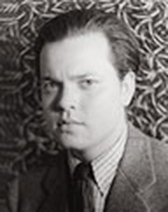
Orson Welles
Born on May 6, 1915
Died on October 10, 1985
Age at death: 70
Profession: Actor, Director, Screenwriter, Producer
Place of Birth: Kenosha, Wisconsin, United States
Place of Death: Los Angeles, California, United States
Orson Welles, widely regarded as one of the most innovative and influential figures in the history of cinema, is best known as the visionary director of *Citizen Kane*, a film that continues to be cited as the greatest ever made. Beginning his career as a theatre actor, Welles expanded his creative reach into radio broadcasting, filmmaking, directing, and producing, leaving behind an extraordinary body of work both in front of and behind the camera.
Orson Welles was born in 1915 as the second child of his family. His father was an inventor who manufactured bicycle parts, while his mother was a talented pianist. From an early age, she gave him piano and violin lessons and introduced him to the works of William Shakespeare. These artistic influences would later become clearly visible in his films and theatrical productions.
At the age of nine, Welles lost his mother Beatrice Welles, and at fifteen he lost his father Richard Welles. Following these losses, his care was assumed by Maurice Bernstein, a family friend living in Chicago. In 1931, Welles graduated from the Todd School for Boys in Woodstock, where he had already staged his first theatrical productions. Shortly thereafter, he received offers for small roles from Dublin’s Gate Theatre. By 1934, he was working as a radio actor in New York, and that same year he married fellow actress Virginia Nicholson.
Until 1936, Welles appeared in numerous theatre productions in both England and the United States. He later received an offer from the Negro Theatre Unit, where he formed his own ensemble and staged classic theatrical works. Their first production, *Macbeth*, achieved remarkable success. During this period, he prepared Marc Blitzstein’s *The Cradle Will Rock*, but on opening night the theatre was shut down on the grounds that the play contained communist propaganda. Undeterred, the actors, musicians, and audience relocated to another theatre and performed the play that same evening. The ban only fueled greater dedication, and the production quickly gained widespread attention.
In 1937, Welles co-founded the Mercury Theatre with John Houseman. Their first production was *Julius Caesar* by William Shakespeare, staged with a contemporary political interpretation. The production was met with critical acclaim and solidified Welles’s reputation as a groundbreaking theatre director.
Simultaneously active as a radio actor, stage performer, director, and producer, Welles achieved major success across multiple fields. His radio adaptation of *The War of the Worlds*, broadcast as a Halloween special, caused widespread panic when listeners believed an alien invasion was actually occurring. Hundreds of thousands of people flooded the streets. Recognizing his extraordinary ability to influence mass audiences, Hollywood soon took notice, and Welles began working on the radio program *The Campbell Playhouse*.
By 1940, Welles left *The Campbell Playhouse* and began collaborating with Herman Mankiewicz on his first feature film, *Citizen Kane*. The screenplay drew inspiration from figures such as William Randolph Hearst, Robert McCormick, and Joseph Pulitzer. Even during production, the film generated controversy, particularly due to accusations that it mirrored Hearst’s life. As a result of political pressure and threats, RKO Studios struggled to promote the film, and many theaters refused to screen it. Despite strong critical reception, the film lost money and, although nominated for nine Academy Awards, won only the Oscar for Best Original Screenplay.
Following this, Welles began preparing a new radio program for CBS while simultaneously working on another film for RKO. *The Magnificent Ambersons* was adapted from Booth Tarkington’s Pulitzer Prize–winning novel. The studio hoped to recover its previous losses, but disagreements between Welles and cinematographer Stanley Cortez led to delays and budget overruns. At the same time, Welles was also producing *Journey Into Fear*.
When he received an offer to shoot a documentary about the Rio de Janeiro Carnival, Welles abandoned his ongoing projects and traveled to Brazil. Around this time, he married renowned actress Rita Hayworth, who would play a significant role in both his personal life and career.
By 1946, Welles was producing radio programs for CBS and ABC and worked with International Film on *The Stranger*. He then began filming *The Lady from Shanghai*, starring his second wife Rita Hayworth. Once again, creative conflicts with the studio arose. Realizing that he could no longer work freely within the Hollywood studio system, Welles relocated to Europe in 1948, where he directed a low-budget Shakespeare adaptation, *Macbeth*. The following year, he appeared in *The Third Man*.
His major breakthrough as an actor came with *Othello*, which earned the Palme d’Or at the Cannes Film Festival. By 1952, Welles continued working in England, producing radio programs while maintaining an active acting career in television films and series. In 1955, he returned to directing with *Mr. Arkadin*, created with the team he had worked with on the Harry Lime radio show. During this time, he also filmed the television series *Orson Welles’ Sketchbook*.
In 1956, Welles returned to Hollywood following another radio project offer. In 1958, he directed *Touch of Evil* with his own creative team. As with many of his films, it was subject to studio cuts and was not released in its complete form.
Returning to Europe in 1959, Welles frequently traveled to Spain to work on *Don Quixote*, a project that would remain unfinished even by 1970. In 1962, he directed *The Trial*, adapted from a novel by Franz Kafka. This was followed by *The Deep* in 1967. Until 1970, he remained in Europe, producing the television series *Orson’s Bag*.
After returning to the United States in 1970, Welles sought to finance and produce his own independent projects. *Moby Dick* was among these ambitions, but it too remained incomplete. In 1973, he completed *F for Fake* and, in the same year, reunited with his former Mercury Theatre colleagues for *Treasure Island*.
In 1977, Orson Welles was honored with the Lifetime Achievement Award by the American Film Institute. His later years were largely spent seeking funding for unfinished projects. In 1984, he received the Honorary Award from the Directors Guild of America. On October 10, 1985, at the age of 70, Orson Welles died of a heart attack. Many of his ambitious projects remained unfinished, further cementing his legacy as a brilliant yet restless creative force in film history.
Source: Biyografiler.com
Orson Welles Movies
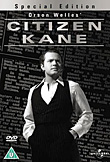
Citizen Kane
Release Date: May 1, 1941
Director: Orson Welles
Writer: Orson Welles, Herman J. Mankiewicz
Cast: Orson Welles, Joseph Cotten, Dorothy Comingore, Agnes Moorehead, Ruth Warrick, Ray Collins, Erskine Sanford
Frequently asked questions about Orson Welles
Who is Orson Welles?, Orson Welles biography, Orson Welles life story, Orson Welles age, Orson Welles facts, Orson Welles birthplace, Orson Welles photos, Orson Welles videos, Orson Welles career
Related Biographies


Lamine Yamal
Professional footballer

Kylian Mbappe
Professional footballer

Erling Haaland
Professional footballer

Sam Altman
Entrepreneur, Investor, CEO

Austin Abrams
Actor

Bad Bunny
Rapper, Songwriter


Hongjoong
Singer, Rapper, Songwriter, Composer

Ludacris
Rapper, Actor

Kwon Eunbi
Singer

Sarah Wayne Callies
Actress, Screenwriter, Producer, Director

LaTavia Roberson
Singer, Actress, Entrepreneur

Pedro Sanchez
Politician
Lamine Yamal
Professional footballer

Adam Sandler
Actor

Cillian Murphy
Actor
Austin Abrams
Actor

Brad Pitt
Actor