
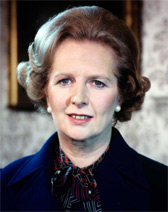
Margaret Thatcher
The Iron Lady | Prime Minister of the United Kingdom
Born on October 12, 1925
Died on April 8, 2013
Age at death: 88
Profession: Politician, Former Head of State
Place of Birth: Grantham, England
Place of Death: London, England
Margaret Thatcher, widely known by the enduring nickname “The Iron Lady,” was one of the most influential and controversial political figures in British history, serving as Prime Minister of the United Kingdom for more than a decade.
Margaret Thatcher was born on October 13, 1925, in the town of Grantham, England. Her birth name was Margaret Hilda Roberts, and she was the daughter of a grocer, Alfred Roberts, who was also active in local politics. Her father’s strong Methodist beliefs and sense of discipline played a decisive role in shaping her character and worldview.
After completing her primary and secondary education with distinction, she chose Somerville College, Oxford, for her university studies, where she specialized in chemistry. During her years at Oxford, she maintained her strict Methodist faith and became increasingly involved in politics. In 1946, she was elected president of the Oxford University Conservative Association, marking an early milestone in her political career.
Encouraged by her father’s political involvement, Margaret Thatcher entered active politics at a young age. In 1950, she ran as a Conservative Party candidate in general elections. The following year, she married the wealthy businessman Denis Thatcher, after which she adopted the surname Thatcher.
In 1959, she won the parliamentary seat for Finchley and entered the House of Commons. Although she held several progressive views that were uncommon among Conservative members—such as supporting the decriminalization of homosexuality, the abolition of corporal punishment, the legalization of abortion, and open parliamentary sessions—she also demonstrated firm conservative convictions by defending the death penalty and openly accusing the Labour Party of communist tendencies.
In 1967, she first became responsible for transportation and later, following the Conservative victory in the 1970 general elections, was appointed Secretary of State for Education. One of her earliest and most controversial decisions was the abolition of free milk for children aged seven to eleven, a move that earned her the public nickname “the milk snatcher.”
After Conservative Party leader Edward Heath lost the 1974 elections, Margaret Thatcher, dissatisfied with his economic policies, decided to challenge the party leadership. On February 11, 1975, she ran for party leader and, to widespread surprise, won the election. Her firm opposition to the Labour Party played a major role in weakening the ruling government, and following the collapse of the James Callaghan administration, she became Prime Minister in 1979.
Although conservative in ideology, Margaret Thatcher pursued economically liberal policies. Despite rising unemployment and inflation, she increased tax rates, drawing intense criticism from the opposition. Between 1978 and 1983, industrial production declined by 30 percent, and unemployment rose to nearly five percent, weakening her government’s standing. However, Britain’s victory over Argentina in the 1982 Falklands War restored public confidence, leading the Conservative Party to a decisive victory in the 1983 general elections.
The worsening economic climate fueled severe tensions between politicians and trade unions, most notably during the major miners’ strike of 1984. The outcome of these confrontations favored the Conservative government and marked the beginning of the collapse of the British trade union system. In the same year, the IRA, dissatisfied with her economic policies, carried out an assassination attempt against her, which she survived.
A strong supporter of privatization, Margaret Thatcher implemented policies that transferred many public enterprises into private ownership. These reforms gained widespread public approval and contributed to another Conservative victory in the 1987 general elections. She thus became the only British Prime Minister since Lord Liverpool to serve three consecutive terms.
However, high interest rates, the introduction of the poll tax—widely criticized as a tax levied on individuals rather than income—and the loss of support from business leaders gradually eroded her political standing. Although she was required to remain in office until the next election, internal party opposition intensified. On November 22, 1990, unable to withstand mounting pressure, she resigned as leader of her party of her own accord.
Following the end of her political career, she was granted the title of Baroness, which enabled her to take a seat in the House of Lords. From that point onward, she withdrew from active politics in the House of Commons.
Margaret Thatcher died on the morning of April 8, 2013, at her home in London after suffering a stroke.
Awards and Honors:
Lady of the Order of the Garter
Order of Merit
Member of Her Majesty’s Privy Council
Fellow of the Royal Society
Honorary Member of the Carlton Club, the only woman granted full membership rights
Presidential Medal of Freedom (United States)
Republican Senatorial Medal of Freedom (United States)
Ronald Reagan Freedom Award (United States)
Source: Biyografiler.com
Frequently asked questions about Margaret Thatcher
Who is Margaret Thatcher?, Margaret Thatcher biography, Margaret Thatcher life story, Margaret Thatcher age, Margaret Thatcher facts, Margaret Thatcher birthplace, Margaret Thatcher photos, Margaret Thatcher videos, Margaret Thatcher career

Lamine Yamal
Professional footballer

Kylian Mbappe
Professional footballer

Erling Haaland
Professional footballer

Sam Altman
Entrepreneur, Investor, CEO

Austin Abrams
Actor

Bad Bunny
Rapper, Songwriter


Hongjoong
Singer, Rapper, Songwriter, Composer

Ludacris
Rapper, Actor

Kwon Eunbi
Singer

Sarah Wayne Callies
Actress, Screenwriter, Producer, Director

LaTavia Roberson
Singer, Actress, Entrepreneur

Pedro Sanchez
Politician

Adam Sandler
Actor

Cillian Murphy
Actor
Lamine Yamal
Professional footballer
Austin Abrams
Actor

Brad Pitt
Actor