
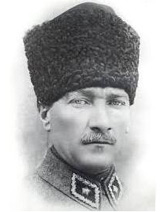
Ataturk
Founder of the Republic of Turkey and a visionary reformer
Born on May 19, 1881
Age: 145
Profession: Statesman, Military Commander
Place of Birth: Thessaloniki
Atatürk's short biography. For a more detailed biography, see: Mustafa Kemal ATATÜRK.
Early Life and EducationMustafa Kemal Atatürk was born in 1881 in Selanik (modern-day Thessaloniki), then part of the Ottoman Empire. He was the son of Ali Rıza Bey and Zübeyde Hanım. From an early age, he showed exceptional intelligence, discipline, and determination. After briefly attending a civilian school, he enrolled in military education, which would shape both his character and his future.
He entered the Selanik Military Secondary School, where his mathematics teacher Mustafa Efendi added the name “Kemal,” meaning perfection, to distinguish him among his peers. He later continued his studies at the Manastır Military High School, where he developed a deep interest in history, literature, and political thought, influenced by writers such as Namık Kemal.
Military Career and the National StruggleMustafa Kemal Atatürk graduated from the Ottoman Military Academy and served as an officer in various regions of the empire. His leadership abilities became evident during the World War I campaigns, particularly at Gallipoli, where his strategic brilliance earned him national recognition.
Following the defeat of the Ottoman Empire, he emerged as the leader of the Turkish National Movement. In 1919, he began organizing resistance against foreign occupation, uniting the nation around the goal of independence. Under his command, the Turkish War of Independence was successfully concluded, leading to the establishment of a sovereign state.
Founder of the Republic of TurkeyOn 29 October 1923, Mustafa Kemal Atatürk proclaimed the Republic of Turkey and became its first president. He fundamentally transformed the political, legal, social, and cultural structure of the country, guiding Turkey from a collapsing empire into a modern nation-state.
His reforms included the abolition of the sultanate and caliphate, the adoption of secular governance, equality before the law, educational reform, the introduction of the Latin-based Turkish alphabet, and expanded rights for women. These reforms aimed to create a rational, progressive, and independent society.
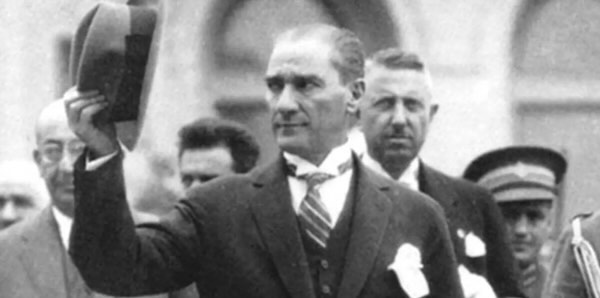
Principles and Reforms
Mustafa Kemal Atatürk articulated six core principles—Republicanism, Nationalism, Populism, Statism, Secularism, and Reformism—which became the foundation of the Turkish state. He believed that sovereignty belonged unconditionally to the people and that progress depended on science, reason, and education.
He emphasized peace at home and peace in the world, rejecting imperialism while respecting the independence of other nations. His vision was not only national but also universal, inspiring leaders and movements far beyond Turkey’s borders.
Personal Life and CharacterMustafa Kemal Atatürk was known for his intellectual curiosity, love of reading, and deep interest in history, philosophy, and science. Although he married Latife Uşşaki in 1923, the marriage ended in divorce in 1925. He never remarried and dedicated his life entirely to the nation.
He adopted several children, including Sabiha Gokcen and Ülkü Adatepe, reflecting his strong belief in education and the future of younger generations. He valued merit, discipline, and independent thinking above all else.
Death and LegacyMustafa Kemal Atatürk passed away on 10 November 1938 in Istanbul. His death was mourned not only in Turkey but around the world. He left behind a secular, independent republic and a vision of continuous modernization.
Remembered as a soldier, statesman, reformer, and visionary leader, Mustafa Kemal Atatürk remains one of the most influential figures of the twentieth century. His ideas, reforms, and principles continue to shape the identity and direction of modern Turkey.
Source: Biyografiler.com
Ataturk Videos
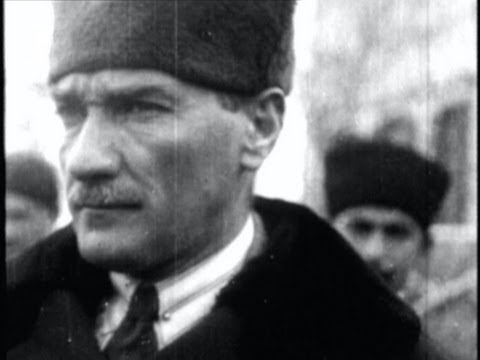


Frequently asked questions about Ataturk
Who is Ataturk?, Ataturk biography, Ataturk life story, Ataturk age, Ataturk facts, Ataturk birthplace, Ataturk photos, Ataturk videos, Ataturk career
Related Biographies

Lamine Yamal
Professional footballer

Sam Altman
Entrepreneur, Investor, CEO

Kylian Mbappe
Professional footballer

Erling Haaland
Professional footballer

Alice Weidel
Politician, Economist

Giorgia Meloni
Politician, Journalist


Hongjoong
Singer, Rapper, Songwriter, Composer

Ludacris
Rapper, Actor

Kwon Eunbi
Singer

Sarah Wayne Callies
Actress, Screenwriter, Producer, Director

LaTavia Roberson
Singer, Actress, Entrepreneur
Lamine Yamal
Professional footballer

Austin Abrams
Actor

Eliezer Yudkowsky
Researcher, Writer

Charles Leclerc
Formula 1 Driver

Recep Tayyip Erdogan
Politician

Ilya Sutskever
Computer Scientist, Researcher