
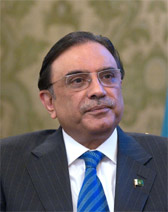
Asif Ali Zardari
Political leader of the Pakistan Peoples Party and twice-serving President of Pakistan
Born on July 26, 1955
Age: 71
Profession: Politician, President
Place of Birth: Karachi, Pakistan
Asif Ali Zardari is a Pakistani politician who has played a central role in the country’s political landscape for decades. A senior leader of the Pakistan Peoples Party, he first served as President of Pakistan from 2008 to 2013 and later returned to the presidency in 2024, becoming the country’s 14th president. His political prominence is closely connected to his marriage to former Prime Minister Benazir Bhutto, whose assassination in 2007 reshaped Pakistan’s political dynamics and elevated Asif Ali Zardari to a decisive leadership role within the party. Throughout his long career, he has been both a controversial and influential figure, navigating periods of imprisonment, exile, and political resurgence.
Early Life and Family Background
Asif Ali Zardari was born on July 26, 1955, in Karachi, Pakistan. He was the son of Hakim Ali Zardari, a wealthy landowner and influential tribal leader in the Sindh region, and Bilquis Sultana Zardari. His father was a prominent member of the Baloch-origin Zardari tribe and held significant political influence in local affairs. His mother was a descendant of the respected educator Hasan Ali Effendi, the founder of Sindh Madressatul Islam, one of the most important educational institutions in the region.
Growing up in Karachi, Asif Ali Zardari received his early education at several prestigious institutions including Karachi Grammar School, Cadet College Petaro, and St. Patrick’s High School. During his youth he developed interests outside politics, particularly in sports such as polo and boxing. In his childhood he also briefly appeared in the Pakistani film Salgira, playing a small role—an early glimpse of public life that foreshadowed his later prominence in national affairs.
Marriage to Benazir Bhutto
On December 18, 1987, Asif Ali Zardari married Benazir Bhutto in Karachi. The marriage united two politically significant families and quickly drew national attention. Within a year of their wedding, Benazir Bhutto became Prime Minister after the 1988 elections, becoming the first woman to lead a Muslim-majority country.
The marriage placed Asif Ali Zardari directly within Pakistan’s political elite. The couple had three children: Bilawal Bhutto Zardari, Bakhtawar Bhutto Zardari, and Aseefa Bhutto Zardari. Over time, their son Bilawal Bhutto Zardari would emerge as a prominent political figure and later assume leadership responsibilities within the Pakistan Peoples Party.
Political Rise and Controversies
During the 1990s, while Benazir Bhutto served as Prime Minister, Asif Ali Zardari held several political positions. He served as Federal Minister for Investment and also chaired the Pakistan Environmental Protection Council. These roles expanded his influence within the political system and connected him to key economic and development initiatives.
However, his political career soon became overshadowed by allegations of corruption. Critics accused him of receiving commissions from government contracts, which led to his widely publicized nickname “Mr. Ten Percent.” Following the dismissal of Benazir Bhutto’s government in 1990, Asif Ali Zardari was arrested on multiple charges and spent extended periods in prison during the following decade.
Despite imprisonment, his political influence did not disappear. In 1990 he was elected to Pakistan’s National Assembly and later, in 1997, he was elected to the Senate while still facing legal challenges. Throughout the 1990s and early 2000s, numerous corruption and money-laundering investigations were launched against him both inside Pakistan and internationally. Many of these cases were eventually dismissed or collapsed after years of litigation.
Imprisonment, Release, and Exile
Asif Ali Zardari spent nearly eleven years in jail between 1990 and 2004 on various charges, many of which remained unresolved for long periods. His imprisonment coincided with intense political rivalry in Pakistan between the Pakistan Peoples Party and other major political factions.
After his release in 2004, he left Pakistan and spent several years living in Dubai. During this period he remained politically active behind the scenes, maintaining connections with party leaders and preparing for a possible return to Pakistani politics.
After the Assassination of Benazir Bhutto
On December 27, 2007, the political landscape of Pakistan changed dramatically when Benazir Bhutto was assassinated during an election rally in Rawalpindi. Her death triggered widespread national unrest and left the Pakistan Peoples Party without its most prominent leader.
In the aftermath, Asif Ali Zardari emerged as a key political strategist and organizer. Although the formal leadership of the party was passed to his son Bilawal Bhutto Zardari, who was still very young, Asif Ali Zardari effectively guided the party’s political direction and electoral strategy.
First Presidency (2008–2013)
The 2008 general elections resulted in a major victory for the Pakistan Peoples Party. Asif Ali Zardari played a central role in forming the new coalition government. Following the resignation of President Pervez Musharraf in August 2008, he was nominated as the party’s presidential candidate.
On September 6, 2008, Asif Ali Zardari was elected President of Pakistan and officially took office on September 9. His presidency occurred during a period marked by economic instability, rising militant violence, and complex relations between civilian authorities and the military establishment.
One of the most significant constitutional developments during his tenure came in 2010 with the passage of the 18th Constitutional Amendment. This reform dramatically reduced the powers of the presidency and strengthened Pakistan’s parliamentary system, transferring many executive authorities to the Prime Minister and parliament.
When his term ended on September 8, 2013, Asif Ali Zardari became the first democratically elected president in Pakistan’s history to complete a full constitutional term and peacefully transfer power.
Political Influence After the Presidency
After leaving office, Asif Ali Zardari remained a powerful figure within the Pakistan Peoples Party. He continued to influence political strategy, electoral alliances, and party leadership structures. His role became particularly significant as his son Bilawal Bhutto Zardari gradually assumed a more active role in national politics.
Second Presidency (2024– )
On March 9, 2024, Asif Ali Zardari was elected President of Pakistan once again after defeating Mahmood Khan Achakzai with 411 votes. He officially assumed office on March 10, 2024, becoming Pakistan’s 14th president.
This election made him the first civilian leader in Pakistan’s history to be elected president for two non-consecutive terms. During his second presidency, Asif Ali Zardari has emphasized national reconciliation, economic recovery, and regional stability. His return to the presidency reflects his enduring influence in Pakistani politics after decades marked by controversy, resilience, and political transformation.
Source: Biyografiler.com
Frequently asked questions about Asif Ali Zardari
Who is Asif Ali Zardari?, Asif Ali Zardari biography, Asif Ali Zardari life story, Asif Ali Zardari age, Asif Ali Zardari facts, Asif Ali Zardari birthplace, Asif Ali Zardari photos, Asif Ali Zardari videos, Asif Ali Zardari career
Related Biographies

Lamine Yamal
Professional footballer

Erling Haaland
Professional footballer

Austin Abrams
Actor

Keanu Reeves
Actor

Kylian Mbappe
Professional footballer

Brad Pitt
Actor


Hongjoong
Singer, Rapper, Songwriter, Composer

Ludacris
Rapper, Actor

Kwon Eunbi
Singer

Sarah Wayne Callies
Actress, Screenwriter, Producer, Director

LaTavia Roberson
Singer, Actress, Entrepreneur

Alice Weidel
Politician, Economist

Mackenzie Davis
Actress

Maria Corina Machado
Politician, Political Activist

Bad Bunny
Rapper, Songwriter

Jensen Huang
Entrepreneur, CEO

Leonardo DiCaprio
Actor