
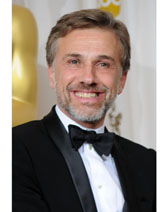
Christoph Waltz
Born on October 4, 1956
Age: 70
Profession: Actor, Director
Place of Birth: Vienna, Austria
Christoph Waltz is an Austrian-born German actor celebrated for his extraordinary linguistic ability, refined screen presence, and psychologically layered performances. Internationally recognized for redefining the modern cinematic villain, he rose to global prominence with his portrayal of SS Colonel Hans Landa in Inglourious Basterds, a role that transformed his career and placed him among the most respected character actors of contemporary cinema.
Early Life and Background
Christoph Waltz was born on October 4, 1956, in Vienna, Austria, to set designer Johannes Waltz and costume designer Elisabeth Urbancic. Although born in Austria, he holds German citizenship. Raised in a deeply artistic environment—his grandparents were actors—Waltz was immersed in theater from an early age. He has three siblings, and his upbringing was shaped by constant exposure to stagecraft, rehearsal culture, and artistic debate.
He studied acting at Vienna’s prestigious Max Reinhardt Seminar, one of Europe’s most influential conservatories, where he received rigorous classical training. He later continued his education in New York at the Lee Strasberg Theatre and Film Institute, where he was introduced to American method acting traditions. This combination of European theatrical discipline and American psychological realism became central to his acting identity.
European Career and Theatrical Foundations
Before achieving international fame, Christoph Waltz built a long and disciplined career in European theater, television, and cinema. He performed at major institutions such as the Schauspielhaus Zürich, the Burgtheater in Vienna, and the Salzburg Festival, developing a reputation for intellectual seriousness and technical precision.
Throughout the 1980s and 1990s, he appeared in numerous German-language television series, stage productions, and European co-productions. During this period, he often worked with directors rooted in classical theater traditions rather than commercial filmmaking, refining his mastery of dialogue, timing, and character psychology.
Directorial Work and Pre-Breakthrough Years
In 2000, Christoph Waltz made his directorial debut with the television film Wenn man sich traut, signaling an early interest in narrative construction and creative control beyond acting. While directing did not become his primary focus, the project reflected his broader engagement with storytelling and performance theory.
Despite decades of steady professional work, his international breakthrough arrived unexpectedly late. This delayed recognition reinforced his image as an actor shaped by patience, discipline, and accumulated experience rather than rapid commercial ascent.
Breakthrough and Global Recognition
The defining turning point of Christoph Waltz’s career came when Quentin Tarantino cast him as SS Colonel Hans Landa in the 2009 war film Inglourious Basterds. Waltz’s performance—marked by chilling charm, intellectual cruelty, and flawless command of multiple languages—was widely regarded as one of the most memorable antagonists in modern cinema.
He won the Best Actor Award at the 2009 Cannes Film Festival for the role and subsequently received the Academy Award and Golden Globe Award for Best Supporting Actor. Acting alongside Brad Pitt, Waltz emerged as the film’s dominant presence, embodying Tarantino’s dialogue-driven, revisionist cinematic style.
Continued Collaboration and Career Expansion
Christoph Waltz continued his collaboration with Tarantino in 2012 with Django Unchained, portraying Dr. King Schultz, a morally principled bounty hunter. The role offered a striking contrast to Hans Landa, emphasizing ethical conviction, humor, and emotional restraint.
The performance earned him a second Academy Award and Golden Globe Award. Sharing the screen with Jamie Foxx, Leonardo DiCaprio, Kerry Washington, and Samuel L. Jackson, Waltz further solidified his reputation as an actor capable of balancing menace, wit, and humanity within complex narrative structures.
Hollywood and International Projects
Following his success with Tarantino, Christoph Waltz became a sought-after figure in Hollywood and international cinema. He joined the James Bond franchise in Spectre, acting opposite Daniel Craig, and brought intellectual menace to the long-running series.
He collaborated with Tim Burton in Big Eyes, portraying artist Walter Keane, and worked with Terry Gilliam in The Zero Theorem, where his performance reflected existential and philosophical themes consistent with his European intellectual background.
Personal Life
Fluent in German, English, French, and Italian, Christoph Waltz is widely known for his precision with language, a defining element of many of his most iconic roles. He divides his time between Berlin and Los Angeles.
He has four children—three from his first marriage to a woman named Jackie, and one from his second marriage to costume designer Judith Holste. Waltz maintains a notably private personal life, rarely engaging in celebrity culture.
Legacy and Reputation
Often associated with sophisticated antagonists and morally complex authority figures, Christoph Waltz is widely regarded as one of the most distinctive actors of his generation. His career stands as a rare example of international stardom achieved through theatrical discipline, linguistic mastery, and intellectual depth rather than early commercial success.
Major Awards
- 2009 – Cannes Film Festival – Best Actor (for Inglourious Basterds)
- 2010 – Academy Awards – Best Supporting Actor (for Inglourious Basterds)
- 2010 – Golden Globe Awards – Best Supporting Actor (for Inglourious Basterds)
- 2013 – Academy Awards – Best Supporting Actor (for Django Unchained)
- 2013 – Golden Globe Awards – Best Supporting Actor (for Django Unchained)
Selected Filmography
- Inglourious Basterds (2009)
- Django Unchained (2012)
- The Zero Theorem (2013)
- Big Eyes (2014)
- Spectre (2015)
- Tulip Fever (2015)
Source: Biyografiler.com
Christoph Waltz Movies

No Time To Die
Release Date: October 8, 2021
Director: Cary Joji Fukunaga
Writer: Neal Purvis, Robert Wade
Cast: Daniel Craig, Léa Seydoux, Rami Malek, Christoph Waltz, Ana de Armas, Ralph Fiennes, Naomie Harris, Lashana Lynch, Ben Whishaw, Jeffrey Wright, Billy Magnussen, David Dencik, Rory Kinnear, Dali Benssalah, Lisa-Dorah, Hugh Dennis, Priyanga Burford

The Legend of Tarzan
Release Date: July 1, 2016
Director: David Yates
Writer: Stuart Beattie, Craig Brewer
Cast: Alexander Skarsgård, Margot Robbie, Christoph Waltz, Samuel Jackson, Djimon Hounsou, Ella Purnell, Jim Broadbent

Spectre
Release Date: November 6, 2015
Director: Sam Mendes
Writer: John Logan, Neal Purvis
Cast: Daniel Craig, Christoph Waltz, Léa Seydoux, Ralph Fiennes, Monica Bellucci, Jesper Christensen, Ben Whishaw, Naomie Harris, Andrew Scott, Dave Bautista, Rory Kinnear, Alessandro Cremona, Stephanie Sigman, Judi Dench, Marc Zinga
Frequently asked questions about Christoph Waltz
Who is Christoph Waltz?, Christoph Waltz biography, Christoph Waltz life story, Christoph Waltz age, Christoph Waltz facts, Christoph Waltz birthplace, Christoph Waltz photos, Christoph Waltz videos, Christoph Waltz career
Related Biographies


Lamine Yamal
Professional footballer

Erling Haaland
Professional footballer

Austin Abrams
Actor

Keanu Reeves
Actor

Kylian Mbappe
Professional footballer

Bad Bunny
Rapper, Songwriter


Hongjoong
Singer, Rapper, Songwriter, Composer

Ludacris
Rapper, Actor

Kwon Eunbi
Singer

Sarah Wayne Callies
Actress, Screenwriter, Producer, Director

LaTavia Roberson
Singer, Actress, Entrepreneur
Erling Haaland
Professional footballer
Lamine Yamal
Professional footballer

Sadio Mane
Professional footballer
Keanu Reeves
Actor

Ma Huateng
Entrepreneur, Inventor

Giorgia Meloni
Politician, Journalist