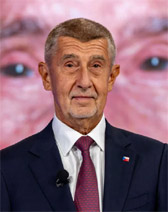
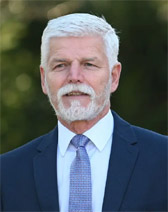
Andrej Babis
Billionaire businessman who moved from building a major industrial conglomerate to serving two non-consecutive periods as Prime Minister of the Czech Republic
Born on September 2, 1954
Age: 72
Profession: Businessperson, Politician, Economist
Place of Birth: Bratislava, then part of Czechoslovakia, now Slovakia
Andrej Babiš was born on September 2, 1954, in Bratislava, then part of Czechoslovakia and now the capital of Slovakia. A Slovak-born Czech politician, businessman and economist, Andrej Babiš has served as Prime Minister of the Czech Republic since December 9, 2025, returning to the office after previously leading the country between 2017 and 2021. He also served as first deputy prime minister and minister of finance from 2014 to 2017. As the founder and long-standing leader of ANO 2011, Andrej Babiš has become one of the most influential and controversial figures in modern Czech politics, combining populist electoral campaigning, managerial rhetoric and criticism of several European Union policies with a business career that made him one of the wealthiest people in the country.
Early Life and Family Background
Andrej Babiš was born into a family closely connected to the state-controlled foreign trade system of communist-era Czechoslovakia. His father, Štefan Babiš, worked in foreign trade and held diplomatic assignments. Because of his father’s professional duties, Andrej Babiš spent part of his childhood outside his native country, including periods in France and Switzerland.
Growing up in an internationally oriented family exposed Andrej Babiš to foreign languages, diplomatic circles and cross-border commerce from an early age. These experiences later became relevant to his work in state foreign trade companies and to the international expansion of his business interests.
After completing his secondary education in Bratislava, Andrej Babiš entered the University of Economics in Bratislava in 1974. He studied at the Faculty of Commerce, specializing in foreign trade, and graduated in 1978 with an engineering degree in economics. His education provided the technical and commercial foundation for his subsequent career in international chemicals, raw materials and agricultural trading.
Career in Czechoslovak Foreign Trade
Following his graduation, Andrej Babiš began working for Chemapol Bratislava, one of the state foreign trade organizations operating within the centrally planned Czechoslovak economy. As a foreign trade officer, he developed experience in the purchase and sale of chemical products, fertilizers and industrial raw materials.
In 1985, Andrej Babiš joined Petrimex Bratislava, another state-controlled foreign trade company. He was assigned to Morocco, where he worked as a commercial representative in Rabat until 1991. The position gave him practical experience in North African markets and allowed him to build contacts in the international chemicals and commodity industries.
After the Velvet Revolution ended communist rule in 1989, Andrej Babiš returned from Morocco and eventually settled in Prague. The transformation from a centrally planned economy to a market economy created new opportunities for managers with foreign trade experience, industry contacts and knowledge of international financing.
Communist Party Membership and the StB Dispute
Andrej Babiš was a member of the Communist Party of Czechoslovakia during the period in which he worked in state foreign trade. His name also appeared in archival records of the communist-era State Security service, commonly known as the StB, under the code name “Bureš.” The records were interpreted by some historians and political opponents as indicating that he had been registered as an agent.
Andrej Babiš consistently denied knowingly collaborating with the secret police. He acknowledged meeting StB officers while working in foreign trade but maintained that the discussions concerned state economic and commercial matters rather than secret intelligence cooperation.
The legal dispute continued for more than a decade. Earlier court decisions did not definitively clear Andrej Babiš, but in October 2024 the Slovak Ministry of the Interior reached a settlement with him. The ministry accepted that he had not knowingly collaborated with the StB and stated that interpretations presenting him as a conscious secret-police agent were unjustified. The settlement remained politically controversial, with critics questioning the government’s decision to resolve the case without a final contested judgment.
Foundation and Expansion of Agrofert
In 1993, Andrej Babiš became the founder and director of Agrofert, initially established as a Czech subsidiary connected to Petrimex. Beginning with only a small number of employees, the company operated primarily as a trading business in agricultural commodities, fertilizers and chemical products.
Under the leadership of Andrej Babiš, Agrofert expanded through acquisitions and corporate restructuring. It developed into one of Central Europe’s largest privately controlled industrial groups, with operations in agriculture, food processing, fertilizers, chemicals, forestry, renewable energy, logistics and related industries.
The conglomerate eventually grew to include more than 230 subsidiaries and approximately 30,000 employees. Its businesses produced fertilizers, agricultural products, baked goods, dairy products, meat, plastics and industrial chemicals in the Czech Republic, Slovakia, Germany and other European markets. This expansion made Andrej Babiš one of the richest businessmen in the Czech Republic and gave him considerable influence across several economically important sectors.
Questions were repeatedly raised about the financing and ownership changes that enabled Andrej Babiš to obtain full control of Agrofert. Former business partners and journalists examined the company’s separation from Petrimex, while Andrej Babiš maintained that the acquisition and subsequent development of the group were legitimate commercial transactions.
Expansion into Media
In 2013, Agrofert acquired MAFRA, one of the Czech Republic’s most important media companies. Its portfolio included major newspapers such as Mladá fronta DNES and Lidové noviny, digital news platforms, magazines and other media properties.
The acquisition generated widespread concern because Andrej Babiš was simultaneously becoming a major political figure. Critics argued that the combination of political leadership, industrial ownership and influence over nationally significant newspapers created an unhealthy concentration of economic and media power. Andrej Babiš rejected accusations that he interfered with editorial decisions.
Agrofert agreed in 2023 to sell MAFRA and the radio company LONDA to the investment group controlled by Czech businessman Karel Pražák. The transaction was subsequently completed, ending approximately a decade of ownership by the business group associated with Andrej Babiš. The sale took place ahead of stricter Czech legislation limiting the ownership of certain media organizations by senior political figures.
Entry into Politics and the Creation of ANO 2011
After approximately two decades in private business, Andrej Babiš entered national politics by presenting himself as an outsider capable of challenging corruption, inefficient administration and the established political parties. In 2011, he launched the movement that became known as Action of Dissatisfied Citizens 2011, or ANO 2011. The Czech abbreviation “ANO” also means “yes.” The movement was formally organized as a political party in 2012.
Andrej Babiš based his political identity on his business record. He argued that the Czech state should be managed more efficiently, with measurable objectives, tighter financial controls and clearer responsibility for results. His promise to “run the state like a company” appealed to voters frustrated with conventional parties and repeated corruption scandals.
Although ANO 2011 initially presented itself as a pragmatic, anti-corruption and non-ideological movement, it gradually became strongly associated with the personality and leadership of Andrej Babiš. Its policies combined elements of economic managerialism, social spending, pension protection, centralized leadership and criticism of traditional political institutions.
2013 Election and Appointment as Finance Minister
In the 2013 parliamentary election, ANO 2011 finished second and won 47 seats in the 200-member Chamber of Deputies. The result transformed the recently founded movement into one of the country’s dominant political forces.
Following the election, ANO 2011 joined a coalition government led by the Czech Social Democratic Party together with the Christian and Democratic Union–Czechoslovak People’s Party. In January 2014, Andrej Babiš became first deputy prime minister and minister of finance in the government of Bohuslav Sobotka.
As finance minister, Andrej Babiš promoted measures designed to reduce tax evasion and improve the collection of public revenue. These included electronic registration of sales, stronger value-added tax reporting requirements and more extensive use of financial data to identify irregular transactions.
Supporters credited these reforms with strengthening tax discipline and increasing state revenues. Opponents argued that the electronic sales system imposed disproportionate administrative and technological burdens on small businesses, restaurants and independent retailers.
Business Trusts and Conflict-of-Interest Questions
In 2017, changes to Czech conflict-of-interest legislation required Andrej Babiš to separate himself formally from companies that could receive public subsidies, participate in government procurement or own certain media organizations while he held senior government office.
Andrej Babiš transferred his interests in Agrofert to trust funds. He stated that the arrangement complied with Czech law and removed him from the management of the conglomerate. Critics, auditors and European institutions nevertheless questioned whether he remained the group’s ultimate beneficiary and continued to exercise indirect influence over it.
An audit by the European Commission later concluded that Andrej Babiš continued to have an economic interest in Agrofert despite the trust structure, creating a conflict of interest in relation to European subsidy decisions. Andrej Babiš and his political allies disputed the conclusions and maintained that Czech law had been respected.
First Premiership
ANO 2011 won the October 2017 parliamentary election by a substantial margin. President Miloš Zeman appointed Andrej Babiš Prime Minister of the Czech Republic on December 6, 2017.
His first minority government failed to secure the confidence of the Chamber of Deputies. After prolonged coalition negotiations, Andrej Babiš was reappointed in June 2018 and formed another minority administration with the Czech Social Democratic Party. The government was supported in key parliamentary votes by the Communist Party of Bohemia and Moravia.
The agreement was historically significant because it gave the communist party a direct role in sustaining a Czech national government for the first time since the end of communist rule. Support from the party remained controversial throughout the administration.
During his first period as prime minister, Andrej Babiš emphasized increases in pensions and public-sector salaries, expanded investment, infrastructure projects, digital government services and the preservation of social benefits. Economic growth and very low unemployment during much of the period contributed to his government’s popularity, especially among older voters and residents outside the largest urban centers.
COVID-19 Pandemic
The government of Andrej Babiš faced its most severe administrative and public-health challenge after the COVID-19 pandemic reached Europe in 2020. The government introduced border restrictions, business closures, limits on public gatherings, testing requirements and emergency economic-support programs.
The Czech Republic initially received international attention for bringing the first wave of infections under control. Later waves, however, produced high infection and mortality rates. Frequently changing restrictions, disagreements among government officials and repeated changes in the leadership of the health ministry weakened public confidence.
Supporters of Andrej Babiš argued that the government had to make rapid decisions in an unprecedented emergency and provided extensive financial assistance to businesses and workers. Critics maintained that inconsistent communication, delayed measures and political interference contributed to the seriousness of later outbreaks.
The Stork’s Nest Subsidy Case
One of the most persistent legal controversies in the career of Andrej Babiš concerned the Stork’s Nest hotel, conference center and recreational complex outside Prague. The project received approximately €2 million in European Union subsidies intended for small and medium-sized businesses.
Prosecutors alleged that the company controlling the project had been temporarily separated from Agrofert and transferred to members of the family of Andrej Babiš so that it would appear eligible for funding unavailable to a large corporate group. The company later returned to the Agrofert structure.
Andrej Babiš denied fraud and argued that the project satisfied the rules applicable at the time. He repeatedly described the prosecution as politically motivated and intended to damage his career.
A lower court acquitted Andrej Babiš, but an appeals court overturned the acquittal and ordered a retrial. After he returned to parliament and the premiership, the Chamber of Deputies voted on March 5, 2026, not to remove his parliamentary immunity. The vote prevented the retrial from proceeding while his immunity remains in force, potentially until the end of the current parliamentary term in 2029.
In a related proceeding, former associate and European Parliament member Jana Nagyová was convicted in 2026 and received a suspended sentence and a financial penalty. The verdict remained subject to appeal. Andrej Babiš was not convicted in that proceeding.
2017–2021 Government Policies
The first premiership of Andrej Babiš combined business-oriented administrative language with policies protecting pensions, wages and public expenditure. Rather than following a conventional free-market platform, his government used rising state revenues to increase social payments and public-sector compensation.
The administration promoted transport infrastructure, digitalization and measures intended to improve tax collection. It also defended the continued use of the Czech koruna rather than adopting the euro and resisted mandatory European migration quotas.
In European affairs, Andrej Babiš generally supported continued membership in the European Union and NATO, while criticizing proposals that he believed transferred excessive authority to European institutions. His approach was frequently described as pragmatic and transactional rather than consistently anti-European.
2021 Election Defeat and Opposition Leadership
In the 2021 parliamentary election, ANO 2011 remained one of the country’s strongest political movements and received a high share of the national vote. However, opposition alliances won enough seats collectively to form a parliamentary majority.
The center-right coalition headed by Petr Fiala formed a new government, and Andrej Babiš left the premiership in December 2021. He subsequently became the central figure of the parliamentary opposition, criticizing the government’s energy policies, inflation response, pension reforms and fiscal consolidation measures.
During his years in opposition, Andrej Babiš continued to rely on direct campaigning, extensive social-media communication and frequent visits to smaller cities and rural communities. ANO 2011 increasingly emphasized the rising cost of living, pensions, energy prices and dissatisfaction with the governing coalition.
2023 Presidential Election
Andrej Babiš ran for president of the Czech Republic in January 2023. He advanced to the second round after finishing behind retired general and former senior NATO official Petr Pavel in the first round.
The campaign became highly polarized, with national security, the war in Ukraine, social stability and the political record of Andrej Babiš among its central issues. Petr Pavel defeated him in the second round with approximately 58 percent of the vote.
Despite the defeat, Andrej Babiš retained the leadership of ANO 2011 and remained the most important opposition politician in the country. The election also demonstrated his ability to mobilize a large electoral base even when facing a broad coalition of political and civic opponents.
2025 Parliamentary Election and Political Comeback
In the parliamentary election held on October 3 and 4, 2025, ANO 2011 won approximately 34.7 percent of the vote, comfortably defeating the governing alliance led by Prime Minister Petr Fiala. The result represented the strongest national parliamentary performance in the history of the movement.
Because ANO 2011 did not win an absolute majority, Andrej Babiš negotiated with the right-wing Motorists for Themselves movement and the nationalist, Eurosceptic Freedom and Direct Democracy party led by Tomio Okamura. The three parties established a parliamentary majority and agreed on a common government program.
The proposed coalition promised lower energy costs, limits on the retirement age, protection of pensions, opposition to major elements of the European Green Deal and a more restrictive migration policy. It also pledged to keep the budget deficit within European fiscal limits while easing several austerity measures introduced by the previous government.
Return to the Premiership
President Petr Pavel initially requested a clear explanation of how Andrej Babiš would address the conflict between his government responsibilities and his ownership of Agrofert. Previous trust arrangements had been criticized by European institutions and Czech political opponents as insufficient.
In December 2025, Andrej Babiš announced that Agrofert would be transferred to a new independently governed trust structure. He stated that he would not regain control of the company during his lifetime and that it would eventually pass to his descendants.
After the announcement, President Petr Pavel appointed Andrej Babiš Prime Minister on December 9, 2025. The full coalition cabinet was appointed on December 15. The government included ministers nominated by ANO 2011, Freedom and Direct Democracy and Motorists for Themselves.
The new government won a confidence vote in the Chamber of Deputies on January 15, 2026, by 108 votes to 91. The result formally secured the second non-consecutive premiership of Andrej Babiš and ended four years of center-right government under Petr Fiala.
Second Premiership and Economic Policy
The second government of Andrej Babiš entered office with a program aimed at interrupting several austerity and fiscal-consolidation policies introduced by the previous administration. Its priorities included cheaper energy, pension protection, wage support, transport investment and greater state spending on healthcare.
The government approved a revised 2026 budget with a deficit of approximately 310 billion Czech koruna. The plan increased spending on wages, subsidies, energy support and road construction while reducing planned defense expenditure. Critics warned that the policy could weaken fiscal discipline, while the government argued that investment and household protection were necessary to support economic growth.
In March 2026, Andrej Babiš stated that the 2027 budget deficit might also be allowed to widen to create additional room for healthcare, transport infrastructure and other investment projects. His approach represented a partial reversal of the restrictive fiscal policies associated with the government of Petr Fiala.
The economic strategy of Andrej Babiš continued the political pattern established during his first premiership: combining promises of administrative efficiency with active public spending, pension protection and state intervention in areas affecting household living costs.
European Union Policies
Andrej Babiš does not support the withdrawal of the Czech Republic from either the European Union or NATO. He has nevertheless criticized several European policies concerning migration, climate regulation, emissions, agricultural standards and national budget contributions.
He argues that national governments should retain greater authority over taxation, energy, social policy and migration. His political messaging frequently presents the European Union as valuable for trade and investment but overly bureaucratic in its regulatory activity.
ANO 2011 became part of the Patriots for Europe political group at the European level, associating it with movements connected to political figures such as Viktor Orban, Marine Le Pen and Matteo Salvini. Even so, Andrej Babiš has often adopted more flexible positions when negotiating practical economic or budgetary issues within European institutions.
Ukraine and Defence Policy
Andrej Babiš has stated that he supports the sovereignty and territorial integrity of Ukraine but argues that the financial and military burden carried directly by Czech taxpayers should be limited. His second government moved away from the strongly pro-Ukraine military policy pursued by Petr Fiala, while continuing to support certain humanitarian, diplomatic and reconstruction initiatives.
In 2026, the government reduced planned national defense expenditure to approximately 1.7–1.8 percent of gross domestic product, below the minimum target established by NATO. Andrej Babiš initially confirmed that the country would miss the two-percent target in 2026, while stating that it intended to reach that level in 2027.
At the NATO Summit in Ankara in July 2026, Andrej Babiš announced plans to increase the following year’s defense budget by 36 billion Czech koruna and reach two percent of gross domestic product. At the same time, he said the Czech Republic would not participate in a newly proposed €70 billion allied military-aid package for Ukraine, maintaining that each country should determine its own contribution.
The Czech government continued to support the participation of Czech companies in the future reconstruction of Ukraine. Its broader policy, however, placed greater emphasis on domestic budget priorities and assistance financed by foreign partners rather than direct Czech state expenditure.
Public Broadcasting Controversy
In 2026, the government of Andrej Babiš approved plans to abolish the household licence-fee system used to finance Czech Television and Czech Radio. Under the proposal, public broadcasters would instead receive funding directly from the state budget beginning in 2027.
The government argued that the new system would be more efficient and could preserve editorial independence. Critics, including opposition parties, journalists and international press-freedom organizations, warned that annual dependence on the state budget could increase political influence over public broadcasting.
The proposed funding levels were also expected to reduce the combined resources available to the broadcasters. Journalists and employees organized demonstrations and strike action, while media-freedom organizations argued that the change lacked sufficient long-term safeguards for institutional independence.
Political Style and Public Image
The political approach of Andrej Babiš has been described as populist, pragmatic, managerial, centrist and, during different phases of his career, increasingly nationalist or right-wing. His policies do not fit consistently within the traditional left-right division.
On economic and social questions, Andrej Babiš has supported pension increases, public investment, state subsidies and higher government spending. On migration, climate regulation and national sovereignty, he has adopted positions associated more closely with the European right.
His campaigning focuses heavily on everyday economic issues such as food prices, energy bills, pensions, wages, taxation, healthcare access and public services. He presents himself as an experienced manager who can deliver practical results rather than an ideological politician.
Supporters regard Andrej Babiš as a decisive and commercially experienced leader who challenges ineffective political institutions. Critics describe him as an oligarch who has concentrated corporate wealth, political authority and, for a significant period, media influence within the same network.
Comparisons have sometimes been made between Andrej Babiš and political figures such as Donald Trump, Silvio Berlusconi, Viktor Orban and Robert Fico, particularly because of his wealth, anti-establishment communication and criticism of conventional media. Such comparisons are imperfect, however, because his political platform combines nationalist rhetoric with extensive social spending and a highly pragmatic approach to European negotiations.
Personal Life
Andrej Babiš married physician Beata Adamičová, whom he had known since his student years, during the 1970s. They had two children, Adriana Bobeková and Andrej Babiš Jr.. The marriage later ended in divorce.
Andrej Babiš subsequently entered a long-term relationship with Monika Herodesová, who later adopted the surname Babišová. They have two children, Vivien Babišová and Frederik Babiš. The couple married in 2017.
In April 2024, Andrej Babiš and Monika Babišová publicly announced that they had separated after approximately 30 years together. They stated that they intended to maintain an amicable relationship, particularly because of their family. Publicly available information did not initially indicate that the separation had been legally finalized as a divorce.
Andrej Babiš speaks several languages, including Czech, Slovak, French, English, German and Russian. Born in Slovakia and later established in Prague, he has held both Slovak and Czech citizenship and has repeatedly emphasized his Czech political identity.
Position in Modern Czech Politics
From an economist working in communist-era foreign trade to the founder of Agrofert, from billionaire industrialist to political-party leader and prime minister, Andrej Babiš has followed one of the most unusual career paths in modern Central European politics.
His influence rests on several interconnected elements: extensive business experience, a highly centralized political movement, direct communication with voters, promises to protect pensions and household incomes, and criticism of both established parties and selected European Union policies.
At the same time, his career has been accompanied by continuing disputes concerning conflicts of interest, business subsidies, corporate ownership, media power and the relationship between private wealth and public authority. These controversies have not prevented him from maintaining a large and loyal electoral base or returning to the premiership after four years in opposition.
Through his leadership of ANO 2011, two non-consecutive periods in power and repeated confrontations with political, judicial and European institutions, Andrej Babiš has become one of the defining figures of post-communist Czech political life.
Selected Offices and Positions
- 1978–1985 – Foreign Trade Officer at Chemapol Bratislava
- 1985–1991 – Commercial Representative for Petrimex Bratislava in Morocco
- 1993–2000 – Founder and Director of Agrofert
- 2000–2014 – Chairman of the Board of Agrofert
- 2012–Present – Founder and Chairman of ANO 2011
- 2013–Present – Member of the Chamber of Deputies of the Parliament of the Czech Republic
- 2014–2017 – First Deputy Prime Minister of the Czech Republic
- 2014–2017 – Minister of Finance of the Czech Republic
- 2017–2021 – Prime Minister of the Czech Republic
- 2021–2025 – Principal Opposition Leader and Chairman of ANO 2011
- 2025–Present – Prime Minister of the Czech Republic
Source: Biyografiler.com
Frequently asked questions about Andrej Babis
Who is Andrej Babis?, Andrej Babis biography, Andrej Babis life story, Andrej Babis age, Andrej Babis facts, Andrej Babis birthplace, Andrej Babis photos, Andrej Babis videos, Andrej Babis career
Related Biographies


Lamine Yamal
Professional footballer

Erling Haaland
Professional footballer

Sam Altman
Entrepreneur, Investor, CEO

Kylian Mbappe
Professional footballer

Giorgia Meloni
Politician, Journalist

Alice Weidel
Politician, Economist


Hongjoong
Singer, Rapper, Songwriter, Composer

Ludacris
Rapper, Actor

Kwon Eunbi
Singer

Sarah Wayne Callies
Actress, Screenwriter, Producer, Director

LaTavia Roberson
Singer, Actress, Entrepreneur
Lamine Yamal
Professional footballer

Elena Andreyevna Rybakina
Professional Tennis Player
Sam Altman
Entrepreneur, Investor, CEO
Alice Weidel
Politician, Economist

Bad Bunny
Rapper, Songwriter

Mark Cuban
Business Leader, Investor