
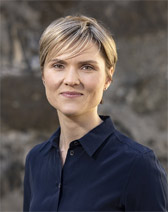
Kristrun Frostadottir
Iceland’s youngest-ever prime minister and a social-democratic leader who combines fiscal discipline with a strong welfare state
Born on May 12, 1988
Age: 38
Profession: Politician, Economist
Place of Birth: Reykjavík, Iceland
Kristrún Frostadóttir was born on May 12, 1988, in Reykjavík, Iceland. Her full name is Kristrún Mjöll Frostadóttir. An Icelandic politician and economist, Kristrún Frostadóttir has served as Prime Minister of Iceland since December 21, 2024, and has led the Social Democratic Alliance since 2022. She entered office at the age of 36, becoming the youngest prime minister in Icelandic history. With professional experience in macroeconomics, banking, international finance and public policy, she has built her political identity around the argument that strong social services must be supported by responsible budgeting, lower inflation and sustainable economic growth.
Early Life and Family Background
Kristrún Frostadóttir grew up in Reykjavík in an educated professional family. Her father, Frosti Fífill Jóhannsson, is an ethnographer, while her mother, Steinunn Guðný H. Jónsdóttir, is a physician. Her family environment encouraged an early interest in society, economics, public institutions and international affairs.
She completed her secondary education at Menntaskólinn í Reykjavík, one of Iceland’s oldest and best-known upper-secondary schools, graduating in 2008. Her transition to university coincided with the collapse of Iceland’s banking system during the global financial crisis. The crisis produced a severe recession, currency instability and a profound loss of public trust in financial institutions.
These events influenced the academic and professional interests of Kristrún Frostadóttir. She became particularly interested in monetary policy, financial regulation, inflation, public budgeting and the relationship between private markets and social stability.
University Education
Kristrún Frostadóttir studied economics at the University of Iceland, completing a bachelor’s degree in 2011. While still a student, she worked in the office of the governor of the Central Bank of Iceland between 2009 and 2010. The position gave her direct exposure to monetary policy during the difficult period that followed the banking collapse.
She later moved to the United States and earned a master’s degree in economics from Boston University in 2014. Her studies included macroeconomics, econometrics, financial markets and the international economic forces affecting small, trade-dependent countries such as Iceland.
Kristrún Frostadóttir subsequently attended the Jackson Institute for Global Affairs at Yale University. She completed a second master’s degree in 2016, specializing in international affairs with an emphasis on economic policy and international finance.
Her education at Yale University allowed her to examine domestic economic management within a broader international framework. It also strengthened her interest in trade, currency policy, geopolitical risk and the role of international institutions in protecting smaller states.
Early Career in Economic Analysis
After completing her undergraduate degree, Kristrún Frostadóttir worked in the analytical division of Arion Bank from 2011 to 2012. Iceland’s banking system was still being reconstructed, and financial institutions were operating under increased political, regulatory and public scrutiny.
Between 2013 and 2014, she worked as a journalist for the Icelandic business newspaper Viðskiptablaðið. The position helped her develop the ability to explain complex financial and economic questions to a wider audience.
In 2014, Kristrún Frostadóttir worked as an economist for a monetary-reform working group established under the Prime Minister’s Office of Iceland. The group examined the structure of Iceland’s monetary and banking systems, including questions concerning financial stability, money creation and the vulnerability of a small economy with an independent currency.
Career at Morgan Stanley
In 2015, Kristrún Frostadóttir joined the research division of Morgan Stanley in New York. She later moved to the international investment bank’s London office and remained with the company until 2017.
Her work at Morgan Stanley involved macroeconomic analysis, international financial markets, investment research and the interpretation of political and economic developments for institutional clients. Working in two of the world’s leading financial centers gave her practical experience of global capital movements, interest-rate expectations and investor decision-making.
This experience later contributed to her distinctive position within Icelandic social democracy. Kristrún Frostadóttir did not present markets, international investment or private enterprise as incompatible with progressive politics. Instead, she argued that functioning markets required stable institutions and that economic growth should help finance reliable public services and broader social security.
Return to Iceland
Kristrún Frostadóttir returned to Iceland in 2017 and worked as an economist for the Iceland Chamber of Commerce. She also participated in policy work concerning tourism, which had become one of the country’s most important sources of employment and foreign income.
From 2017 to 2018, she chaired the Agricultural Products Pricing Committee under the ministry responsible for industry and innovation. The role involved questions concerning farmers, consumers, food production and Iceland’s regulated agricultural market.
In 2018, Kristrún Frostadóttir joined Kvika Bank as chief economist. She held the position until entering parliamentary politics in 2021. Her responsibilities included preparing macroeconomic forecasts and analyzing inflation, interest rates, wages, currency movements, government policy and economic growth.
At the same time, she worked as an adjunct lecturer in the economics department of the University of Iceland from 2018 to 2020. Her combined experience in banking, academic teaching and public commentary made her one of Iceland’s most recognizable younger economists.
Public Profile as an Economist
Before becoming a politician, Kristrún Frostadóttir appeared regularly on Icelandic television and radio and contributed to newspaper discussions. She became particularly associated with public debates about inflation, mortgage costs, interest rates, housing prices, wages and government expenditure.
She argued that a successful welfare state could not be maintained through permanently uncontrolled budget deficits. Public healthcare, education, pensions and social security required a stable tax base, predictable revenues and confidence in the broader economy.
This approach allowed Kristrún Frostadóttir to combine traditional social-democratic objectives with a strong emphasis on fiscal responsibility. Rather than treating budget discipline and social welfare as opposing principles, she presented responsible financial management as a necessary condition for maintaining high-quality public services.
Entry into Parliament
Kristrún Frostadóttir entered electoral politics as a candidate for the Social Democratic Alliance in the 2021 parliamentary election. She was elected to the Althing, Iceland’s national parliament, as a representative for the Reykjavík South constituency.
She served on the Budget Committee from 2021 to 2023 and represented Iceland in the West Nordic Council during the same period. In 2023, she became a member of the Economic Affairs and Trade Committee before returning to the Budget Committee for the 2023–2024 parliamentary period.
Her parliamentary work concentrated on taxation, public expenditure, monetary policy and the effects of inflation on households. Unlike many newly elected legislators, Kristrún Frostadóttir entered parliament with extensive technical experience in banking, investment research and macroeconomic forecasting.
Leadership of the Social Democratic Alliance
In 2022, Kristrún Frostadóttir was elected leader of the Social Democratic Alliance. The party had previously played a major role in government but had experienced serious electoral losses following its participation in the administration that managed the consequences of the 2008 financial collapse.
After becoming leader, Kristrún Frostadóttir worked to restore the party’s credibility on economic management. She argued that social democrats should be trusted not only on healthcare, education and social protection but also on inflation, business development, public debt and financial stability.
She repositioned the party as a pragmatic center-left movement capable of appealing to public-sector employees, urban professionals, working families, younger voters and people affected by rising housing costs. Her program placed healthcare, housing, education and responsible budgeting at the center of the party’s political message.
Her communication style was generally calmer and more technical than that of many established Icelandic party leaders. By combining economic expertise with a clear emphasis on social equality, she helped the Social Democratic Alliance recover much of the support it had lost during the previous decade.
The 2024 Government Crisis
In October 2024, the coalition government led by Prime Minister Bjarni Benediktsson collapsed after prolonged disagreements among the governing parties. Immigration, energy policy and economic management were among the principal areas of conflict.
An early parliamentary election was scheduled for November 30, 2024. The campaign took place during a period of high living costs, elevated interest rates, housing shortages and continuing uncertainty caused by volcanic activity on the Reykjanes Peninsula.
Kristrún Frostadóttir presented the Social Democratic Alliance as a credible alternative to the outgoing government. She promised to protect the welfare state while reducing inflationary pressure and improving confidence in economic management.
Victory in the 2024 Parliamentary Election
In the election held on November 30, 2024, the Social Democratic Alliance received approximately 20.8 percent of the vote and won 15 of the 63 seats in the Althing. The party increased its representation from six seats to 15 and became the largest political group in parliament.
The conservative Independence Party finished second with 14 seats, while the liberal Reform Party won 11. The result represented a significant political recovery for the Icelandic center-left and established Kristrún Frostadóttir as the leading candidate to form the next government.
Although the Social Democratic Alliance had won the largest number of seats, it did not possess a majority. Kristrún Frostadóttir therefore needed to form a coalition capable of commanding at least 32 seats in the 63-member parliament.
Formation of the Coalition Government
Following the election, President Halla Tómasdóttir gave Kristrún Frostadóttir the mandate to explore the formation of a new government. She opened negotiations with the liberal and pro-European Reform Party led by Þorgerður Katrín Gunnarsdóttir and the socially focused People’s Party led by Inga Sæland.
The three parties reached an agreement despite differences concerning taxation, immigration, economic regulation and European integration. Together, they controlled 36 seats, providing the new government with a working parliamentary majority.
The coalition took office on December 21, 2024, with Kristrún Frostadóttir as prime minister. The Social Democratic Alliance and the Reform Party each received four ministerial positions, while the People’s Party received three.
The administration became the first government in Icelandic history in which all coalition parties were led by women. With Halla Tómasdóttir serving as president, Iceland was also represented simultaneously by a female head of state and a female head of government for the first time.
Iceland’s Youngest Prime Minister
Kristrún Frostadóttir was 36 when she became prime minister, making her the youngest person to lead an Icelandic government. Her rise from bank economist to member of parliament, party leader and prime minister took place over a period of only a few years.
Although her age attracted international attention, Kristrún Frostadóttir avoided presenting her government primarily as a generational or symbolic project. She argued that the administration should be judged by its ability to reduce inflation, lower interest rates, improve housing availability and strengthen public services.
Her position as a young political leader and the mother of two small children nevertheless carried wider social significance. Her premiership was viewed as further evidence of the normalization of women’s leadership within Icelandic politics and public life.
Economic Policy and Fiscal Discipline
The principal economic objective of the government led by Kristrún Frostadóttir has been to reduce inflation and create the conditions necessary for lower interest rates. Icelandic households are particularly sensitive to interest-rate changes because of high mortgage costs and the historical use of inflation-indexed loans.
Kristrún Frostadóttir has argued that excessive government expenditure can increase demand and make inflation more difficult to control. Her government has therefore attempted to combine stronger social services with expenditure reviews, administrative reform and more efficient use of public funds.
The coalition reduced the number of ministries and reorganized several areas of government responsibility. The administration has also examined tax exemptions, public-sector costs and overlapping government functions in an effort to finance new priorities without relying entirely on additional borrowing.
Her approach reflects the idea that a center-left government must demonstrate financial credibility. Kristrún Frostadóttir has maintained that public deficits cannot be ignored indefinitely because high debt and persistent inflation ultimately place the greatest burden on low- and middle-income households.
Housing Policy
Housing has been one of the central issues of the premiership of Kristrún Frostadóttir. Population growth, high construction costs, limited supply and elevated interest rates have contributed to increasing property prices and rents, particularly in the Reykjavík metropolitan area.
Her government has supported accelerating the construction of new homes, simplifying planning procedures and improving cooperation among the national government, municipalities and construction companies. It has also emphasized rental security and better housing opportunities for younger people and lower-income families.
Kristrún Frostadóttir views housing policy as closely connected to inflation and labor-market stability. Rapidly increasing rents and mortgage payments contribute to demands for higher wages, which can produce further price increases throughout the economy.
For this reason, the government has treated the housing shortage not only as a social problem but also as a structural economic challenge. Increasing supply is intended to reduce pressure on households while supporting broader efforts to stabilize prices and interest rates.
Healthcare and Education
The coalition program includes measures intended to strengthen public healthcare, reduce waiting lists and improve access to treatment. Kristrún Frostadóttir has argued that a wealthy country cannot consider its welfare system successful when patients wait excessively for essential medical services.
Her government has also emphasized the recruitment and retention of healthcare professionals, the capacity of hospitals and the need to coordinate services more effectively. These priorities must be balanced with the government’s commitment to limiting inflationary public spending.
Education policy has focused on staffing, equal access, literacy and the ability of schools to respond to a changing population. The government also supports increased Icelandic-language education for immigrants as part of a wider integration strategy.
The participation of the People’s Party in the coalition has placed additional attention on pensions, disability rights and support for older citizens. The government therefore combines the fiscal priorities of Kristrún Frostadóttir, the economic liberalism of the Reform Party and the strong social-welfare emphasis of Inga Sæland.
European Union Policy
Kristrún Frostadóttir supports a renewed public debate about Iceland’s relationship with the European Union. Iceland already participates in much of the European internal market through the European Economic Area and is a member of the Schengen Area, but it remains outside the European Union.
Iceland submitted an application for EU membership in 2009 following the financial crisis. Negotiations were later suspended, with fisheries, agriculture, national sovereignty and control over natural resources remaining among the most sensitive issues.
The coalition agreement initially promised a referendum no later than 2027 on whether Iceland should resume accession negotiations. It also called for an independent examination of the economic consequences of retaining the Icelandic króna compared with adopting the euro.
In March 2026, the government proposed holding the referendum on August 29, 2026. The vote concerns whether Iceland should return to accession negotiations; it is not a final decision on becoming a member of the European Union.
Under the government’s approach, any completed accession agreement would have to be presented to the Icelandic public in a separate referendum. Kristrún Frostadóttir has argued that voters should decide on the basis of a negotiated agreement rather than an abstract debate lacking clear terms.
She has also emphasized that membership should be evaluated through economic, political and strategic considerations rather than fear alone. Fisheries, currency policy, trade, food production, sovereignty and access to European decision-making remain central to the discussion.
The Icelandic Króna and the Euro Debate
The future of the Icelandic króna is closely connected to the European debate. The independent currency allows Iceland to operate its own monetary policy, but it can also be volatile and contribute to high borrowing costs.
Kristrún Frostadóttir has supported an independent expert assessment of the advantages and disadvantages of retaining the króna. This examination includes the possible implications of adopting the euro if Iceland eventually joined the European Union.
She has not presented currency change as an automatic solution to Iceland’s economic problems. Instead, she has argued that the public should receive detailed information about inflation, interest rates, financial stability and the loss or retention of monetary independence.
Foreign Policy and Support for Ukraine
In foreign policy, Kristrún Frostadóttir supports close relations with the Nordic countries, the United States and Iceland’s European partners. Iceland has no standing army but is a founding member of NATO and occupies a strategically important position in the North Atlantic.
Her government has continued Iceland’s political, humanitarian and financial support for Ukraine following Russia’s invasion. Kristrún Frostadóttir has defended Ukraine’s sovereignty and emphasized that international law is particularly important for small states.
In February 2026, she attended events in Kyiv marking the anniversary of the full-scale invasion. Her participation demonstrated the government’s continuing alignment with European support for Ukraine and its opposition to territorial conquest by force.
Kristrún Frostadóttir also supports multilateral diplomacy and cooperation through institutions such as the United Nations, NATO and the Council of Europe. She regards international rules and collective institutions as important safeguards for countries with limited military power.
The Arctic and National Security
The increasing strategic importance of the Arctic has become a significant part of the government’s foreign-policy agenda. Climate change is opening new maritime routes and increasing international interest in Arctic minerals, energy, infrastructure and security.
Kristrún Frostadóttir has argued that the Arctic should remain a region of peaceful cooperation. At the same time, she has acknowledged that growing rivalry among major powers requires Iceland to strengthen its security relationships and monitoring capabilities.
Iceland’s location between Europe and North America gives it importance for aviation, shipping, undersea infrastructure and North Atlantic surveillance. The country’s position has become even more significant as European governments reassess their security policies.
Her government has connected the debate over European integration with wider geopolitical developments. Nevertheless, Kristrún Frostadóttir has stated that any decision about the European Union should be based on Iceland’s long-term economic and political interests rather than a temporary international crisis.
Energy, Climate and Natural Resources
Iceland produces almost all of its electricity from renewable geothermal and hydroelectric sources. Despite this advantage, energy policy remains politically sensitive because population growth, industrial development and the electrification of transport are increasing demand.
The government of Kristrún Frostadóttir supports additional renewable-energy investment while emphasizing environmental protection and public participation. Debates over new power plants and transmission infrastructure frequently involve competing concerns about economic development and the conservation of Icelandic landscapes.
She has also emphasized that energy security is connected to housing, industry and the country’s ability to attract investment. Reliable and affordable electricity remains one of Iceland’s principal economic advantages.
Fishing continues to be one of the most important areas of national policy. Any future European Union negotiations would have to address control over marine resources and Iceland’s quota-management system, subjects that remain politically and economically sensitive.
Immigration and Social Integration
Rapid population growth and increased immigration have produced new political debates in Iceland. Foreign workers have become important to tourism, construction, healthcare and other sectors, while public services and housing supply have struggled to expand at the same speed.
Kristrún Frostadóttir has supported a more organized immigration system that combines labor-market needs with effective integration. Her government has emphasized Icelandic-language education, participation in employment and access to essential public services.
The coalition parties do not agree on every aspect of immigration policy. The People’s Party has generally favored stricter measures, while the Reform Party has adopted a more liberal position. Kristrún Frostadóttir has therefore had to balance humanitarian obligations, economic requirements and concerns about pressure on housing and welfare services.
Political Philosophy
Kristrún Frostadóttir is generally described as a center-left, social-democratic and pragmatic political leader. She accepts the central role of private enterprise and international trade but argues that government must take strong responsibility for healthcare, education, social security and housing.
Her economic philosophy is based on the principle that a welfare state must be financially sustainable. She supports public investment and redistribution but also emphasizes productivity, stable prices and the efficient administration of state resources.
This combination has allowed her to appeal to voters who support social equality but are concerned about public debt and inflation. Her leadership represents an effort to modernize Icelandic social democracy without abandoning its traditional commitment to universal public services.
Leadership Style and Public Image
Kristrún Frostadóttir is known for a calm, analytical and data-oriented political style. Her professional background allows her to discuss inflation, interest rates and public finance in technical detail, while her media experience has helped her communicate those subjects to a general audience.
Supporters regard her as a knowledgeable, modern and economically credible leader who can combine social justice with practical financial management. Her rapid rise has also made her a prominent representative of a younger generation of European political leaders.
Critics argue that her government must demonstrate that fiscal discipline can coexist with its ambitious promises on healthcare, housing and social protection. Others question whether the ideologically diverse coalition can remain united on taxation, immigration, energy and European Union membership.
The economic performance of Iceland, the outcome of the European referendum debate and the government’s ability to improve housing availability will play an important role in determining the long-term political reputation of Kristrún Frostadóttir.
Women in Political Leadership
Kristrún Frostadóttir supports greater representation of women in politics, economics and corporate leadership. Her premiership has been viewed as another stage in Iceland’s long history of promoting gender equality in public institutions.
The presence of three female party leaders at the head of the governing coalition received considerable attention. Kristrún Frostadóttir has nevertheless argued that women holding high office should be treated as an ordinary feature of political life rather than an exceptional achievement.
Her experience as the mother of young children while serving as prime minister has also contributed to public discussion of family responsibilities and political leadership. She has presented professional ambition and parenthood as roles that should be possible to combine for both women and men.
Personal Life
Kristrún Frostadóttir is married to Einar Bergur Ingvarsson, an economist and business professional. The couple have two daughters, born in 2019 and 2023.
Although her family occasionally appears in public reporting, Kristrún Frostadóttir generally maintains a clear division between her official responsibilities and private life. She has spoken about the importance of making senior professional and political roles compatible with raising children.
Position in Contemporary Icelandic Politics
The career of Kristrún Frostadóttir has developed with exceptional speed. After working in Icelandic banking, economic journalism, international finance and academic teaching, she entered parliament in 2021, became party leader in 2022 and assumed the premiership in 2024.
Her rise revived the Social Democratic Alliance and returned the party to the center of government after a long period of electoral weakness. She succeeded by presenting social democracy as compatible with financial responsibility, private-sector growth and modern public administration.
As prime minister, Kristrún Frostadóttir faces interconnected challenges involving inflation, interest rates, housing, immigration, healthcare, energy and Iceland’s relationship with the European Union. Each of these issues requires compromise among coalition partners with different political priorities.
Whether her government can translate economic expertise and ambitious social objectives into measurable results will determine her lasting position in Icelandic history. Her status as the country’s youngest prime minister has already made her one of the most notable political figures of her generation.
Selected Offices and Positions
- 2009–2010 – Staff Member in the Office of the Governor of the Central Bank of Iceland
- 2011–2012 – Economist at Arion Bank
- 2013–2014 – Journalist at Viðskiptablaðið
- 2014 – Economist for a Monetary-Reform Working Group under the Prime Minister’s Office of Iceland
- 2015–2017 – Research Specialist at Morgan Stanley in New York and London
- 2017 – Economist at the Iceland Chamber of Commerce
- 2017–2018 – Chair of the Agricultural Products Pricing Committee
- 2018–2020 – Adjunct Lecturer at the University of Iceland
- 2018–2021 – Chief Economist at Kvika Bank
- 2021–Present – Member of the Althing
- 2021–2023 – Member of the Icelandic Delegation to the West Nordic Council
- 2021–2024 – Member of the Parliamentary Budget and Economic Committees
- 2022–Present – Leader of the Social Democratic Alliance
- 2024–Present – Prime Minister of Iceland
Source: Biyografiler.com
Frequently asked questions about Kristrun Frostadottir
Who is Kristrun Frostadottir?, Kristrun Frostadottir biography, Kristrun Frostadottir life story, Kristrun Frostadottir age, Kristrun Frostadottir facts, Kristrun Frostadottir birthplace, Kristrun Frostadottir photos, Kristrun Frostadottir videos, Kristrun Frostadottir career

Lamine Yamal
Professional footballer

Erling Haaland
Professional footballer

Austin Abrams
Actor

Keanu Reeves
Actor

Kylian Mbappe
Professional footballer

Bad Bunny
Rapper, Songwriter


Hongjoong
Singer, Rapper, Songwriter, Composer

Ludacris
Rapper, Actor

Kwon Eunbi
Singer

Sarah Wayne Callies
Actress, Screenwriter, Producer, Director

LaTavia Roberson
Singer, Actress, Entrepreneur

Demi Moore
Actress

Kristrun Frostadottir
Politician, Economist

John F. Kennedy
Politician, Statesman

Leonardo DiCaprio
Actor

Annie Leibovitz
Photographer

Brad Pitt
Actor