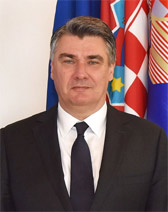
Zoran Milanovic
Croatian leader who rose from the premiership to the presidency and became known for his direct, confrontational political style
Born on October 30, 1966
Age: 60
Profession: Lawyer, Politician, President
Place of Birth: Zagreb, then part of Yugoslavia, now Croatia
Zoran Milanović was born on October 30, 1966, in Zagreb, then part of Yugoslavia and now the capital of Croatia. A Croatian politician, lawyer and former diplomat, Zoran Milanović has served as President of the Republic of Croatia since February 18, 2020. He previously served as Prime Minister from December 2011 until January 2016 and led the Social Democratic Party of Croatia between 2007 and 2016. Known for his sharp rhetoric, emphasis on national sovereignty and outspoken criticism of government, European Union and NATO policies, he won a second presidential term by a landslide in January 2025 and took the oath for another five-year mandate on February 18, 2025.
Early Life and Education
Zoran Milanović grew up in Zagreb, where he completed his primary and secondary education. He came of age during the final decades of socialist Yugoslavia, a period marked by political stability at the federal level but also by growing economic difficulties and increasingly visible tensions among the republics that formed the country.
In 1986, Zoran Milanović entered the Faculty of Law at the University of Zagreb. He completed his legal studies in 1991, the same year in which Croatia declared independence and the Croatian War of Independence began. His academic performance earned him the University of Zagreb Rector’s Award.
Zoran Milanović later expanded his education in European law. In 1998, he completed a master’s degree in European Union law at the Vrije Universiteit Brussel in Brussels. His legal education and familiarity with European institutions became important assets during Croatia’s negotiations for closer integration with Western political and security organizations.
Legal and Diplomatic Career
Zoran Milanović began his professional career as an intern at the Zagreb Commercial Court. The position introduced him to commercial law and the legal institutions of the newly independent Croatian state.
In 1993, Zoran Milanović joined the Croatian Ministry of Foreign Affairs, beginning a diplomatic career that would take him into international security and European affairs. In 1994, he worked as a political adviser to a peace mission of the Organization for Security and Co-operation in Europe in Azerbaijan.
From 1996 to 1999, Zoran Milanović served as an adviser at Croatia’s diplomatic mission to the European Union and NATO in Brussels. Croatia was not yet a member of either organization, and the country was attempting to strengthen its position within the Western diplomatic and security system following the wars that accompanied the breakup of Yugoslavia.
The assignment provided Zoran Milanović with direct experience of European diplomacy, collective security policy and the institutional structure of the European Union. His years in Brussels also allowed him to observe how smaller European states negotiated with more powerful governments and international organizations.
In 2003, Zoran Milanović became Assistant Minister for Political Multilateral Affairs at the Croatian Ministry of Foreign Affairs. In that role, he worked on relations with international organizations, security policy and multilateral diplomacy. His diplomatic background later distinguished him from many domestic party politicians and contributed to his reputation as a politician with strong knowledge of European and foreign affairs.
Rise within the Social Democratic Party
Zoran Milanović entered party politics through the Social Democratic Party of Croatia, generally known by its Croatian abbreviation SDP. The party had developed from the reformed Croatian branch of the former communist organization but had repositioned itself as a modern European social-democratic movement.
Following the illness and death of party leader Ivica Račan in 2007, Zoran Milanović competed for the leadership of the Social Democratic Party of Croatia. Although relatively young and less widely known than several senior party figures, he won the internal election and became party president.
During the same period, Zoran Milanović chaired the National Committee for Monitoring Croatia’s European Union Accession Negotiations. The position placed him at the center of one of the most important strategic projects in modern Croatian history: the effort to secure full membership in the European Union.
In 2008, Zoran Milanović became a member of the Croatian Parliament. Until 2011, he served as president of the SDP parliamentary group and sat on the Committee on the Constitution, Standing Orders and Political System. His combative performances in parliament and direct criticism of the government helped establish him as the leading figure of the center-left opposition.
The Kukuriku Coalition
Ahead of the 2011 parliamentary election, Zoran Milanović brought together a four-party center-left alliance known as the Kukuriku Coalition. Its members were the Social Democratic Party of Croatia, the Croatian People’s Party–Liberal Democrats, the Istrian Democratic Assembly and the Croatian Party of Pensioners.
The coalition campaigned against the governing Croatian Democratic Union, which had been weakened by economic difficulties and a series of corruption scandals. Zoran Milanović presented the alliance as a reformist alternative capable of modernizing state institutions, restoring public confidence and completing Croatia’s integration into the European Union.
The Kukuriku Coalition won the December 2011 parliamentary election. Zoran Milanović was appointed Prime Minister and took office on December 23, 2011, becoming the head of Croatia’s tenth government.
Prime Minister of Croatia
Zoran Milanović assumed office while Croatia was still dealing with the consequences of the global financial crisis. The economy had experienced several years of contraction, unemployment was high, public debt was increasing and private investment remained weak.
His government pursued fiscal consolidation, changes to the tax system, restructuring of state-owned enterprises and reforms intended to improve the investment environment. It also attempted to reduce administrative barriers and make public institutions more efficient.
These policies produced mixed political reactions. Supporters argued that structural reforms were necessary to stabilize public finances and make the country more competitive. Trade unions and opposition parties criticized privatization proposals, changes to labor regulation and reductions or restrictions affecting sections of public expenditure.
The government also faced criticism for failing to generate a rapid economic recovery. Although the Croatian economy eventually returned to growth, the prolonged recession and high unemployment weakened public confidence in the administration of Zoran Milanović.
Croatia’s Accession to the European Union
The most historically significant event of the premiership of Zoran Milanović was Croatia’s entry into the European Union on July 1, 2013. Croatia became the organization’s 28th member state after an accession process that had lasted approximately a decade.
Although the negotiations had begun under earlier governments, the administration of Zoran Milanović oversaw the final preparations for membership and Croatia’s transition from candidate country to full member. He described accession as confirmation that Croatia belonged within the European political, legal and economic order.
Membership opened access to European institutions, development funding and the internal market, but it did not immediately resolve the country’s economic difficulties. The government was required to adapt national legislation and administrative practices to European rules while responding to domestic expectations that membership would quickly improve living standards.
Zoran Milanović generally supported deeper cooperation with European institutions during his premiership. His later presidency, however, would be characterized by a more skeptical approach toward the way in which European power was exercised and the degree to which smaller member states could protect their own interests.
Social and Domestic Policies
On social questions, the government of Zoran Milanović adopted a broadly liberal and secular position. It supported stronger protections for minorities, women’s rights and the legal recognition of same-sex partnerships. The administration frequently clashed with conservative organizations and sections of the Catholic Church over education, family policy and the public role of religion.
Zoran Milanović portrayed his government as committed to a civic understanding of the Croatian state in which citizenship and constitutional equality took priority over ethnic or religious identity. His supporters regarded this approach as part of Croatia’s modernization, while opponents accused the government of disregarding traditional social values.
Relations with labor organizations were more complicated. Although the Social Democratic Party of Croatia had historical links with organized labor, several economic reforms introduced by the government were opposed by unions representing public-sector employees and workers in state-controlled industries.
2015 Election and Departure from Government
The 2015 parliamentary election produced an inconclusive result. The center-left coalition led by Zoran Milanović and the center-right alliance led by the Croatian Democratic Union both failed to secure a governing majority.
After prolonged negotiations, the reformist Bridge of Independent Lists reached an agreement with the Croatian Democratic Union. The resulting coalition nominated businessman Tihomir Orešković as prime minister.
Zoran Milanović left office on January 22, 2016, ending a premiership that had lasted slightly more than four years. He remained leader of the Social Democratic Party and continued to lead the opposition during the political instability that followed the formation of the new government.
Resignation from Party Leadership
The government of Tihomir Orešković collapsed in 2016, leading to an early parliamentary election. Zoran Milanović again led the main center-left electoral alliance, but the Social Democratic Party of Croatia failed to achieve the result required to return to power.
Following the defeat, Zoran Milanović announced that he would not seek another term as party president. He stepped down from the leadership later in 2016, concluding nine years at the head of the Social Democratic Party.
He temporarily withdrew from frontline politics and began working as a consultant. During this period, he advised private clients and participated in business activities, while largely avoiding the daily political disputes taking place within Croatia.
Return to Politics and Presidential Campaign
In 2019, Zoran Milanović announced his return to active politics as a candidate for the presidency. He was supported by the Social Democratic Party of Croatia and several other center-left parties.
His campaign used the slogan A Normal Croatia. The message emphasized the rule of law, tolerance, institutional stability and the need to reduce political extremism. Zoran Milanović presented himself as an experienced former prime minister who could restore dignity and seriousness to the presidency.
His main opponent was the incumbent president, Kolinda Grabar-Kitarović, who was supported by the Croatian Democratic Union. After advancing to the second round, Zoran Milanović defeated her in January 2020.
On February 18, 2020, Zoran Milanović took the oath of office and became the fifth president of independent Croatia. The ceremony was deliberately smaller and less elaborate than previous presidential inaugurations, reflecting his preference for a less ceremonial interpretation of the office.
Presidential Powers and Political Role
Under the Croatian constitutional system, the president does not manage the daily work of the government and cannot independently determine domestic legislation. The office nevertheless has important authority and influence in defense, national security, military command, intelligence oversight and foreign policy.
Zoran Milanović initially stated that he intended to act as a constructive constitutional figure rather than as a constant opponent of the government. His relationship with Prime Minister Andrej Plenković and the Croatian Democratic Union administration, however, soon became intensely confrontational.
The two leaders disagreed over diplomatic appointments, control of security institutions, military policy, Croatia’s representation at international meetings and the constitutional division of foreign-policy powers. Their exchanges frequently included personal insults and unusually harsh public language.
Supporters of Zoran Milanović argued that he was using the presidency to hold the government accountable and prevent excessive concentration of power. Critics maintained that his behavior weakened institutional cooperation and transformed disagreements between state offices into personalized political conflicts.
Foreign Policy and National Sovereignty
During his presidency, Zoran Milanović increasingly emphasized national sovereignty and the need for smaller countries to defend their own interests within international alliances. He remained committed to Croatia’s formal membership in the European Union and NATO, but frequently criticized the policies, priorities and decision-making processes of both organizations.
He argued that European institutions required stronger democratic legitimacy and that the interests of smaller states should not automatically be subordinated to the strategies of larger European powers. His speeches often distinguished between membership in Western institutions and unquestioning acceptance of every policy promoted by their most influential members.
Zoran Milanović also took a strong interest in the constitutional and political position of Croats in Bosnia and Herzegovina. He criticized electoral arrangements that he believed prevented Bosnian Croats from choosing their own legitimate representatives and accused some Western governments of failing to recognize the complexity of the country’s constitutional structure.
Russia’s Invasion of Ukraine
Zoran Milanović did not support Russia’s invasion of Ukraine, but he became one of the most prominent European critics of policies that could increase direct military involvement by Croatia or expand the conflict. He argued that Croatia should avoid becoming an operational participant in the war and should place the safety of its own citizens and military personnel first.
He opposed proposals to train Ukrainian soldiers in Croatia and objected to Croatian participation in military initiatives that he considered insufficiently defined or too closely connected with wartime operational planning. In 2022, the Croatian Parliament failed to approve participation in the European Union Military Assistance Mission in support of Ukraine after he had refused to endorse the government proposal.
In 2024, Zoran Milanović also refused to approve the participation of Croatian military personnel in the NATO Security Assistance and Training for Ukraine mission. He argued that the arrangement risked bringing the alliance closer to direct participation in the conflict.
His position created repeated disputes with Andrej Plenković, whose government strongly supported Ukraine and favored closer alignment with the policies of the European Union and NATO. Critics accused Zoran Milanović of repeating narratives beneficial to Russia, while he maintained that opposition to escalation did not amount to support for the Russian government.
Zoran Milanović has consistently argued that diplomacy and negotiations must remain part of any attempt to end the war. He has also criticized open-ended military commitments and questioned whether European governments have clearly defined the political objectives of their support for Ukraine.
The 2024 Parliamentary Election Controversy
In March 2024, while still serving as president, Zoran Milanović announced that he intended to become the opposition candidate for prime minister in the approaching parliamentary election. The announcement created an immediate constitutional dispute because the Croatian presidency is formally a non-partisan office.
The Constitutional Court of Croatia ruled that Zoran Milanović could not participate as a party candidate or campaign for the premiership while remaining president. The court stated that he would first have to resign from the presidency if he wanted to become a parliamentary candidate or openly take part in a party campaign.
Zoran Milanović rejected the decision and described it as an improper intervention in the electoral process. Although he was not formally listed as a parliamentary candidate, he continued making statements supportive of the opposition coalition led by the Social Democratic Party.
After the election, the Constitutional Court further stated that he could not be proposed as prime minister because he had failed to resign before becoming involved in the campaign. The Croatian Democratic Union remained the largest party and Andrej Plenković ultimately formed another government.
2024–2025 Presidential Election
Zoran Milanović subsequently sought a second presidential term. In the first round held on December 29, 2024, he received approximately 49 percent of the vote, narrowly missing the absolute majority required to win without a runoff. Dragan Primorac, supported by the governing Croatian Democratic Union and several allied parties, finished second with approximately 19 percent.
The second round was held on January 12, 2025. Zoran Milanović won 1,122,859 votes, while Dragan Primorac received 380,752. The result gave the incumbent approximately 74.7 percent of the valid votes and represented one of the widest presidential election victories in the history of independent Croatia.
The scale of the victory reflected support extending beyond the traditional center-left electorate. Many voters who did not necessarily identify with the Social Democratic Party viewed Zoran Milanović as a counterweight to the long-standing national dominance of the Croatian Democratic Union.
Zoran Milanović interpreted the result as both an endorsement of his first presidential term and a message of dissatisfaction with the government. The election strengthened his political authority even though the constitutional powers of the presidency remained limited.
He took the oath for his second five-year term on February 18, 2025. In his inaugural message, he again emphasized national interests, peace, security and the responsibility of Croatian institutions to protect citizens from international instability and domestic inequality.
Political Philosophy and Transformation
Zoran Milanović originally became nationally prominent as a conventional center-left and social-democratic politician. As party leader and prime minister, he emphasized European integration, secular government, minority rights and socially liberal legislation.
During his presidency, his political identity became more difficult to place within the traditional division between left and right. He retained several socially liberal positions but increasingly used language associated with national sovereignty, military restraint, state interests and resistance to pressure from international institutions.
Some political analysts have described Zoran Milanović as a left-wing populist, a sovereigntist social democrat or a nationalist politician with center-left origins. Comparisons have occasionally been drawn with leaders such as Robert Fico and Viktor Orban, particularly in discussions of Ukraine and European sovereignty, although his background, social policies and relationship with the European Union differ significantly from theirs.
His political evolution has allowed him to attract voters from outside the traditional Social Democratic Party base. At the same time, it has alienated some former liberal supporters who regard several of his foreign-policy statements and confrontational interventions as inconsistent with his earlier political identity.
Communication Style and Public Controversies
Zoran Milanović is known for a direct, argumentative and frequently sarcastic communication style. He often speaks without prepared notes and responds to journalists, ministers and political opponents in language that is unusually blunt for a head of state.
Supporters see this approach as evidence that he is independent, intellectually confident and unwilling to use conventional diplomatic language to conceal his actual views. They regard him as a politician who challenges political correctness and openly defends Croatian interests.
Critics argue that his rhetoric contributes to polarization and occasionally damages Croatia’s international reputation. He has been criticized for personal remarks directed at politicians, journalists, activists and public officials, as well as for statements considered dismissive or insulting toward particular social groups.
His disputes with Andrej Plenković have become a defining feature of Croatian political life. The rivalry represents not only a personal conflict but also a continuing constitutional disagreement over the authority of the presidency, the role of the government and the direction of Croatian foreign and defense policy.
Personal Life
Zoran Milanović has been married to Sanja Musić Milanović since 1994. She is a physician, epidemiologist, scientist and university professor whose academic work has included public health, nutrition and the prevention of childhood obesity.
The couple have two sons, Ante Jakov Milanović and Marko Milanović. Although Sanja Musić Milanović has participated in public-health initiatives and official events, the family has generally maintained a more private public profile than many other prominent political families.
Position in Contemporary Croatian Politics
By combining experience in law, diplomacy, parliamentary politics, party leadership, government and the presidency, Zoran Milanović has built one of the most extensive political careers in contemporary Croatia.
As prime minister, he led the country through the final stage of its accession to the European Union and governed during a difficult period of recession and economic restructuring. As president, he developed a more assertive and sovereignty-focused political identity, frequently challenging both the Croatian government and the policies of Western institutions.
His landslide reelection in 2025 demonstrated that his combative style and criticism of the governing establishment had gained support well beyond his original center-left constituency. At the same time, disputes over his rhetoric, his interpretation of presidential authority and his positions on Ukraine continue to make him one of the country’s most polarizing public figures.
Zoran Milanović remains a central force in Croatian politics: admired by supporters as an independent defender of national interests and criticized by opponents as a divisive leader whose confrontational conduct can undermine institutional stability.
Selected Offices and Positions
- 1993–2003 – Diplomat and Adviser at the Croatian Ministry of Foreign Affairs
- 1994 – Political Adviser to the Organization for Security and Co-operation in Europe Mission in Azerbaijan
- 1996–1999 – Adviser at Croatia’s Mission to the European Union and NATO in Brussels
- 2003–2004 – Assistant Minister for Political Multilateral Affairs
- 2007–2016 – President of the Social Democratic Party of Croatia
- 2007 – Chairman of the National Committee for Monitoring Croatia’s European Union Accession Negotiations
- 2008–2011 – Member of the Croatian Parliament and President of the SDP Parliamentary Group
- 2011–2016 – Prime Minister of the Republic of Croatia
- 2020–Present – President of the Republic of Croatia
Source: Biyografiler.com
Frequently asked questions about Zoran Milanovic
Who is Zoran Milanovic?, Zoran Milanovic biography, Zoran Milanovic life story, Zoran Milanovic age, Zoran Milanovic facts, Zoran Milanovic birthplace, Zoran Milanovic photos, Zoran Milanovic videos, Zoran Milanovic career
Related Biographies

Lamine Yamal
Professional footballer

Sam Altman
Entrepreneur, Investor, CEO

Kylian Mbappe
Professional footballer

Alice Weidel
Politician, Economist

Erling Haaland
Professional footballer

Giorgia Meloni
Politician, Journalist


Hongjoong
Singer, Rapper, Songwriter, Composer

Ludacris
Rapper, Actor

Kwon Eunbi
Singer

Sarah Wayne Callies
Actress, Screenwriter, Producer, Director

LaTavia Roberson
Singer, Actress, Entrepreneur
Lamine Yamal
Professional footballer

Austin Abrams
Actor

Xi Jinping
Politician, Statesman, Head of State

Claudia Sheinbaum
President, Politician, Scientist, Academic

Colman Domingo
Actor, Director, Producer

Kaia Gerber
Model, Actress