
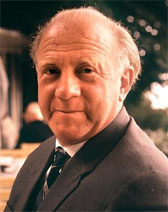
Werner Heisenberg
Founder of Quantum Mechanics and the Uncertainty Principle
Born on December 5, 1901
Died on February 1, 1976
Age at death: 75
Profession: Physicist
Place of Birth: Würzburg, Germany
Place of Death: Munich, Germany
Werner Heisenberg was born on December 5, 1901, in Würzburg, Germany, as the son of Annie Wecklein and August Heisenberg. His family moved to Munich in 1910. He grew up in a large family with five siblings, including his brother Erwin Heisenberg, who became an industrial chemist, and another brother, Kari, who later emigrated to the United States.
Throughout his life, Werner Heisenberg suffered from recurring illnesses and allergies. At the age of five, he nearly died from pneumonia. After graduating from the Maximilian Gymnasium in 1920, he enrolled at the University of Munich. During his first two years, he submitted four highly promising research papers in physics, already signaling his exceptional talent.
Werner Heisenberg pursued his studies at the universities of Munich and Göttingen. After studying physics in Munich, he worked with leading figures in atomic physics, including Max Born and Niels Bohr. He received his doctorate in physics from the University of Munich in 1923. From 1923 to 1924, he worked with Max Born at Göttingen, and in 1924 he joined Niels Bohr at the Institute for Theoretical Physics at the University of Copenhagen.
Following an intensely productive period devoted to quantum mechanics, Werner Heisenberg was appointed professor at the University of Leipzig in 1927. He also became head of the Institute for Theoretical Physics, establishing himself as a leading authority in atomic physics. Between 1927 and 1941, he carried out his most influential work, laying the foundations of quantum mechanics.
Werner Heisenberg introduced a radically new approach to quantum theory known as matrix mechanics. He formulated the Uncertainty Principle, which states that the position and momentum of a particle, such as an electron, cannot both be precisely determined at the same time. The more accurately one quantity is measured, the less precisely the other can be known. This principle demonstrated that uncertainty is not due to experimental limitations but is intrinsic to nature at the atomic scale.
According to Heisenberg’s theory, the behavior of atoms must be described not by classical trajectories or orbits but by abstract mathematical structures called matrices. Physical quantities such as position and momentum are represented by these mathematical objects rather than ordinary numbers. This marked a fundamental break from classical physics and reshaped scientific understanding of matter and radiation.
Heisenberg also proposed a new atomic model consistent with quantum mechanics, fundamentally different from earlier models developed by Bohr. He was among the first to explain that the atomic nucleus consists of protons and neutrons and suggested that strong interaction forces bind the nucleus together. These ideas later proved essential for nuclear physics.
In 1932, Werner Heisenberg was awarded the Nobel Prize in Physics for the creation of quantum mechanics and for applications that led to the discovery of the allotropic forms of hydrogen.
During the Nazi era, Werner Heisenberg opposed the forced exile of Jewish scientists initiated by Adolf Hitler in 1933. Throughout World War II, he worked at the University of Berlin and the Kaiser Wilhelm Institute alongside Otto Hahn on nuclear energy research. After the Allied occupation of Berlin in 1945, he was briefly detained. In 1946, he returned to Göttingen and founded what later became the Max Planck Institute for Physics and Astrophysics.
Werner Heisenberg was involved in debates over Germany’s wartime nuclear research program. Although experimental reactor development was theoretically possible, incorrect calculations regarding critical mass and limited resources prevented practical outcomes. After the war, Allied investigations concluded that Germany had been far from developing an atomic bomb.
After the war, Werner Heisenberg played a key role in rebuilding German science. He served as director of the former Kaiser Wilhelm Institute, later renamed the Max Planck Institute for Physics. In 1950, he visited Turkey and delivered a series of lectures. In 1957, he co-signed a declaration opposing the military use of nuclear weapons. In 1958, he joined the University of Munich as professor.
An accomplished pianist, Werner Heisenberg married Elisabeth Schumacher on April 29, 1937. They had seven children, including twins Maria Heisenberg and Wolfgang Heisenberg (born 1938), followed by Barbara, Christine, Jochen, Martin, and Verena.
Werner Heisenberg died on February 1, 1976, in Munich, Germany, at the age of seventy-five, from gallbladder and kidney cancer. His work permanently transformed modern physics and established the philosophical foundations of quantum mechanics.
Major Works
1930 – The Physical Principles of the Quantum Theory
1943 – Cosmic Radiation
1943 – Nuclear Physics
1949 – Philosophical Problems of Nuclear Science
1958 – Physics and Philosophy
1967 – Introduction to the Unified Field Theory of Elementary Particles
1969 – The Part and the Whole
1970 – Steps Beyond the Frontiers
Source: Biyografiler.com
Frequently asked questions about Werner Heisenberg
Who is Werner Heisenberg?, Werner Heisenberg biography, Werner Heisenberg life story, Werner Heisenberg age, Werner Heisenberg facts, Werner Heisenberg birthplace, Werner Heisenberg photos, Werner Heisenberg videos, Werner Heisenberg career
Related Biographies

Lamine Yamal
Professional footballer

Sam Altman
Entrepreneur, Investor, CEO

Erling Haaland
Professional footballer

Kylian Mbappe
Professional footballer

Alice Weidel
Politician, Economist

Giorgia Meloni
Politician, Journalist


Hongjoong
Singer, Rapper, Songwriter, Composer

Ludacris
Rapper, Actor

Kwon Eunbi
Singer

Sarah Wayne Callies
Actress, Screenwriter, Producer, Director

LaTavia Roberson
Singer, Actress, Entrepreneur

Sydney Sweeney
Actress

Ma Huateng
Entrepreneur, Inventor
Lamine Yamal
Professional footballer

Austin Abrams
Actor

Ursula von der Leyen
Politician, Physician

Kevin Warsh
Economist