
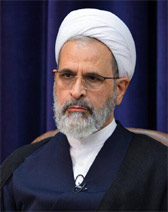
Alireza Arafi
Member of Iran’s Interim Leadership Council (2026)
Born on ?? ??, 1959
Age: 67
Profession: Religious Leader, Political Leader
Place of Birth: Maybod, Yazd Province, Iran
Alireza Arafi is an Iranian cleric, Islamic scholar, and senior religious administrator who rose to heightened prominence in March 2026 when he was appointed to Iran’s interim leadership council following the death of Supreme Leader Ali Khamenei. Over decades, Alireza Arafi has held influential positions within Iran’s religious institutions, including leadership roles in seminaries, the Al-Mustafa International University, and membership in the Guardian Council. Known for his close association with Iran’s clerical establishment, he has been regarded as a figure operating at the intersection of religious authority and state governance.
Early Life and Religious Education
Alireza Arafi was born in 1959 in Maybod, located in Iran’s Yazd Province. He was raised in a religious family environment; his father, Mohammad Ebrahim Arafi, was known to have been a close associate of Ruhollah Khomeini, the leader of the 1979 Iranian Revolution. This familial proximity to the revolutionary clerical network would shape Alireza Arafi’s formative years and ideological orientation.
He completed his primary education in the religious city of Qom, which functions as the epicenter of Shiite theological scholarship in Iran. Alongside standard schooling, he began attending seminary (hawza) preparatory courses at an early age. During his studies, Alireza Arafi developed proficiency in Arabic and English and pursued subjects including mathematics and philosophy, disciplines that later informed his scholarly and administrative work within the Islamic Republic’s clerical institutions.
Pre-Revolution Activities and Ideological Formation
Before the 1979 Islamic Revolution, Alireza Arafi was active as a preacher and writer. His early intellectual activities were aligned with the broader revolutionary discourse that was gaining momentum under the leadership of Ruhollah Khomeini. The revolution fundamentally reshaped Iran’s political structure, institutionalizing the doctrine of Velayat-e Faqih — the Guardianship of the Islamic Jurist — which would later become central to Alireza Arafi’s institutional roles.
Leadership of Al-Mustafa International University
From 2008 to 2018, Alireza Arafi served as rector of the Al-Mustafa International University, a major religious educational institution established to promote the ideology of the Islamic Republic and to disseminate Shiite Islam globally. The university operates internationally and recruits students from numerous countries.
Between 2009 and 2018, he also headed the Almostafa Institute, an institution founded with the stated aim of spreading the ideology of the Islamic Republic and Shiite Islam. During his tenure, Alireza Arafi claimed that approximately 50 million people converted to Shiism within eight years through the institution’s outreach. This assertion has been widely described by analysts and experts as highly improbable and unattainable, generating debate regarding the scale and measurement of religious conversion efforts attributed to the organization.
Senior Religious and Constitutional Roles
In 2015, Alireza Arafi began serving as Friday Prayer Leader in Qom, a position carrying both religious authority and political symbolism within Iran’s clerical system. Since 2016, he has also presided over Iran’s seminary network, overseeing religious education nationwide.
On July 15, 2019, Alireza Arafi was appointed as a member of the Guardian Council, the constitutional body responsible for reviewing legislation and supervising elections. The council plays a decisive role in maintaining ideological alignment with the principles established by Ruhollah Khomeini and later upheld by Ali Khamenei.
On March 8, 2022, he was elected to the Assembly of Experts, the constitutional institution empowered to appoint, supervise, and dismiss Iran’s Supreme Leader. Membership in this body positioned Alireza Arafi among the senior clerics directly involved in safeguarding the continuity of the Velayat-e Faqih system.
Interim Leadership Council Appointment (2026)
On February 28, 2026, during joint U.S. and Israeli air operations, Iran’s Supreme Leader Ali Khamenei was killed in an Israeli airstrike in Tehran. Following this development, on March 1, 2026, Alireza Arafi, as a member of the Guardian Council, was selected to serve on Iran’s interim leadership council.
Under the Iranian Constitution, the Supreme Leader — referred to as the “Rahbar” — is ultimately chosen by the Assembly of Experts. Until a new leader is formally appointed, the responsibilities of the Velayat-e Faqih office are to be carried out collectively. In accordance with constitutional provisions, President Masoud Pezeshkian, Judiciary Chief Gholam-Hossein Mohseni-Ejei, and Alireza Arafi assumed joint temporary authority.
Political Profile and Diplomatic Engagements
Alireza Arafi has been described as having worked closely with Ali Khamenei in religious and institutional matters. His diplomatic engagements, including visits to Moscow and the Vatican, have attracted attention in international media and policy circles. These contacts positioned him within broader interfaith and geopolitical dialogues, reflecting Iran’s strategic religious diplomacy.
Observers frequently characterize his political and religious stance as relatively cautious and measured within the framework of Iran’s conservative clerical establishment. While firmly rooted in the ideological foundations of the Islamic Republic, Alireza Arafi has often been viewed as an administrator and institutional strategist rather than a populist or overtly confrontational figure.
Source: Biyografiler.com
Frequently asked questions about Alireza Arafi
Who is Alireza Arafi?, Alireza Arafi biography, Alireza Arafi life story, Alireza Arafi age, Alireza Arafi facts, Alireza Arafi birthplace, Alireza Arafi photos, Alireza Arafi videos, Alireza Arafi career
Related Biographies

Lamine Yamal
Professional footballer

Erling Haaland
Professional footballer

Kylian Mbappe
Professional footballer

Bad Bunny
Rapper, Songwriter

Austin Abrams
Actor

Brad Pitt
Actor


Hongjoong
Singer, Rapper, Songwriter, Composer

Ludacris
Rapper, Actor

Kwon Eunbi
Singer

Sarah Wayne Callies
Actress, Screenwriter, Producer, Director

LaTavia Roberson
Singer, Actress, Entrepreneur
Lamine Yamal
Professional footballer

Elon Musk
Entrepreneur, Businessperson, Engineer

Keanu Reeves
Actor
Erling Haaland
Professional footballer

Emma Watson
Actress

Leonardo DiCaprio
Actor