
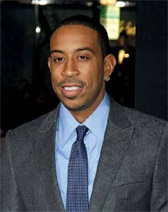
Ludacris
Grammy-winning Southern hip-hop star and actor internationally known as Tej Parker in the Fast & Furious franchise
Born on September 11, 1977
Age: 49
Profession: Rapper, Actor
Place of Birth: Champaign, Illinois, United States
Ludacris, born Christopher Brian Bridges on September 11, 1977, in Champaign, Illinois, United States, is an American rapper, songwriter, actor, record producer, entrepreneur and philanthropist. Emerging from the Atlanta hip-hop scene at the end of the 1990s, he became one of the first major stars associated with Southern and Dirty South rap to achieve sustained mainstream commercial success. Albums including Back for the First Time, Word of Mouf, Chicken-n-Beer, The Red Light District and Release Therapy established him as one of the dominant rappers of the early 2000s, while songs such as What's Your Fantasy, Southern Hospitality, Area Codes, Move Bitch, Stand Up, Money Maker and his appearance on Usher's Yeah! became major hits. In cinema, Ludacris developed an equally durable second career, most prominently as Tej Parker in the Fast & Furious franchise.
Early Life and Background
Ludacris is the son of Roberta Shields and Wayne Brian Bridges. His childhood and adolescence involved several moves, including periods in Illinois, Virginia and Georgia. He attended Oak Park and River Forest High School in Illinois, spent a period at Centreville High School in Virginia and later attended Banneker High School in Atlanta, graduating in 1995.
He began writing rap lyrics when he was around nine years old and joined an amateur rap group a few years later. The move to Atlanta became particularly important because the city was developing into one of the central locations of Southern hip-hop. Exposure to Atlanta's music scene, radio culture and local performers would shape both his musical identity and his later business network.
Ludacris subsequently studied music management at Georgia State University. Although he left before completing the program after his recording career accelerated, the business-oriented education complemented the industry experience he was already gaining through radio and independent music.
The Origins of the Ludacris Name
The stage name Ludacris is derived from the English word “ludicrous,” meaning something wild, ridiculous or absurd. He altered the spelling so that the final syllable incorporated “Cris,” a reference to his first name Christopher. He has explained that the name matched the exaggerated humor, unpredictable imagery and energetic personality of his music and videos.
Before settling on Ludacris, he experimented with other names. When he first began rapping as a child, he called himself Kris Kringle, a reference to Santa Claus. He later joked that the name became impractical because there were only so many Christmas-themed raps he could write.
During his early professional period in Atlanta radio, he became known as Chris Lova Lova. That nickname gained recognition among local listeners before the Ludacris identity eventually became his permanent recording name.
Radio Career and Entry into the Atlanta Hip-Hop Scene
Before achieving success as a recording artist, Ludacris worked as an intern and later an on-air personality at Atlanta radio station Hot 97.5, now known as Hot 107.9. Working under the name Chris Lova Lova gave him direct access to artists, producers and music executives at a time when Atlanta was becoming one of the most influential cities in American hip-hop.
The radio job also helped him develop confidence behind a microphone and gave him opportunities to build relationships within the recording industry. One of the most important early connections was producer Timbaland, who featured Ludacris on the song Fat Rabbit from the 1998 album Tim's Bio: Life from da Bassment. The collaboration introduced his distinctive voice and delivery to a wider audience.
Incognegro and Independent Beginnings
Ludacris initially built his career independently. Through Disturbing tha Peace, the label and entertainment company associated with his early career, he released Incognegro in 1999. The project demonstrated the exaggerated vocal delivery, comedy, storytelling and rapid wordplay that would become defining elements of his style.
The independent album generated enough regional attention to attract major-label interest. His ability to build an audience without first relying on a large national campaign was particularly important at a time when Southern hip-hop was still fighting for equal commercial visibility alongside established scenes in New York and Los Angeles.
Breakthrough with Def Jam South
After signing with Def Jam South, Ludacris released Back for the First Time in 2000. The album reworked material from Incognegro while introducing him to a national audience. What's Your Fantasy, featuring Shawnna, and the The Neptunes-produced Southern Hospitality became major singles.
His delivery immediately distinguished him from many contemporaries. Ludacris combined rapid changes in tone, unusual vocal inflections, punchlines, sexual humor and exaggerated visual comedy. His music videos frequently amplified this approach through distorted imagery, oversized heads, animated expressions and deliberately absurd scenarios.
The success of Back for the First Time made him one of the most visible representatives of Atlanta's expanding rap industry and helped establish Def Jam South as an important platform for Southern artists.
Word of Mouf and Mainstream Success
His 2001 album Word of Mouf significantly expanded that success. Songs including Area Codes with Nate Dogg, Rollout (My Business) and Move Bitch became closely identified with early-2000s hip-hop culture.
By this period, Ludacris had moved beyond being viewed simply as an Atlanta or regional Southern rapper. His records were reaching national radio, television and international audiences, while his distinctive voice made him an especially sought-after guest rapper.
Collaborations became another major component of his career. Over the following years he worked with artists including Missy Elliott, Usher, Lil Jon, Mary J. Blige, Pharrell Williams, T.I., Jamie Foxx, Nicki Minaj, Ciara and Justin Bieber.
Chicken-n-Beer and The Red Light District
In 2003, Ludacris released Chicken-n-Beer. Its lead single Stand Up, produced by Kanye West, became one of his biggest commercial records. The album strengthened his position as a mainstream rap star while maintaining the humor and energetic delivery associated with his earlier work.
The Red Light District followed in 2004. By then, Ludacris was operating simultaneously as a recording artist, label figure and increasingly visible actor. His music during this period moved easily between club-oriented singles, comic storytelling and technically elaborate rap performances.
Release Therapy and Grammy Recognition
With the 2006 album Release Therapy, Ludacris adopted a somewhat more serious tone alongside his established humorous persona. The project included Money Maker featuring Pharrell Williams and Runaway Love featuring Mary J. Blige, the latter addressing the experiences of young women confronting abuse and difficult family circumstances.
Release Therapy won the Grammy Award for Best Rap Album, while Money Maker won Best Rap Song. Earlier, Ludacris, Usher and Lil Jon had won a Grammy for their collaboration Yeah!. In total, Ludacris has won three Grammy Awards from twenty nominations.
The awards represented a period in which his commercial success was accompanied by recognition from the recording industry, while his music increasingly demonstrated that his exaggerated comic persona could coexist with more serious subject matter.
Later Albums and Continued Music Career
Ludacris continued recording with Theater of the Mind in 2008 and Battle of the Sexes in 2010. These albums featured collaborations with a broad range of hip-hop and R&B performers and reflected his ability to remain commercially visible as musical trends changed around him.
His 2015 album Ludaversal became his first studio album in five years. The record was more autobiographical than much of his earlier work, addressing family, career longevity, financial struggles from his youth and his position within hip-hop after more than a decade of mainstream success.
Although his film and business activities increasingly occupied his time, Ludacris continued performing, collaborating and recording new material. In 2026 he was again discussing new music publicly while maintaining an active live-performance schedule.
Transition into Acting
Ludacris began building a serious acting career during the same period in which his music was reaching its commercial peak. His transition was aided by a natural screen presence that already had been visible in his highly theatrical music videos.
His early film work included The Wash before his major franchise breakthrough as Tej Parker in 2 Fast 2 Furious in 2003. He soon demonstrated greater dramatic range through films including Crash and Hustle & Flow.
In Paul Haggis's Crash, Ludacris portrayed Anthony in an ensemble examining race, prejudice and social conflict in Los Angeles. The film won the Academy Award for Best Picture. His appearance in Hustle & Flow placed him within another critically recognized drama rooted in Southern hip-hop culture, alongside Terrence Howard.
Fast & Furious and Tej Parker
The role most strongly associated with Ludacris's acting career is Tej Parker in the Fast & Furious franchise. He first appeared in 2 Fast 2 Furious alongside Paul Walker and Tyrese Gibson, initially portraying Tej as a Miami street-racing organizer with technical knowledge and strong connections within the racing community.
After an absence from several installments, he returned in Fast Five in 2011. From that point onward, Tej became one of the core members of Dominic Toretto's extended team alongside characters played by Vin Diesel, Michelle Rodriguez, Tyrese Gibson, Sung Kang and later Nathalie Emmanuel.
The character gradually evolved from racing organizer into the group's primary technology specialist, hacker and tactical problem-solver. Ludacris's comic timing with Tyrese Gibson also became an important part of the franchise's ensemble chemistry.
He reprised Tej in Fast & Furious 6, Furious 7, The Fate of the Furious, F9: The Fast Saga and Fast X. By 2026, he was also attached to return as Tej in the next main installment, Fast Forever, continuing an association with the franchise that began more than two decades earlier.
Film and Television Work Beyond Fast & Furious
Outside the automotive franchise, Ludacris has moved between crime drama, action, comedy, family entertainment and voice acting. His film credits include Max Payne, RocknRolla, Gamer, No Strings Attached, New Year's Eve, The Ride, John Henry, End of the Road and Dashing Through the Snow.
He has also appeared on television in productions including Law & Order: Special Victims Unit, Empire and Being Mary Jane, while his television career expanded beyond acting when he became the host of Fear Factor during its MTV revival.
This combination of dramatic acting, comedy and unscripted television allowed Ludacris to develop a screen career that was not dependent entirely on his musical fame or on a single franchise.
Karma's World
One of Ludacris's most personal creative projects is the children's animated series Karma's World, inspired by his eldest daughter Karma Bridges. He created the concept through Karma's World Entertainment, initially developing it as an educational project before it became a full animated series for Netflix.
Karma's World follows Karma Grant, a young aspiring rapper who uses music and songwriting to understand problems involving friendship, identity, confidence, discrimination, family and self-expression. Ludacris served as creator and executive producer and was also deeply involved with the music.
The project allowed him to apply hip-hop storytelling to children's entertainment while focusing on themes such as self-esteem, creativity, leadership and cultural identity. The series ultimately ran for four seasons and expanded into music videos and related children's media.
Business Activities
Ludacris has developed numerous business interests alongside entertainment. Disturbing tha Peace functioned not only as the infrastructure for his own early career but also as a label platform associated with artists and producers from the Atlanta music scene.
He has invested in hospitality, technology, consumer products and entertainment ventures. His business activities have included restaurant projects and branded products, reflecting a long-term effort to build commercial interests outside recording and acting.
His experience studying music management and working within radio before becoming famous contributed to an unusually business-oriented approach to his entertainment career. Rather than operating exclusively as a performer, he has repeatedly participated in ownership, production and brand development.
Philanthropy
In 2001, Ludacris established The Ludacris Foundation, a nonprofit organization focused particularly on young people, families and underserved communities. His mother Roberta Shields became a central figure in the organization and has served as its president.
The foundation has supported education, youth development, community programs and economic empowerment initiatives. Philanthropy became one of the more consistent non-entertainment elements of Ludacris's public life as his commercial career expanded.
Personal Life
Ludacris married Eudoxie Mbouguiengue in December 2014. She is originally from Gabon and has been involved in philanthropic and community initiatives of her own.
Ludacris is the father of four daughters: Karma Bridges, Cai Bella Bridges, Cadence Gaëlle Bridges and Chance Oyali Bridges. His experience as a father, particularly his relationship with Karma, directly influenced the creation of Karma's World.
He has frequently described fatherhood as one of the most important parts of his life, and family-oriented projects became increasingly visible in his work as he moved into the later stages of his career.
Musical Style
Ludacris is particularly associated with Southern hip-hop and the Dirty South movement, but his individual style is distinguished by more than geography. His performances rely on strong enunciation, rapid changes in rhythm, comic exaggeration, aggressive punchlines and dramatic shifts in vocal tone.
Humor has always been central to his approach. Even when delivering technically complex verses, he frequently uses unexpected comparisons, caricature, exaggerated threats and animated vocal effects. This style translated especially well to music videos, where surreal visual comedy became part of the recognizable Ludacris image.
At the same time, songs such as Runaway Love demonstrated an ability to move away from comedy and club music toward socially conscious storytelling. That flexibility helped sustain his recording career across several shifts in mainstream hip-hop.
Albums
1999 – Incognegro2000 – Back for the First Time
2001 – Word of Mouf
2003 – Chicken-n-Beer
2004 – The Red Light District
2006 – Release Therapy
2008 – Theater of the Mind
2010 – Battle of the Sexes
2015 – Ludaversal
Selected Major Singles
2000 – What's Your Fantasy – featuring Shawnna2000 – Southern Hospitality
2001 – Area Codes – featuring Nate Dogg
2001 – Rollout (My Business)
2002 – Move Bitch – featuring Mystikal and I-20
2003 – Act a Fool
2003 – Stand Up – featuring Shawnna
2004 – Yeah! – Usher featuring Lil Jon and Ludacris
2004 – Number One Spot
2006 – Money Maker – featuring Pharrell Williams
2006 – Runaway Love – featuring Mary J. Blige
2010 – How Low
2010 – My Chick Bad – featuring Nicki Minaj
Films
2001 – The Wash – Customer – Comedy Film2003 – 2 Fast 2 Furious – Tej Parker – Action Film
2004 – Crash – Anthony – Drama Film
2005 – Hustle & Flow – Skinny Black – Musical Drama Film
2007 – Fred Claus – DJ Donnie – Comedy Film
2008 – Ball Don't Lie – Julius – Sports Drama Film
2008 – Max Payne – Jim Bravura – Action-Thriller Film
2008 – RocknRolla – Mickey – Crime-Comedy Film
2009 – Gamer – Humanz Brother – Science-Fiction Action Film
2011 – No Strings Attached – Wallace – Romantic Comedy Film
2011 – Fast Five – Tej Parker – Action Film
2011 – New Year's Eve – Brendan Nolan – Romantic Comedy Film
2013 – Fast & Furious 6 – Tej Parker – Action Film
2015 – Furious 7 – Tej Parker – Action Film
2017 – The Fate of the Furious – Tej Parker – Action Film
2018 – Show Dogs – Max – Voice – Family Comedy Film
2018 – The Ride – Eldridge Buultjens – Biographical Drama Film
2019 – John Henry – Hell – Action-Drama Film
2021 – F9: The Fast Saga – Tej Parker – Action Film
2022 – End of the Road – Reggie Beaumont – Thriller Film
2023 – Fast X – Tej Parker – Action Film
2023 – Dashing Through the Snow – Eddie Garrick – Family Comedy Film
2026 – Groove Tails – Voice Role – Animated Film
2028 – Fast Forever – Tej Parker – Action Film
Television
2006 – The Simpsons – Himself – Animated Comedy Series2006–2007 – Law & Order: Special Victims Unit – Darius Parker – Crime-Drama Series
2014 – Being Mary Jane – Terrence Mitchell – Drama Series
2015 – Empire – Officer McKnight – Musical Drama Series
2017–2018 – Fear Factor – Host – Reality Competition Series
2021–2022 – Karma's World – Creator / Executive Producer / Voice Performer – Animated Children's Series
Major Awards
2005 – Grammy Awards – Best Rap/Sung Collaboration – Yeah! with Usher and Lil Jon2007 – Grammy Awards – Best Rap Album – Release Therapy
2007 – Grammy Awards – Best Rap Song – Money Maker with Pharrell Williams
Selected Career Milestones
1998 – Appeared on Timbaland's Fat Rabbit1999 – Released independent album Incognegro
2000 – Achieved mainstream breakthrough with Back for the First Time
2001 – Released Word of Mouf
2003 – Debuted as Tej Parker in 2 Fast 2 Furious
2004 – Appeared in Academy Award-winning drama Crash
2005 – Won a Grammy for Yeah! with Usher and Lil Jon
2007 – Won Grammys for Release Therapy and Money Maker
2011 – Returned as Tej Parker in Fast Five and became a regular member of the franchise ensemble
2015 – Released Ludaversal
2021 – Karma's World premiered on Netflix
2023 – Reprised Tej Parker in Fast X
2026 – Continued performing and discussing new music while preparing for another Fast & Furious installment
2028 – Scheduled to return as Tej Parker in Fast Forever
Source: Biyografiler.com
Ludacris Movies
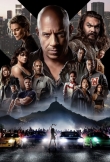
Fast X
Release Date: May 19, 2023
Director: Louis Leterrier
Writer: Dan Mazeau, Justin Lin
Cast: Vin Diesel, Michelle Rodriguez, Jason Momoa, Tyrese Gibson, Ludacris, John Cena, Nathalie Emmanuel, Jordana Brewster, Sung Kang, Brie Larson, Charlize Theron, Helen Mirren

F9 The Fast Saga
Release Date: July 2, 2021
Director: Justin Lin
Writer: Daniel Casey, Justin Lin
Cast: Vin Diesel, Michelle Rodriguez, Jordana Brewster, Tyrese Gibson, Ludacris, Nathalie Emmanuel, Charlize Theron, John Cena, Finn Cole, Sung Kang, Anna Sawai, Helen Mirren

Fate Of The Furious 8
Release Date: April 13, 2017
Director: F. Gary Gray
Writer: Chris Morgan, Gary Scott Thompson
Cast: Vin Diesel, Dwayne Johnson, Jason Statham, Charlize Theron, Michelle Rodriguez, Kurt Russell, Tyrese Gibson, Ludacris, Scott Eastwood, Nathalie Emmanuel, Chris Bridges, Eva Mendes
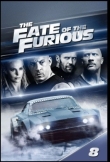
The Fate of the Furious
Release Date: April 14, 2017
Director: F. Gary Gray
Writer: Chris Morgan
Cast: Vin Diesel, Dwayne Johnson, Jason Statham, Michelle Rodriguez, Tyrese Gibson, Charlize Theron, Ludacris, Nathalie Emmanuel, Scott Eastwood, Kurt Russell, Helen Mirren, Lucas Black, Elsa Pataky, Destiny Lopez, Theresa Cook, Don Omar, Zachary Vazquez
Frequently asked questions about Ludacris
Who is Ludacris?, Ludacris biography, Ludacris life story, Ludacris age, Ludacris facts, Ludacris birthplace, Ludacris photos, Ludacris videos, Ludacris career
Related Biographies


Lamine Yamal
Professional footballer

Erling Haaland
Professional footballer

Austin Abrams
Actor

Keanu Reeves
Actor

Kylian Mbappe
Professional footballer

Bad Bunny
Rapper, Songwriter


Hongjoong
Singer, Rapper, Songwriter, Composer

Ludacris
Rapper, Actor

Kwon Eunbi
Singer

Sarah Wayne Callies
Actress, Screenwriter, Producer, Director

LaTavia Roberson
Singer, Actress, Entrepreneur
Erling Haaland
Professional footballer
Lamine Yamal
Professional footballer

Sadio Mane
Professional footballer

Ma Huateng
Entrepreneur, Inventor
Keanu Reeves
Actor

Michael Jordan
Professional Basketball Player