
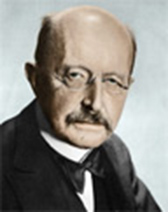
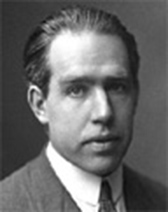
Max Planck
Founder of Quantum Theory
Born on April 23, 1858
Died on October 4, 1947
Age at death: 89
Profession: Physicist
Place of Birth: Kiel, Germany
Place of Death: Göttingen, Germany
Max Planck, whose full name was Max Karl Ernst Ludwig Planck, was born on April 23, 1858, in the city of Kiel, Germany. His father was a professor of law at the University of Kiel. He completed his secondary education in Munich at the Maximilian Gymnasium, where the influence of his physics teacher sparked a lifelong interest in physics.
After finishing high school, Max Planck pursued higher education at the universities of Munich and Berlin, studying under some of the most distinguished physicists of the era, including Gustav Kirchhoff and Hermann von Helmholtz. In 1879, he graduated from the University of Munich. After spending five years there as a lecturer, he was appointed professor of mathematics at the University of Kiel.
In 1889, Max Planck was invited to Berlin to occupy the chair previously held by Gustav Kirchhoff. He remained in this position until his retirement in 1928. In 1930, he was elected president of the Kaiser Wilhelm Institute in Berlin. He resigned from this post in 1937 and withdrew from the Prussian Academy of Sciences the following year.
Max Planck developed the foundations of Quantum Theory through his work on thermodynamics and radiation. He introduced the concepts now known as the Planck constant and the Planck radiation law. His research addressed one of the central problems of late nineteenth-century physics: the nature of thermal radiation emitted by heated bodies, particularly the so-called “blackbody radiation.”
When a metal is heated, it first emits long-wavelength radiation in the infrared region, appearing red, then orange, yellow, and eventually white as additional wavelengths are emitted. At even higher temperatures, radiation extends into the ultraviolet range, beyond human vision. The blackbody spectrum describes how energy is distributed across different wavelengths.
In 1900, Max Planck published his theoretical solution to the blackbody radiation problem. He proposed that matter consists of oscillators, each emitting radiation at a characteristic frequency, and that energy is not emitted continuously but in discrete packets, which he called quanta. This led to the fundamental equation relating energy to frequency via a universal constant, later named the Planck constant.
Although Planck initially regarded this formulation as a purely mathematical device, it shattered the classical assumption of energy continuity. His discovery paved the way for a profound scientific revolution. In 1905, Albert Einstein extended the quantum idea to light itself through his explanation of the photoelectric effect. Soon after, the work of Niels Bohr, Erwin Schrödinger, and Werner Heisenberg transformed Planck’s hypothesis into the full framework of quantum mechanics.
Max Planck thus became, albeit reluctantly, the pioneer of a revolution that replaced mechanical models of nature with abstract mathematical relationships. Alongside Einstein’s theory of relativity, quantum theory stands as one of the two great scientific revolutions of modern physics.
In recognition of his discovery of energy quanta, Max Planck was awarded the Nobel Prize in Physics in 1918.
In his personal life, Max Planck married his childhood friend Marie Merck in 1885. After her death in 1909, he married his cousin Marga von Hösslin. His life was marked by profound personal tragedies. His eldest son Karl was killed on the фронt during World War I in 1916. One of his twin daughters died during childbirth, and the surviving twin later died under similar circumstances. In 1944, his Berlin home was destroyed during Allied bombing, resulting in the loss of his manuscripts, diaries, books, and scientific papers.
Max Planck openly opposed the Nazi regime. His only surviving son, Erwin Planck, was executed in 1944 for his involvement in the plot to assassinate Adolf Hitler. The Nazi authorities offered Planck a cruel ultimatum: sign a declaration of loyalty to Nazism and his son would be spared. Planck refused, remaining faithful to his moral principles despite the personal cost.
After World War II, Max Planck settled in Göttingen. He died there on October 4, 1947, leaving behind a legacy that forever changed humanity’s understanding of nature and laid the foundations of modern physics.
Source: Biyografiler.com
Frequently asked questions about Max Planck
Who is Max Planck?, Max Planck biography, Max Planck life story, Max Planck age, Max Planck facts, Max Planck birthplace, Max Planck photos, Max Planck videos, Max Planck career
Related Biographies

Lamine Yamal
Professional footballer

Sam Altman
Entrepreneur, Investor, CEO

Kylian Mbappe
Professional footballer

Alice Weidel
Politician, Economist

Erling Haaland
Professional footballer

Giorgia Meloni
Politician, Journalist


Hongjoong
Singer, Rapper, Songwriter, Composer

Ludacris
Rapper, Actor

Kwon Eunbi
Singer

Sarah Wayne Callies
Actress, Screenwriter, Producer, Director

LaTavia Roberson
Singer, Actress, Entrepreneur
Lamine Yamal
Professional footballer

Xi Jinping
Politician, Statesman, Head of State

Austin Abrams
Actor

Pedro Sanchez
Politician

Claudia Sheinbaum
President, Politician, Scientist, Academic

Colman Domingo
Actor, Director, Producer