
European Central Bank President Christine Lagarde Resigns
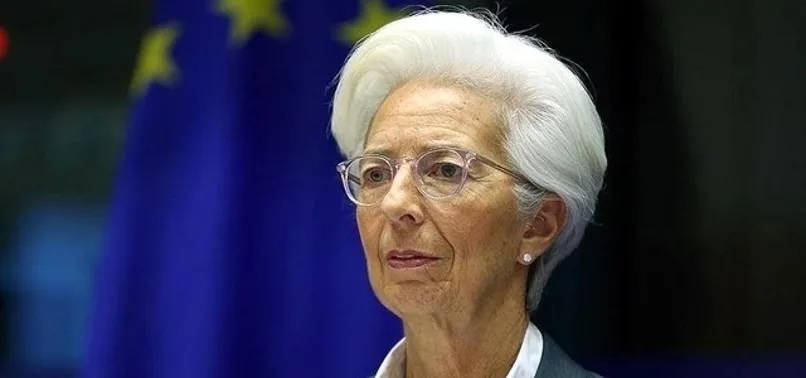
European Central Bank (ECB) President Christine Lagarde announced her resignation on October 29, 2026, approximately nine months before the end of her eight-year term. Lagarde, who has led the ECB since November 2019, will officially step down on February 7, 2027. She explained that her decision was motivated by a desire to speak more freely on matters beyond monetary policy, without the political neutrality requirements associated with her position.
Why Did Christine Lagarde Resign?
In an official statement issued from its headquarters in Frankfurt, the European Central Bank confirmed that Christine Lagarde had informed the ECB Governing Council and European Council President António Costa of her decision to resign.
Her eight-year term was originally scheduled to end on October 31, 2027, but she will leave office approximately nine months earlier.
Speaking at a press conference on October 29, Lagarde explained that the political neutrality expected of an ECB president limited her ability to express opinions on issues outside monetary policy. She said she wanted greater freedom to participate in public discussions and comment on international developments.
Did France's Presidential Election Influence Her Decision?
The timing of Lagarde's departure has prompted discussion about France's 2027 presidential election. According to reports by Reuters and the Financial Times, her early resignation could allow European Union leaders to appoint a new ECB president before the French election.
French President Emmanuel Macron is scheduled to complete his second presidential term in 2027. Political developments in France have therefore become part of the discussion surrounding the ECB succession process.
International media have also examined whether Lagarde's desire to express political views more openly influenced her decision. However, she did not announce support for any particular political party or presidential candidate.
Who Will Become the Next European Central Bank President?
Following Lagarde's resignation announcement, European Union institutions began preparations to select her successor.
European Council President António Costa indicated that the appointment process would begin without delay.
Under Article 283 of the Treaty on the Functioning of the European Union, the ECB president is appointed by the European Council through the procedures established in EU law.
Among the potential successors mentioned in international media reports are Klaas Knot, former president of the Dutch central bank, and Pablo Hernández de Cos, former governor of the Bank of Spain.
No official appointment has been announced.
Resignation Announced on the Same Day as ECB Interest Rate Decision
Lagarde's announcement came on October 29, 2026, the same day the European Central Bank held its monetary policy meeting.
The ECB decided to leave its key interest rates unchanged. The bank warned that rising energy prices could increase inflationary pressures and negatively affect economic growth.
The leadership transition will therefore take place while the euro area continues to face uncertainty surrounding inflation, energy costs and financial conditions.
Who Is Christine Lagarde?
Christine Lagarde was born on January 1, 1956, in Paris, France. After studying law, she pursued a career in international legal and financial affairs.
In 2005, she became France's Minister for Foreign Trade. In 2007, she was appointed Minister of Economy and Finance, becoming the first woman to hold that position in France.
In 2011, Lagarde was appointed Managing Director of the International Monetary Fund (IMF), a position she held until 2019.
On November 1, 2019, she succeeded Mario Draghi as President of the European Central Bank, becoming the first woman to lead the institution.
During her presidency, the euro area faced the COVID-19 pandemic, the energy crisis following Russia's invasion of Ukraine, and a period of high inflation. The ECB implemented significant interest rate changes in response to inflationary pressures.
Lagarde announced her resignation on October 29, 2026, and is scheduled to leave office on February 7, 2027. The appointment of her successor will be handled by the relevant European Union institutions.
Related Biographies


Related News

Lamine Yamal
Professional footballer,

Kylian Mbappe
Professional footballer,

Erling Haaland
Professional footballer,

Keanu Reeves
Actor,

Brad Pitt
Actor,

Bad Bunny
Rapper, Songwriter,

Andre Gide
Novelist, Essayist

Andreas Papandreu
Former Prime Minister, Politician, Economist

Andrea Mantegna
Painter

Andrea del Verrocchio
Sculptor, Painter

Andrea del Sarto
Painter

Andrea Bargnani
Former Professional Basketball Player
Brad Pitt
Actor

Max Verstappen
Formula 1 Driver

Demi Moore
Actress

Penelope Cruz
Actress

Sam Altman
Entrepreneur, Investor, CEO

Susie Wiles
Political Consultant