
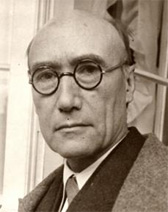
Andre Gide
French writer who received the Nobel Prize in Literature in 1947. His works include The Immoralist, Strait Is the Gate, The Pastoral Symphony, and The Counterfeiters.
Born on November 22, 1869
Died on February 19, 1951
Age at death: 82
Profession: Novelist, Essayist
Place of Birth: Paris, France
Place of Death: Paris, France
André Gide, whose full name was André Paul Guillaume Gide, was born on November 22, 1869, in Paris, France. He was a French novelist, essayist, playwright, literary critic, and translator who received the Nobel Prize in Literature in 1947. His writings explore individual freedom, religion, sexuality, morality, and the conflict between personal desires and social conventions. His major works include The Fruits of the Earth (1897), The Immoralist (1902), Strait Is the Gate (1909), The Pastoral Symphony (1919), and The Counterfeiters (1925). Gide also wrote autobiographical works, travel accounts criticizing French colonial practices in Africa, and political essays about the Soviet Union. He helped establish La Nouvelle Revue française, a literary journal that became associated with numerous twentieth-century French writers. He died in Paris on February 19, 1951, at the age of 81.
Early Life and Education
André Gide was born on November 22, 1869, in Paris, France, into a Protestant family. His father, Paul Gide, was a professor of law at the University of Paris and came from a Protestant family in southern France. His mother, Juliette Rondeaux, belonged to a wealthy Protestant family from Normandy.
His father died in 1880, when Gide was ten years old. He subsequently grew up under the supervision of his mother and other female relatives, whose religious beliefs and expectations influenced his childhood.
Gide attended the École Alsacienne in Paris, but recurring illnesses interrupted his education. He also studied at other schools, including the Lycée Henri-IV.
Despite these interruptions, he passed the baccalaureate examination in 1889. He decided to pursue literature rather than a conventional professional career.
Music was another of his interests. He played the piano and particularly admired the compositions of Frédéric Chopin, whose work remained a subject of his later essays.
Early Literary Career
In 1891, André Gide published The Notebooks of André Walter (*Les Cahiers d'André Walter*), his first book. Written in the form of a fictional personal journal, it examined religious devotion, love, and emotional conflict.
That same year, he published The Treatise of Narcissus (*Le Traité du Narcisse*), followed by The Poems of André Walter in 1892.
His subsequent works included The Voyage of Urien (1893), The Attempt at Love (1893), and Marshlands (*Paludes*, 1895).
These early writings were influenced by literary symbolism, but Gide gradually developed a style that combined psychological observation with questions concerning morality and personal identity.
During this period, he became acquainted with writers including Paul Valéry, Stéphane Mallarmé, and Pierre Louÿs.
Travels in North Africa and Personal Freedom
In 1893, André Gide traveled to North Africa with painter Paul-Albert Laurens. The journey took him to Algeria and Tunisia, where he encountered different social customs and developed a greater awareness of his sexuality.
He returned to North Africa during the following years. While traveling, he met British writer Oscar Wilde and Lord Alfred Douglas. Gide later described how these experiences influenced his understanding and acceptance of his homosexuality.
His travels provided material for several subsequent writings, including The Fruits of the Earth (*Les Nourritures terrestres*), published in 1897.
The book uses lyrical prose and reflections on travel, nature, and personal experience to examine freedom from inherited moral and religious restrictions.
In 1896, Gide became mayor of the small commune of La Roque-Baignard in Normandy, a position he held for several years.
The Immoralist and Strait Is the Gate
In 1902, André Gide published The Immoralist (*L'Immoraliste*), a narrative about a scholar named Michel whose experiences lead him to question conventional morality and his obligations to other people.
The novel examines the consequences of pursuing personal freedom without fully considering the needs of others.
In 1909, Gide published Strait Is the Gate (*La Porte étroite*). The novel follows Jérôme and Alissa, whose relationship is shaped by religious convictions and the belief that personal happiness may conflict with spiritual duty.
The two works approach similar questions from different perspectives, particularly the relationship between desire, self-denial, and responsibility.
In 1919, he published The Pastoral Symphony (*La Symphonie pastorale*), the story of a Protestant pastor who takes responsibility for a blind young woman and becomes emotionally attached to her.
The novel was adapted into a French film directed by Jean Delannoy in 1946, starring Michèle Morgan and Pierre Blanchar.
La Nouvelle Revue française
In 1908, André Gide became involved in establishing La Nouvelle Revue française, commonly known as the NRF, alongside writers including Jean Schlumberger, Jacques Copeau, and Henri Ghéon.
After an initial issue in 1908, the journal was relaunched in 1909 and became associated with the publishing house Gallimard.
Gide contributed essays, criticism, and literary discussions to the journal and maintained correspondence with French and international writers.
During the First World War, he participated in charitable efforts assisting refugees and people affected by the conflict.
Corydon, The Counterfeiters and Autobiographical Writing
André Gide addressed homosexuality directly in Corydon, a work structured as a series of dialogues.
Parts of the text circulated privately beginning in 1911. A limited edition appeared in 1920, followed by a public edition in 1924.
The book challenged prevailing social attitudes toward homosexuality and provoked criticism, particularly from conservative and religious commentators.
In 1925, Gide published The Counterfeiters (*Les Faux-Monnayeurs*), a novel featuring several interconnected characters and storylines involving family relationships, education, deception, and literary creation.
The narrative includes the fictional writer Édouard, who is himself working on a novel called *The Counterfeiters*. Gide subsequently published The Journal of the Counterfeiters (1926), describing aspects of the book's composition.
His autobiography, If It Die (*Si le grain ne meurt*), appeared in a limited edition in 1924 and became publicly available in 1926.
In it, he discussed his childhood, religious upbringing, early travels, marriage, and sexuality.
Journey to the Congo and Criticism of Colonialism
Between 1925 and 1926, André Gide traveled through French Equatorial Africa with filmmaker Marc Allégret.
During the journey, he visited areas of the Congo and Chad and observed conditions affecting local communities under French colonial administration.
He criticized the treatment of African workers, particularly abuses associated with companies holding colonial concessions.
His observations appeared in Travels in the Congo (*Voyage au Congo*, 1927) and Return from Chad (*Le Retour du Tchad*, 1928).
These publications contributed to public discussion in France about forced labor, economic exploitation, and the responsibilities of colonial authorities.
Communism and the Soviet Union
During the early 1930s, André Gide expressed support for communist ideas and participated in political discussions associated with the French left.
In 1936, he visited the Soviet Union, where he attended the funeral of writer Maxim Gorky and met representatives of Soviet cultural and political institutions.
The journey altered his assessment of Soviet communism. After returning to France, he published Return from the USSR (*Retour de l'U.R.S.S.*, 1936), criticizing censorship, political conformity, and restrictions on individual freedom.
In 1937, he published Afterthoughts on the USSR (*Retouches à mon Retour de l'U.R.S.S.*), responding to criticism of his earlier account and developing his objections to Soviet political practices.
Second World War and Nobel Prize
During the Second World War, André Gide initially remained in France but later traveled to North Africa. From 1942 until the end of the war, he lived primarily in Tunisia and Algeria.
In 1946, he published Theseus (*Thésée*), a retelling of the Greek myth through the reflections of the aging hero.
In 1947, the University of Oxford awarded Gide an honorary doctorate in literature.
That same year, he received the Nobel Prize in Literature. The Swedish Academy recognized his literary work for its treatment of human experience, psychological questions, and the pursuit of truth.
Gide continued writing and revising his journals during his final years.
Personal Life
André Gide married his cousin Madeleine Rondeaux in October 1895, shortly after the death of his mother.
The marriage was never consummated. Although Gide was deeply attached to Madeleine, their relationship was affected by his romantic and sexual relationships with men.
Gide developed a close relationship with Marc Allégret, who later became a film director. They traveled together, including during Gide's journey to Africa in 1925–1926.
In 1918, after learning of Gide's relationship with Allégret, Madeleine destroyed many of the letters Gide had written to her during their marriage.
Madeleine died in 1938.
Gide had one daughter, Catherine Gide, born in 1923, from his relationship with Élisabeth van Rysselberghe, daughter of Belgian painter Théo van Rysselberghe. Catherine died in 2013.
Death
André Gide died on February 19, 1951, in Paris, France, at the age of 81.
He was buried in the cemetery of Cuverville-en-Caux in Normandy, near the family residence associated with his wife Madeleine.
His writings continued to appear in posthumous editions, including So Be It: Or The Chips Are Down (*Ainsi soit-il ou Les Jeux sont faits*) in 1952.
Novels and Major Narratives
1895 – Marshlands (*Paludes*)
1902 – The Immoralist (*L'Immoraliste*)
1909 – Strait Is the Gate (*La Porte étroite*)
1911 – Isabelle
1914 – The Vatican Cellars (*Les Caves du Vatican*)
1919 – The Pastoral Symphony (*La Symphonie pastorale*)
1925 – The Counterfeiters (*Les Faux-Monnayeurs*)
1929 – The School for Wives (*L'École des femmes*)
1930 – Robert
1936 – Geneviève
Essays and Prose Works
1891 – The Treatise of Narcissus (*Le Traité du Narcisse*)
1893 – The Voyage of Urien (*Le Voyage d'Urien*)
1893 – The Attempt at Love (*La Tentative amoureuse*)
1899 – El Hadj, or The Treatise of the False Prophet (*El Hadj*)
1903 – Pretexts (*Prétextes*)
1911 – New Pretexts (*Nouveaux Prétextes*)
1924 – Incidences
1952 – So Be It: Or The Chips Are Down (*Ainsi soit-il ou Les Jeux sont faits*) – Published posthumously
Poetry and Poetic Prose
1892 – The Poems of André Walter (*Les Poésies d'André Walter*)
1897 – The Fruits of the Earth (*Les Nourritures terrestres*)
1907 – The Return of the Prodigal Son (*Le Retour de l'enfant prodigue*)
1935 – New Fruits of the Earth (*Les Nouvelles Nourritures*)
1946 – Theseus (*Thésée*)
Plays
1899 – Philoctetes (*Philoctète*)
1901 – King Candaules (*Le Roi Candaule*)
1903 – Saul (*Saül*)
1912 – Bathsheba (*Bethsabé*)
1931 – Oedipus (*Œdipe*)
1934 – Persephone (*Perséphone*)
1935 – The Thirteenth Tree (*Le Treizième Arbre*)
1944 – Robert, or The General Interest (*Robert ou l'Intérêt général*)
1946 – The Return (*Le Retour*)
Autobiographical Works and Journals
1891 – The Notebooks of André Walter (*Les Cahiers d'André Walter*)
1926 – If It Die (*Si le grain ne meurt*)
1939 – Journal 1889–1939
1950 – Journal 1939–1949
1951 – Et nunc manet in te
Travel Writing
1906 – Amyntas
1927 – Travels in the Congo (*Voyage au Congo*)
1927 – Dindiki
1928 – Return from Chad (*Le Retour du Tchad*)
Literary Criticism and Political Essays
1923 – Dostoevsky (*Dostoïevsky*) – Study of Fyodor Dostoevsky
1924 – Incidences – Collection of essays
1926 – The Journal of the Counterfeiters (*Journal des Faux-Monnayeurs*)
1929 – Essay on Montaigne (*Essai sur Montaigne*)
1931 – Various Writings (*Divers*)
1936 – Return from the USSR (*Retour de l'U.R.S.S.*)
1937 – Afterthoughts on the USSR (*Retouches à mon Retour de l'U.R.S.S.*)
1941 – Discovering Henri Michaux (*Découvrons Henri Michaux*)
1943 – Imaginary Interviews (*Interviews imaginaires*)
1945 – Teachings of Poussin (*Enseignement de Poussin*)
1948 – Notes on Chopin (*Notes sur Chopin*)
Dialogues and Satirical Works
1899 – Prometheus Illbound (*Le Prométhée mal enchaîné*)
1924 – Corydon – Dialogues on homosexuality
Source: Biyografiler.com
Frequently asked questions about Andre Gide
Who is Andre Gide?, Andre Gide biography, Andre Gide life story, Andre Gide age, Andre Gide facts, Andre Gide birthplace, Andre Gide photos, Andre Gide videos, Andre Gide career
Related Biographies

Lamine Yamal
Professional footballer

Erling Haaland
Professional footballer

Keanu Reeves
Actor

Kylian Mbappe
Professional footballer

Bad Bunny
Rapper, Songwriter

Leonardo DiCaprio
Actor

Andre Gide
Novelist, Essayist

Andreas Papandreu
Former Prime Minister, Politician, Economist

Andrea Mantegna
Painter

Andrea del Verrocchio
Sculptor, Painter

Andrea del Sarto
Painter

Andrea Bargnani
Former Professional Basketball Player

Amy Ryan
Actress

Andy Garcia
Actor, Film Director

Ali Larter
Actress, Former Model

Andy Serkis
Actor, Film Director

Ursula von der Leyen
Politician, Physician

John Healey
Politician