
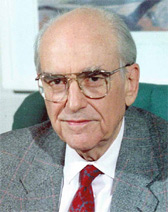
Andreas Papandreu
Greek politician, economist, and founder of the Panhellenic Socialist Movement (PASOK). He served as Prime Minister of Greece from 1981 to 1989 and again from 1993 to 1996.
Born on February 5, 1919
Died on June 23, 1996
Age at death: 77
Profession: Former Prime Minister, Politician, Economist
Place of Birth: Chios, Greece
Place of Death: Ekali, Athens, Greece
Andreas Papandreou, whose full name was Andreas Georgiou Papandreou, was born on February 5, 1919, on the island of Chios, Greece. He was a Greek politician, economist, and university professor who served as Prime Minister of Greece from October 21, 1981, to July 2, 1989, and from October 13, 1993, to January 22, 1996. The son of former Prime Minister Georgios Papandreou, he studied economics at Harvard University and taught at universities in the United States before entering Greek politics. After opposing the military dictatorship established in 1967, he founded the Panhellenic Socialist Movement (PASOK) in September 1974. His governments introduced reforms in healthcare, family law, education, and public administration. His foreign policy included disputes and negotiations with Turkey, criticism of American military influence, and continued participation in NATO and the European Economic Community. He resigned as Prime Minister in January 1996 because of deteriorating health and died five months later, aged 77.
Early Life and Education
Andreas Papandreou was born on February 5, 1919, in Chios, Greece. His father, Georgios Papandreou, was a Greek politician who later served several terms as Prime Minister. Andreas grew up in Athens and attended Athens College.
In 1937, he enrolled at the Law School of the University of Athens. During his university years, he became involved in left-wing political activities and developed an interest in socialist and Trotskyist ideas.
In 1939, he was arrested under the authoritarian government of Ioannis Metaxas. After his release, he left Greece for the United States in 1940 and continued his education.
Academic Career in the United States
In 1943, Andreas Papandreou received a doctorate in economics from Harvard University. He became a naturalized American citizen in 1944 and served in the United States Navy during the Second World War.
After the war, he pursued an academic career in economics, holding teaching and research positions at Harvard, the University of Minnesota, and the University of California, Berkeley.
His academic work addressed economic theory, competition, and the organization of industrial markets.
In 1951, while working in the United States, he married Margaret Chant, an American journalism student whom he had met at the University of Minnesota.
The couple had four children, including George Papandreou, who later became Prime Minister of Greece, and Nikos Papandreou, who pursued a career in writing and politics.
Return to Greece and Entry into Politics
In 1959, Andreas Papandreou was invited by Greek Prime Minister Konstantinos Karamanlis to participate in a program concerning economic development and research.
He returned to Greece and became involved in establishing the Centre of Economic Research in Athens. In 1960, he was appointed director of the center and served as an economic adviser to the Bank of Greece.
In 1964, he renounced his American citizenship and entered Greek parliamentary politics as a member of the Centre Union, the party led by his father.
He was elected to Parliament from Achaea and subsequently served in his father's government, initially as Minister to the Prime Minister and later as Deputy Minister for Economic Coordination.
His political activity became a source of disagreement within the Centre Union. The government of Georgios Papandreou fell in July 1965 following a confrontation with King Constantine II of Greece, beginning a period of political instability.
Military Coup and Political Exile
On April 21, 1967, a group of military officers seized power in Greece, establishing the dictatorship commonly known as the Regime of the Colonels.
Andreas Papandreou was arrested following the coup and remained imprisoned for several months.
International appeals, including interventions by American academics and political figures, contributed to pressure for his release. He was freed in December 1967 and left Greece in January 1968.
During his exile, he lived in Paris, Stockholm, and Toronto. He taught economics at Stockholm University and York University in Canada.
He also established the Panhellenic Liberation Movement (PAK), an organization opposed to the military dictatorship.
His political positions became more radical during exile. He criticized American involvement in Greek affairs and argued that the country needed political independence and socialist reforms.
In 1971, he published Democracy at Gunpoint, an account of the political developments leading to the military coup and his opposition to the dictatorship.
Founding PASOK
Following the collapse of the military dictatorship in July 1974, Andreas Papandreou returned to Greece.
On September 3, 1974, he announced the formation of the Panhellenic Socialist Movement (PASOK). The party combined socialist economic policies with demands for national independence, democratic institutions, and social reform.
PASOK received approximately 13.6 percent of the vote in the November 1974 general election.
In 1977, the party increased its vote share to approximately 25 percent and became the main parliamentary opposition.
During these years, Papandreou criticized Greece's relationship with NATO and the European Economic Community and called for greater independence in foreign policy.
First Term as Prime Minister, 1981–1989
In the general election of October 18, 1981, PASOK won approximately 48 percent of the vote and secured 172 seats in the 300-member Greek Parliament.
Andreas Papandreou became Prime Minister on October 21, 1981, heading Greece's first government led by a socialist party.
His administration introduced changes to family law, including reforms concerning marriage, divorce, and the legal status of women. Civil marriage was recognized, and legislation reduced distinctions between children born within and outside marriage.
In 1983, the government established the National Health System of Greece (ESY), intended to expand access to public healthcare.
Other measures included changes to public administration, education, social welfare, and the recognition of resistance organizations associated with the Second World War.
The government also expanded public-sector involvement in parts of the economy. These policies were accompanied by increases in government expenditure, inflation, and public debt, which became subjects of political debate.
Although Papandreou had previously advocated withdrawal from NATO and the European Economic Community, Greece remained a member of both organizations. His government also negotiated arrangements allowing American military facilities to continue operating in Greece.
PASOK won the parliamentary election of June 1985, allowing Papandreou to remain Prime Minister for a second consecutive term.
Relations with Turkey and the Davos Meeting
During the 1980s, Andreas Papandreou pursued a foreign policy that included strong criticism of Turkish positions concerning the Aegean Sea and Cyprus.
Relations between Greece and Turkey deteriorated during the Aegean crisis of March 1987, when disputes over petroleum exploration and maritime rights brought the countries close to military confrontation.
In January 1988, Papandreou met Turkish Prime Minister Turgut Özal at the World Economic Forum in Davos, Switzerland.
The talks produced an agreement to establish communication mechanisms and promote dialogue between the two governments. Proposed measures included regular meetings, direct communication between political leaders, and cooperation on economic and cultural matters.
The meeting temporarily reduced tensions, although the underlying territorial and maritime disputes remained unresolved.
Political Scandals and the 1989 Elections
During the final years of his first premiership, Andreas Papandreou's government faced accusations of corruption involving the Bank of Crete and businessman George Koskotas.
The allegations concerned financial misconduct, the handling of government deposits, and claims involving senior political officials.
In 1989, the controversy became a major issue in Greek politics. PASOK lost its parliamentary majority in the June election.
Further elections in November 1989 failed to produce a single-party majority, leading to temporary coalition arrangements.
Papandreou was subsequently prosecuted in connection with the Koskotas affair. In January 1992, a special court acquitted him of all charges.
The period also included public discussion of his personal relationship with Dimitra Liani, whom he married in 1989 after divorcing Margaret Chant.
Return to Power, 1993–1996
Following the October 1993 general election, PASOK returned to government and Andreas Papandreou became Prime Minister for a second period, beginning October 13, 1993.
His government addressed economic policy, public finances, relations with European institutions, and disputes concerning Greece's neighboring countries.
During this period, Papandreou's health deteriorated. In November 1995, he was hospitalized with serious heart and kidney problems.
He remained in hospital for several weeks and announced his resignation as Prime Minister in January 1996.
He was succeeded by Costas Simitis, who assumed office on January 22, 1996.
Personal Life
Andreas Papandreou married three times.
His first wife was Christina Rasia, whom he married in 1941. The marriage ended in divorce in 1951.
In 1951, he married Margaret Chant. They had four children: George Papandreou, born in 1952; Sofia Papandreou, born in 1954; Nikos Papandreou, born in 1956; and Andreas Papandreou Jr., born in 1959.
The marriage ended in divorce in 1989. That same year, he married Dimitra Liani, a former flight attendant. They remained married until his death.
He also had a daughter, Emilia Nyblom, born in 1969, from a relationship with Swedish actress Ragna Nyblom.
Death
Andreas Papandreou died on June 23, 1996, at his home in Ekali, a northern suburb of Athens, Greece. He was 77 years old.
His funeral was held in Athens, and he was buried at the First Cemetery of Athens.
Political and Academic Positions
1940s–1950s – University Lecturer and Professor of Economics, United States
1960–1963 – Director, Centre of Economic Research, Athens
1964–1967 – Member of the Hellenic Parliament, Centre Union
1964–1965 – Ministerial Positions in the Government of Georgios Papandreou
1968–1974 – Founder and Leader, Panhellenic Liberation Movement (PAK)
1974–1996 – Founder and Leader, Panhellenic Socialist Movement (PASOK)
1974–1996 – Member of the Hellenic Parliament
October 21, 1981–July 2, 1989 – Prime Minister of Greece
October 13, 1993–January 22, 1996 – Prime Minister of Greece
Books and Academic Writings
1952 – Competition and Its Regulation
1970 – A Paternalistic Capitalism
1971 – Democracy at Gunpoint: The Greek Front
Source: Biyografiler.com
Frequently asked questions about Andreas Papandreu
Who is Andreas Papandreu?, Andreas Papandreu biography, Andreas Papandreu life story, Andreas Papandreu age, Andreas Papandreu facts, Andreas Papandreu birthplace, Andreas Papandreu photos, Andreas Papandreu videos, Andreas Papandreu career

Lamine Yamal
Professional footballer

Erling Haaland
Professional footballer

Keanu Reeves
Actor

Kylian Mbappe
Professional footballer

Bad Bunny
Rapper, Songwriter

Leonardo DiCaprio
Actor

Andre Gide
Novelist, Essayist

Andreas Papandreu
Former Prime Minister, Politician, Economist

Andrea Mantegna
Painter

Andrea del Verrocchio
Sculptor, Painter

Andrea del Sarto
Painter

Andrea Bargnani
Former Professional Basketball Player

Amy Ryan
Actress

Andy Garcia
Actor, Film Director

Ali Larter
Actress, Former Model

Andy Serkis
Actor, Film Director

Ursula von der Leyen
Politician, Physician

John Healey
Politician