
Leadership Debate Intensifies at the ECB as Questions Swirl Over Lagarde’s Future
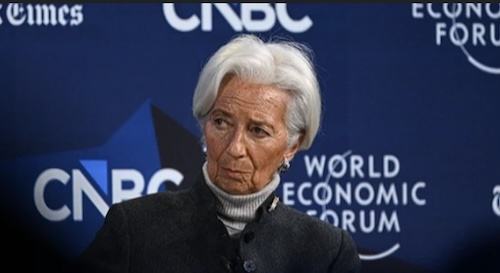
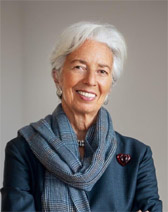
Speculation is intensifying in European political and financial circles over whether Christine Lagarde, President of the European Central Bank (ECB), could step down before completing her mandate. Although ECB officials insist that no decision has been taken, recent remarks from Lagarde have left room for interpretation and triggered early discussions about succession.
Reports suggest that Lagarde may be considering an earlier departure to ensure that her successor is determined before France’s next presidential election cycle potentially reshapes the country’s political balance. With far-right forces gaining momentum in French polls, the broader European political context adds sensitivity to the issue.
An ECB spokesperson stated that Lagarde remains focused on her responsibilities. However, the absence of a categorical denial has fueled further speculation. In a recent interview, Lagarde described finishing her term as the “baseline scenario,” but did not explicitly rule out alternative paths, including a possible future leadership role at the World Economic Forum.
Spain Signals Its Ambition
Following reports of a possible early transition, Spanish Economy Minister Carlos Cuerpo declared that Spain is seeking a stronger leadership role within Europe’s main economic institutions.
Several Spanish-linked names are now circulating:
- Pablo Hernández de Cos – Former Governor of the Bank of Spain and current head of the Bank for International Settlements (BIS), widely regarded as a technically strong and internationally respected candidate.
- Luis de Guindos – Current ECB Vice President, whose term is set to expire in May.
- Boris Vujčić – Governor of Croatia’s central bank, nominated as a potential successor to de Guindos.
Spain has never held the ECB presidency in the institution’s nearly three-decade history — a factor Madrid could leverage in negotiations.
Klaas Knot Emerges as a Leading Contender
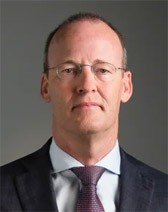
Among the strongest potential successors is Klaas Knot, the former head of the Dutch central bank. Once known for his hawkish stance on inflation, Knot has in recent years adopted a more pragmatic and consensus-oriented tone, which analysts believe broadens his appeal across the eurozone.
Lagarde previously described Knot as having “inclusive leadership skills,” a comment interpreted by many as a subtle endorsement.
Other names under discussion include:
- Joachim Nagel – President of Germany’s Bundesbank. However, with Ursula von der Leyen already leading the European Commission, Berlin may face political resistance in securing another top EU role.
- Fabio Panetta – Governor of the Bank of Italy, seen as highly competent in monetary policy but sometimes viewed by northern member states as relatively dovish.
A Politically Complex Appointment Process
Selecting an ECB president is not merely a technical decision but a deeply political one. The candidate must secure:
- Support from at least 16 of the 21 eurozone member states
- Backing from countries representing 65% of the euro area’s population
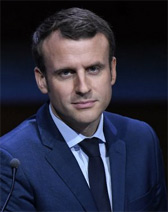
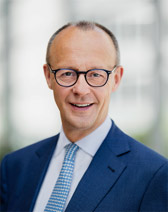
This high threshold ensures that intense negotiations among key capitals will shape the outcome. If Lagarde were to step down early, French President Emmanuel Macron and German Chancellor Friedrich Merz would likely become central power brokers in the process.
Because Lagarde is French, it is considered unlikely that her successor would also come from France. Instead, Paris may focus on securing other senior ECB roles, including the chief economist position due to open in 2027.
Policy Fault Lines Behind the Leadership Race
The succession debate comes at a time of deep policy divisions within the European Union. Key fault lines include:
- The European Commission’s Savings and Investment Union initiative (formerly Capital Markets Union)
- Renewed discussions over joint EU debt issuance (Eurobonds)
- The possibility of a “two-speed Europe” if integration efforts stall
While Macron has supported common borrowing instruments, Berlin remains cautious. Some member states have floated enhanced cooperation mechanisms that would allow a smaller group of countries to integrate more quickly if consensus cannot be achieved.
Whoever ultimately takes the ECB presidency will inherit not only a complex inflation environment but also a fragmented political and fiscal landscape. Whether Lagarde completes her term or departs early, the race for Europe’s most influential monetary post is clearly underway.
Related Biographies
Related News

Lamine Yamal
Professional footballer,

Erling Haaland
Professional footballer,

Kylian Mbappe
Professional footballer,

Austin Abrams
Actor,

Bad Bunny
Rapper, Songwriter,

Sam Altman
Entrepreneur, Investor, CEO,


Hongjoong
Singer, Rapper, Songwriter, Composer

Ludacris
Rapper, Actor

Kwon Eunbi
Singer

Sarah Wayne Callies
Actress, Screenwriter, Producer, Director

LaTavia Roberson
Singer, Actress, Entrepreneur
Bad Bunny
Rapper, Songwriter

Margot Robbie
Actress
Kylian Mbappe
Professional footballer

Neymar
Professional footballer

Pedro Sanchez
Politician

Ronaldinho
Professional footballer