Berlin Blackout and Global Turmoil: Friedrich Merz Enters 2026 in Crisis Mode
Sunday 11 January 2026
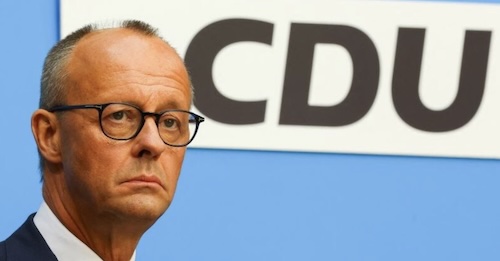
German Chancellor Friedrich Merz has begun 2026 under mounting pressure, facing simultaneous domestic and international challenges. A major power outage in Berlin that left around 100,000 residents without electricity and heating for days, escalating foreign policy turbulence, and a surprise shake-up within the Chancellery have placed the new chancellor firmly in crisis mode.
Muted Response to the Venezuela Operation
Following the capture of former Venezuelan leader Nicolas Maduro by the U.S. military, Berlin’s reaction was notably restrained. Chancellor Friedrich Merz described the situation merely as “complex,” including from a legal standpoint, and said the German government would examine it carefully.
That was the extent of the official response. The term “breach of international law” was notably absent from statements by the chancellor and his spokespersons, leaving such criticism to opposition politicians and legal scholars.
Observers believe Berlin’s caution is linked to Germany’s broader strategic priorities — particularly the desire to preserve U.S. cooperation in efforts to reach a sustainable peace settlement in Ukraine.
Ukraine Remains Merz’s Central Focus
Ukraine continues to dominate Germany’s foreign policy agenda. At a Ukraine conference in Paris this week, Merz signaled that German forces could play an indirect role in a post-ceasefire security arrangement, for example by supporting NATO contingents stationed in Poland.
“Germany will continue to contribute politically, financially and militarily. This could, for example, include deploying forces to neighboring NATO territory after a ceasefire.” Friedrich Merz
France and the United Kingdom announced their readiness to deploy troops directly inside Ukraine, while Merz stressed that Berlin was “not ruling anything out” at this stage. Any German deployment, he added, would require parliamentary approval once a U.S.-backed monitoring framework is in place.
Greenland Tensions and NATO Fears
Meanwhile, U.S. President Donald Trump has renewed threats to bring Greenland under U.S. control. Greenland is an autonomous territory within the Kingdom of Denmark, and the remarks have raised alarm across Europe.
Danish Prime Minister Mette Frederiksen warned that an attack by one NATO member against another would effectively spell the end of the alliance. Germany joined six other EU countries in issuing a joint statement affirming that decisions concerning Greenland rest solely with Denmark and Greenland themselves.
Despite this, influential U.S. political figures continue to push a more aggressive line, prompting concern that the issue could escalate further.
High-Profile Shake-Up in the Chancellery
In a move that surprised many in Berlin, Merz dismissed his chief of staff Jacob Schrot after just eight months in office. Schrot was replaced by Philipp Birkenmaier, a seasoned party official and former federal manager of Merz’s conservative CDU.
DW chief correspondent Michaela Küfner described the decision as a sign of deeper structural problems within the chancellor’s inner circle. According to Küfner, Merz had grown increasingly concerned about weak communication from the Chancellery and a lack of economic expertise at the center of government.
With Birkenmaier’s appointment, Merz aims to project a fresh start on both fronts.
Public Support Already Slipping
Critics argue that Merz’s heavy focus on foreign policy has come at the expense of domestic issues. In his New Year’s address, the chancellor acknowledged these concerns and promised to prioritize support for Germany’s struggling economy.
However, public dissatisfaction is already evident. According to the latest ARD Deutschlandtrend poll, only 24% of respondents say they are satisfied with Friedrich Merz’s performance — less than a year after his government took office.
As 2026 unfolds, the combination of international instability, domestic strain and declining public confidence suggests that Merz’s chancellorship is entering turbulent waters far earlier than expected.
Related Biographies
Related News
Popular
New
Trending

Lamine Yamal
Professional footballer,

Erling Haaland
Professional footballer,

Kylian Mbappe
Professional footballer,

Bad Bunny
Rapper, Songwriter,

Austin Abrams
Actor,

Brad Pitt
Actor,


Hongjoong
Singer, Rapper, Songwriter, Composer

Ludacris
Rapper, Actor

Kwon Eunbi
Singer

Sarah Wayne Callies
Actress, Screenwriter, Producer, Director

LaTavia Roberson
Singer, Actress, Entrepreneur

Keanu Reeves
Actor

Elon Musk
Entrepreneur, Businessperson, Engineer
Erling Haaland
Professional footballer

Emma Watson
Actress
Lamine Yamal
Professional footballer

Leonardo DiCaprio
Actor