
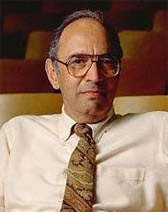
Thomas Kuhn
The Thinker Who Transformed the Meaning of “Paradigm Shift”
Born on July 12, 1922
Died on June 17, 1996
Age at death: 74
Profession: Philosopher, Academic, Author
Place of Birth: Cincinnati, Ohio, United States
Place of Death: Cambridge, Massachusetts, United States
Thomas Kuhn, full name Thomas Samuel Kuhn, was an American historian of science, philosopher of science, academic, and author whose work radically changed the way modern thinkers understand scientific progress. Best known for The Structure of Scientific Revolutions, Thomas Kuhn challenged the idea that science develops only through steady accumulation of facts. Instead, he argued that science advances through periods of “normal science,” anomaly, crisis, scientific revolution, and paradigm shift.
Early Life and Education
Thomas Kuhn was born on July 18, 1922, in Cincinnati, Ohio, United States, into a Jewish family. His father, Samuel L. Kuhn, was an industrial engineer, while his mother, Minette Stroock Kuhn, came from an educated and culturally engaged background. This intellectual family environment helped shape his early interest in mathematics, physics, history, and literature.
Thomas Kuhn studied physics at Harvard University, earning his bachelor’s degree, master’s degree, and doctorate in the field. During the Second World War, he worked in radar-related research in the United States, Britain, and France. After the war, he returned to Harvard and completed his PhD in physics in 1949.
From Physics to the History of Science
Although Thomas Kuhn was trained as a theoretical physicist, his academic interests gradually shifted toward the history and philosophy of science. While teaching at Harvard, he began examining the history of scientific ideas and became especially interested in how earlier scientific systems had made sense within their own intellectual worlds.
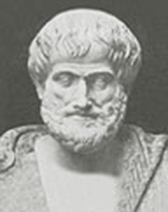
His study of Aristotle’s physics was particularly important. Instead of treating ancient science as merely wrong or primitive, Thomas Kuhn argued that past theories should be understood within their own conceptual frameworks. This approach became central to his later philosophy.
The Copernican Revolution
In 1957, Thomas Kuhn published The Copernican Revolution. The book examined Nicolaus Copernicus’s heliocentric model not simply as a technical improvement in astronomy, but as a major transformation in religion, philosophy, cosmology, mathematics, and European thought.
This work showed Thomas Kuhn’s emerging view that scientific change is historical, cultural, and conceptual. Scientific theories do not exist in isolation; they are tied to wider intellectual structures and communities of practice.
The Structure of Scientific Revolutions
Thomas Kuhn’s most influential work, The Structure of Scientific Revolutions, was published in 1962. The book became one of the most important works in 20th-century philosophy of science and introduced the now-famous concept of the “paradigm shift.”
According to Thomas Kuhn, scientific communities normally work within a shared framework of assumptions, methods, examples, standards, and accepted problem-solutions. He called this framework a “paradigm.” During periods of “normal science,” researchers solve puzzles within the accepted paradigm rather than questioning its foundations.
Over time, however, anomalies may accumulate: observations or problems that the existing paradigm cannot easily explain. When these anomalies become serious enough, a scientific crisis may emerge. A new paradigm can then replace the old one, producing a scientific revolution.
Paradigm Shift and Incommensurability
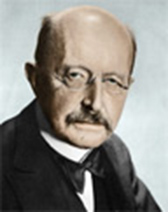
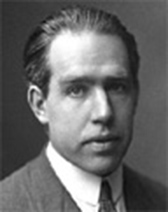
Thomas Kuhn used the idea of paradigm shift to explain major transformations in science, such as the Copernican revolution, Isaac Newton’s mechanics, Albert Einstein’s theory of relativity, and the rise of quantum mechanics associated with figures such as Max Planck, Niels Bohr, and Werner Heisenberg.
His concept of “incommensurability” argued that different paradigms may not be easily compared by a fully neutral standard, because they can involve different questions, concepts, methods, and criteria of truth. This idea became one of the most debated parts of his work.
Academic Career and Influence
Thomas Kuhn held academic positions at Harvard University, University of California, Berkeley, Princeton University, and Massachusetts Institute of Technology. His work influenced philosophy, history of science, sociology, anthropology, political theory, literary criticism, management studies, and cultural theory.
His ideas were discussed alongside those of Karl Popper, Imre Lakatos, and Paul Feyerabend, making him one of the central figures in 20th-century debates about scientific rationality, objectivity, and progress.
Later Works
In 1977, Thomas Kuhn published The Essential Tension, a collection of essays exploring the relationship between scientific tradition and innovation. He argued that science depends both on disciplined commitment to existing methods and on the occasional ability to move beyond them.
In 1978, he published Black-Body Theory and the Quantum Discontinuity, a detailed historical study of the origins of quantum theory, especially through Max Planck’s work on black-body radiation.
Later in life, Thomas Kuhn became concerned that the word “paradigm” was being used too loosely. He refined his terminology with concepts such as “disciplinary matrix” and “exemplars,” but the phrase “paradigm shift” had already entered global intellectual culture far beyond science studies.
Personal Life
Thomas Kuhn married Kathryn Muhs in 1948, and the marriage lasted until 1978. He later married Jehane R. Kuhn in 1981. He had three children: Elizabeth Kuhn, Sarah Kuhn, and Nathaniel Kuhn.
Death
Thomas Kuhn died from lung cancer on June 17, 1996, in Cambridge, Massachusetts, United States, at the age of 73, shortly before his 74th birthday.
After his death, debates about paradigms, normal science, scientific revolutions, crisis, and incommensurability continued across many academic fields. Thomas Kuhn remains one of the most influential thinkers in modern philosophy of science because he showed that science is not only a method of producing knowledge, but also a historical activity shaped by communities, traditions, language, and conceptual frameworks.
Major Works
1957 – The Copernican Revolution – History of Science Book
1962 – The Structure of Scientific Revolutions – Philosophy and History of Science Book
1977 – The Essential Tension – Essays on Philosophy and History of Science
1978 – Black-Body Theory and the Quantum Discontinuity – History of Physics Book
2000 – The Road Since Structure – Posthumous Collection of Philosophy of Science Writings
Key Concepts
Paradigm – A shared theoretical framework, method, and set of exemplary problems within a scientific community
Normal Science – Routine research conducted within an accepted paradigm
Anomaly – A problem or observation that the current paradigm struggles to explain
Scientific Crisis – A period when accumulated anomalies weaken confidence in the existing paradigm
Scientific Revolution – The replacement of an old paradigm by a new one
Paradigm Shift – A fundamental reorganization of scientific understanding
Incommensurability – The difficulty of directly comparing different paradigms because they use different concepts, questions, and standards
Source: Biyografiler.com
Frequently asked questions about Thomas Kuhn
Who is Thomas Kuhn?, Thomas Kuhn biography, Thomas Kuhn life story, Thomas Kuhn age, Thomas Kuhn facts, Thomas Kuhn birthplace, Thomas Kuhn photos, Thomas Kuhn videos, Thomas Kuhn career
Related Biographies

Lamine Yamal
Professional footballer

Sam Altman
Entrepreneur, Investor, CEO

Kylian Mbappe
Professional footballer

Alice Weidel
Politician, Economist

Erling Haaland
Professional footballer

Giorgia Meloni
Politician, Journalist


Hongjoong
Singer, Rapper, Songwriter, Composer

Ludacris
Rapper, Actor

Kwon Eunbi
Singer

Sarah Wayne Callies
Actress, Screenwriter, Producer, Director

LaTavia Roberson
Singer, Actress, Entrepreneur
Lamine Yamal
Professional footballer

Austin Abrams
Actor

Xi Jinping
Politician, Statesman, Head of State

Claudia Sheinbaum
President, Politician, Scientist, Academic

Colman Domingo
Actor, Director, Producer

Kaia Gerber
Model, Actress