
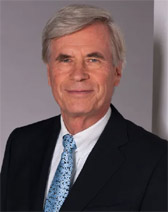
Dieter Schwarz
The discreet German retail magnate who transformed Lidl and Kaufland into one of the world’s largest privately controlled commercial groups
Born on September 24, 1939
Age: 87
Profession: Businessperson, Entrepreneur
Place of Birth: Heilbronn, Baden-Württemberg, Germany
Dieter Schwarz is a German businessman and entrepreneur best known as the owner of Schwarz Group, the international business organization behind the discount supermarket chain Lidl and the hypermarket chain Kaufland. Beginning with a regional food-wholesale company established by his father, Dieter Schwarz built a retail structure that expanded throughout Europe and later into the United States. Although he has rarely appeared publicly or granted interviews, his business decisions have made him one of the most influential figures in modern European retailing and one of Germany’s wealthiest individuals.
Early Life and Family Background
Dieter Schwarz was born on September 24, 1939, in Heilbronn, in the German state of Baden-Württemberg. He is the son of Josef Schwarz, a businessman active in the wholesale food industry.
The family’s commercial history developed around a fruit and grocery wholesale company. In 1930, Josef Schwarz became a partner in Südfrüchte Großhandlung Lidl & Co., a business dealing primarily in fruit and other food products. The company later operated under the name Lidl & Schwarz KG and became the foundation of the modern Schwarz Group.
The business suffered serious damage during the Second World War but was rebuilt during Germany’s postwar economic recovery. Growing up close to the family company gave Dieter Schwarz an early understanding of purchasing, wholesale distribution and the changing habits of German consumers.
Education and Entry into the Family Business
Detailed information about Dieter Schwarz’s formal education has remained limited because he has consistently protected his private life. He is known to have completed commercial training before joining his father’s company.
Within the family business, Dieter Schwarz learned different parts of the food trade, including purchasing, sales, distribution and store organization. His early career coincided with the rapid expansion of supermarkets and self-service retailing in West Germany.
He recognized that the traditional wholesale model would eventually face limits and that direct retail sales offered much greater growth potential. This understanding encouraged him to develop different store formats for price-conscious consumers and customers seeking a wider product range.
The First Lidl Store
In 1973, Dieter Schwarz opened the first Lidl discount store in Ludwigshafen am Rhein. The store initially employed three people and carried approximately 500 product lines. Its simple design, limited assortment and low operating costs became central elements of the Lidl business model.
Instead of presenting customers with a very large number of competing brands, Lidl focused on a smaller selection of frequently purchased products. Centralized buying, rapid stock turnover and an emphasis on private-label goods helped the company offer lower prices.
The brand name was also an important decision. Using the Schwarz family name for the stores could have created the expression “Schwarzmarkt,” the German word for black market. The Lidl name was therefore retained as a more suitable and approachable identity for the discount chain.
Taking Control of the Company
After Josef Schwarz died in 1977, Dieter Schwarz assumed leadership of the family enterprise. By that time, the discount concept had already shown strong growth potential.
He expanded Lidl throughout West Germany and developed a highly standardized system for store design, purchasing and distribution. By the end of the 1970s, the chain had grown to around 30 stores.
Rather than attempting to imitate traditional department stores or large supermarkets, Dieter Schwarz kept Lidl closely focused on price, efficiency and convenience. This disciplined approach allowed the company to open stores rapidly while keeping operating costs under control.
The Lidl Discount Model
The business model developed under Dieter Schwarz was based on a relatively small sales area, a carefully selected product range and high-volume purchasing. Products that failed to sell quickly could be removed, while successful items were purchased in large quantities.
Stores were deliberately functional rather than luxurious. Basic shelving, compact layouts and efficient staffing reduced costs. These savings could then be reflected in retail prices, strengthening Lidl’s image as a destination for value-conscious consumers.
Private-label products became especially important. By selling goods under its own brands, Lidl gained greater control over price, packaging, manufacturing standards and profit margins.
The model did not remain fixed. As Lidl expanded, its stores gradually introduced bakeries, fresh foods, household products, seasonal goods and more polished interiors. Nevertheless, the promise of comparatively low prices remained at the center of the brand.
International Expansion of Lidl
After establishing a strong presence in Germany, Lidl began expanding into other European countries. The company entered France during the late 1980s and early 1990s, followed by additional markets across Western, Southern, Central and Eastern Europe.
International growth required the company to adapt to different consumer preferences, food regulations and retail traditions. At the same time, Lidl maintained a recognizable operating structure based on centralized purchasing, private-label goods and standardized stores.
The chain later expanded into the United Kingdom, Scandinavia and the United States. Its growth made Lidl one of the strongest international competitors to Aldi, another German discount retailer that had developed a similarly efficient low-cost model.
Dieter Schwarz remained largely absent from public campaigns surrounding this expansion. His influence was exercised through ownership, senior appointments and long-term corporate planning rather than through a highly visible personal leadership style.
Development of Kaufland
While Lidl focused on compact discount stores, Dieter Schwarz also developed a second retail format built around larger stores and a much broader assortment. This business eventually became known as Kaufland.
The origins of Kaufland can be traced to larger consumer markets operated by the Schwarz business. The first store using the modern Kaufland name opened in Neckarsulm in 1984.
Kaufland offered food, beverages, household products, clothing and other consumer goods within large supermarket or hypermarket locations. The format allowed the group to serve customers who wanted greater choice than was available in Lidl’s discount stores.
Following German reunification, Kaufland expanded rapidly in the eastern regions of the country. It later entered countries including the Czech Republic, Poland, Croatia, Romania, Bulgaria, Slovakia and Moldova.
Two Complementary Retail Formats
The development of Lidl and Kaufland gave Dieter Schwarz a distinctive position in European retail. Lidl addressed consumers seeking speed, simplicity and low prices, while Kaufland served customers who preferred large stores and more extensive product selection.
Rather than forcing both chains into a single identity, the group maintained separate brand strategies. This allowed it to compete simultaneously in the discount supermarket and hypermarket sectors.
The combination also strengthened the company’s purchasing power. Although the chains operated under different names and formats, their scale created advantages in sourcing, logistics, property development and supplier negotiations.
Corporate Restructuring and Schwarz Group
As the business expanded, its ownership and management structures became increasingly complex. The various companies associated with Lidl, Kaufland and related services were gradually organized under the broader identity of Schwarz Group.
Dieter Schwarz served as the central executive figure during the group’s most important period of domestic and international expansion. He has commonly been described as chairman and chief executive of the Lidl and Kaufland businesses between 1977 and 2004.
In 2004, he withdrew from daily executive management. Klaus Gehrig, one of the group’s most influential professional managers, assumed greater operational responsibility and led the organization for many years.
Although Dieter Schwarz stepped away from visible daily management, he retained decisive influence through the group’s ownership structure and foundations. Major questions involving long-term direction, leadership and investment remained connected to him.
Manufacturing, Recycling and Digital Services
Over time, Schwarz Group expanded beyond conventional retailing. It established manufacturing operations that produce food and beverages for the group’s stores, giving the company greater control over supply and product quality.
The group also developed PreZero, a waste-management and recycling business. PreZero collects, sorts, processes and recycles materials, supporting the group’s aim of managing more stages of the commercial value chain.
Digital and information-technology activities were organized through businesses including Schwarz Digits. These operations provide cloud services, cybersecurity, data systems and digital infrastructure for the group and external customers.
By combining production, retail, recycling and technology, the organization evolved far beyond the original food-wholesale company established by Josef Schwarz.
Scale of Schwarz Group
In the 2025 financial year, the companies of Schwarz Group reported total sales of €185.6 billion. The group operated approximately 14,500 stores in 34 countries and employed around 604,000 people.
Lidl and Kaufland remained the main retail pillars, while production, recycling and digital businesses supported the group’s broader value chain. This scale placed Schwarz Group among the world’s largest retail organizations and Europe’s most important privately controlled companies.
The figures also demonstrate how far Dieter Schwarz moved the business beyond its original regional foundation. What began as a German food-wholesale operation became an international organization serving millions of customers each day.
Leadership Style
Dieter Schwarz is known for an unusually private leadership style. He has rarely granted interviews, avoided television appearances and generally stayed away from public business events.
Few widely circulated photographs of him exist compared with other business leaders of similar wealth and influence. Employees and corporate communications have traditionally focused on the companies and brands rather than presenting Schwarz as a public personality.
This discretion has contributed to his reputation as one of Europe’s most secretive billionaires. It has also reflected the culture of a privately controlled company that releases less information than publicly traded competitors.
His management approach emphasized operational efficiency, disciplined expansion and long-term control. Instead of building a personal public brand, Dieter Schwarz concentrated on creating structures that could grow without depending on his constant public involvement.
Ownership Structure
The ownership structure surrounding Schwarz Group has been designed to preserve long-term control and prevent the business from being divided or sold easily. Shares and voting rights are held through foundations and associated entities.
The charitable Dieter Schwarz Foundation is linked to the group’s economic success, while control rights are structured separately. This arrangement allows business earnings to support educational and scientific initiatives while the company remains protected from short-term ownership pressures.
The structure also limits direct family intervention in daily management. Professional executives oversee operations, but the business remains anchored in the long-term principles established by Dieter Schwarz.
Dieter Schwarz Foundation
Dieter Schwarz established the Dieter Schwarz Foundation to support education, science, research, innovation and entrepreneurship. The foundation has concentrated much of its activity in Heilbronn and the surrounding region.
Its projects range from early-childhood education and schools to universities, research institutions and startup programs. The foundation’s central objective is to create an educational environment connecting academic knowledge with technology and commercial innovation.
The foundation has supported the development of the Bildungscampus Heilbronn, a large educational campus bringing together universities, research organizations and training institutions.
Heilbronn as an Education and Technology Center
Through foundation-backed investments, Dieter Schwarz has played a major role in the transformation of Heilbronn from an industrial city into an increasingly important center for education and technology.
The Technical University of Munich established a campus in Heilbronn with support from the foundation. Programs there focus on management, digital technology, data science, artificial intelligence and entrepreneurship.
The foundation has also supported institutions including Heilbronn University of Applied Sciences, DHBW Heilbronn and the programming school 42 Heilbronn.
These investments reflect Dieter Schwarz’s interest in developing a regional ecosystem where students, researchers, established companies and new technology ventures can work together.
Artificial Intelligence and Research Investment
Education and research support connected with Dieter Schwarz has increasingly focused on artificial intelligence, digital sovereignty and applied technology. Heilbronn has become the location of major projects intended to strengthen Germany’s position in these fields.
The foundation has supported research partnerships, professorships and innovation programs designed to attract academics and technology companies to the region.
These activities broadened Dieter Schwarz’s public influence beyond retail. Although he remained personally private, his foundation became an important participant in Germany’s debates about education, digital infrastructure and international technological competitiveness.
Wealth
Dieter Schwarz derives most of his wealth from his connection to the privately held Schwarz Group. Because the business is not publicly traded, estimates of his fortune depend on private-company valuations, revenue figures and assumptions about the group’s ownership structure.
Forbes estimated his wealth at $67.2 billion in its March 2026 global billionaires ranking, placing him among the world’s 30 wealthiest people and identifying him as Germany’s richest individual at that time. Real-time estimates change with market conditions, currencies and valuation methods.
Despite this wealth, Dieter Schwarz has generally avoided the luxury-focused public profile associated with many billionaires. Public information about his residences, personal spending and private activities remains limited.
Public Criticism and Labor Relations
The rapid growth of Lidl and Kaufland has occasionally brought criticism concerning labor conditions, employee monitoring, supplier pressure and the demanding nature of discount retail operations.
Trade unions and journalists in different countries have examined working hours, management practices and employee representation within the chains. Lidl has responded at various times by revising internal policies, strengthening compliance systems and emphasizing employee development.
Like other large retailers, the group has also faced scrutiny over packaging waste, food sourcing, agriculture, transportation emissions and the commercial influence it exercises over suppliers.
These controversies form part of the wider debate surrounding large discount retailers: they offer consumers lower prices but achieve those prices through strict control over costs, logistics, staffing and procurement.
Historical Importance in European Retail
Dieter Schwarz belongs to the generation of German entrepreneurs who transformed discount retailing into an international industry. Together with the families behind Aldi, he helped demonstrate that low-price stores could compete not only during periods of economic hardship but also become a permanent part of consumer culture.
His achievement was not based on inventing a single product. Instead, he created systems capable of purchasing, transporting and selling enormous volumes of everyday goods with consistent efficiency.
The dual development of Lidl and Kaufland was especially significant. It allowed Schwarz Group to serve different consumer groups while benefiting from a shared international organization.
By remaining private, the business was able to prioritize long-term expansion rather than quarterly shareholder expectations. This structure became one of the defining features of Dieter Schwarz’s commercial legacy.
Personal Life
Dieter Schwarz married Franziska Weipert Schwarz in 1963. The couple has two daughters, Monika Schwarz and Regine Schwarz.
His daughters have generally remained outside the public management of Schwarz Group. The company’s daily operations have instead been entrusted to professional executives, while the family’s long-term influence has been maintained through ownership and foundation structures.
Dieter Schwarz has spent much of his life in the Heilbronn and Neckarsulm region. Despite his international business influence, he has preserved an exceptionally private lifestyle and rarely appears at public ceremonies, business conferences or media events.
Marriage and Children
Children:
Monika Schwarz – Daughter
Regine Schwarz – Daughter
Major Businesses and Institutions
1973–present – Lidl – International discount supermarket chain
1984–present – Kaufland – Supermarket and hypermarket chain
PreZero – Waste-management and recycling company
Schwarz Produktion – Food and beverage manufacturing business
Schwarz Digits – Digital, cloud and cybersecurity services
Dieter Schwarz Foundation – Education, research and entrepreneurship foundation
Selected Career Milestones
1977 – Assumed leadership of the family business after the death of Josef Schwarz
1984 – Developed the first store operating under the modern Kaufland name
1990s – Accelerated the international expansion of Lidl and Kaufland
2004 – Withdrew from daily executive management
Later years – Continued to influence Schwarz Group through its ownership and foundation structures
Source: Biyografiler.com
Frequently asked questions about Dieter Schwarz
Who is Dieter Schwarz?, Dieter Schwarz biography, Dieter Schwarz life story, Dieter Schwarz age, Dieter Schwarz facts, Dieter Schwarz birthplace, Dieter Schwarz photos, Dieter Schwarz videos, Dieter Schwarz career

Lamine Yamal
Professional footballer

Sam Altman
Entrepreneur, Investor, CEO

Erling Haaland
Professional footballer

Kylian Mbappe
Professional footballer

Alice Weidel
Politician, Economist

Giorgia Meloni
Politician, Journalist


Hongjoong
Singer, Rapper, Songwriter, Composer

Ludacris
Rapper, Actor

Kwon Eunbi
Singer

Sarah Wayne Callies
Actress, Screenwriter, Producer, Director

LaTavia Roberson
Singer, Actress, Entrepreneur

Mustafa Kemal ATATÜRK
Statesman, Military Commander

Coco Chanel
Fashion Designer, Entrepreneur

Hermann Göring
Military Officer, Politician, Military Commander
Lamine Yamal
Professional footballer

Erich von Daniken
Author

Janet Jackson
Singer, Songwriter