
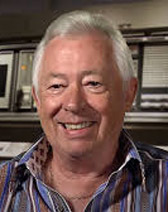
Mike Markkula
The first major investor who transformed the computer project created by Steve Jobs and Steve Wozniak into a professionally managed company
Born on February 11, 1942
Age: 84
Profession: Businessperson, Entrepreneur
Place of Birth: Los Angeles, California, United States
Mike Markkula, whose full name is Armas Clifford Markkula Jr., is an American electrical engineer, businessman, investor and technology executive best known for his foundational role in the development of Apple. After Steve Jobs and Steve Wozniak created the company’s first computers, Mike Markkula supplied financing, prepared an ambitious business plan, established its early marketing philosophy and helped create the professional management structure required for rapid expansion. Although less publicly celebrated than the two principal technical founders, he became one of the decisive figures who transformed Apple from a small personal-computer project into a commercially viable technology company.
Early Life and Family Background
Mike Markkula was born on February 11, 1942, in Los Angeles, California. His full name, Armas Clifford Markkula Jr., reflects his Finnish ancestry. The Markkula family name originated in Finland, and his great-grandfather moved to the United States during the nineteenth century.
Growing up during the expansion of the American electronics and aerospace industries, Mike Markkula developed an interest in engineering, mathematics and technology. Southern California was becoming an important center for aviation, defense research and electronic manufacturing, providing an environment in which electrical engineering offered significant professional opportunities.
Education in Electrical Engineering
Mike Markkula studied electrical engineering at the University of Southern California. He earned a bachelor’s degree in electrical engineering in 1964 and completed a master’s degree in the same field in 1966.
His technical education gave him a detailed understanding of electronics, computer components and integrated circuits. This knowledge later distinguished him from investors who approached technology companies only through financial analysis. Mike Markkula could evaluate both the engineering potential of a product and the commercial strategy required to sell it.
Early Career at Hughes Aircraft
After completing his undergraduate education, Mike Markkula began working as an engineer at Hughes Aircraft Company. He participated in classified aerospace work associated with advanced aircraft technology, including systems related to the Lockheed YF-12 interceptor program.
The experience exposed him to large-scale engineering projects, complex production processes and the relationship between technical development and organizational management. However, he eventually concluded that his strongest professional abilities were not limited to engineering. He became increasingly interested in product planning, sales and technology marketing.
Fairchild Semiconductor and Intel
Mike Markkula moved from aerospace engineering into the emerging semiconductor industry, joining Fairchild Semiconductor. The company was one of the most important institutions in the development of Silicon Valley and played a major role in the commercialization of transistors and integrated circuits.
At Fairchild Semiconductor, Mike Markkula worked in product marketing. His responsibilities required him to understand new electronic components, identify potential commercial applications and explain highly technical products to manufacturers and business customers.
He later joined Intel, which had been established by former Fairchild executives Robert Noyce and Gordon Moore. At Intel, Mike Markkula continued working in marketing and became involved with early semiconductor memory products and integrated circuits.
His experience at Fairchild Semiconductor and Intel gave him extensive knowledge of the rapidly developing electronics market. He learned how technology companies could move from engineering prototypes to mass-produced commercial products, how distribution networks were constructed and how professional marketing could create demand for unfamiliar technologies.
Early Financial Independence
Through his salary, investments and stock options at Intel, Mike Markkula accumulated significant personal wealth while still in his early thirties. By approximately the age of 32 or 33, he had achieved sufficient financial independence to leave regular corporate employment.
His early retirement did not end his involvement in technology. Instead, it gave him the freedom to examine investment opportunities, advise young companies and become involved in projects that interested him personally. This financial independence became crucial when he encountered a small computer venture being developed by Steve Jobs and Steve Wozniak.
Meeting Steve Jobs and Steve Wozniak
In 1976, Steve Jobs and Steve Wozniak began selling the Apple I, a single-board computer designed primarily by Wozniak. Their early operation had technical promise but lacked sufficient capital, formal management, distribution capacity and a detailed commercial strategy.
Investor and entrepreneur Don Valentine was introduced to the young founders but concluded that their company required an experienced marketing executive before it could attract major venture financing. He referred them to Mike Markkula, who visited the operation and examined the computer being developed by Steve Wozniak.
Mike Markkula quickly recognized that the more advanced Apple II could appeal to a much wider audience than the hobbyists who purchased most early microcomputers. Its integrated design, color-graphics capabilities and expandability suggested that personal computers could become practical consumer products rather than specialist machines assembled by electronics enthusiasts.
Financing and Incorporation of Apple
In 1977, Mike Markkula provided and arranged approximately $250,000 in financial support for Apple. This commitment consisted of a direct equity investment combined with a credit facility that helped the company purchase parts, manufacture computers and fund its early operations.
His involvement was more substantial than that of a passive investor. Mike Markkula helped reorganize the venture as Apple Computer, Inc. and became one of its principal shareholders alongside Steve Jobs and Steve Wozniak. At the time of incorporation, the three men each controlled approximately 26 percent of the company, with the remaining shares reserved for future investors and employees.
Ronald Wayne, who had briefly participated in the original partnership with Steve Jobs and Steve Wozniak, had already withdrawn from the enterprise. As a result, Mike Markkula effectively became the third central figure in the newly incorporated company and is frequently described as a co-founder because of his financial, managerial and strategic contributions.
The First Apple Business Plan
Mike Markkula wrote the company’s first comprehensive business plan. The document predicted that personal computers could develop into a major consumer industry and projected that Apple could become a Fortune 500 company within a relatively short period.
At the time, the forecast appeared highly ambitious. The personal-computer market was still small, fragmented and dominated by technically oriented companies serving hobbyists. Nevertheless, Mike Markkula believed that a professionally designed computer, supported by strong branding and reliable distribution, could reach homes, schools and small businesses.
His business plan gave Apple credibility with banks, suppliers and outside investors. It demonstrated that the company possessed not only an innovative product but also a structured strategy for manufacturing, marketing, distribution and revenue growth.
Apple’s Marketing Philosophy
One of Mike Markkula’s most lasting contributions was a marketing philosophy summarized through three principles: empathy, focus and impute.
Empathy meant understanding customers more effectively than competing companies understood them. Focus required eliminating unimportant opportunities in order to concentrate resources on the most valuable goals. Impute expressed the idea that customers judged the quality of a product partly through its presentation, packaging, communications and retail environment.
These principles became deeply connected to the identity of Apple. The company would later become famous for simple product communication, controlled presentation, premium packaging and close attention to how consumers emotionally experienced technology.
Mike Markkula also understood the commercial value of the name Apple. While some advisers considered it unsuitable for a professional computer manufacturer, he recognized that it was memorable, approachable and less intimidating than the highly technical names used by many electronics companies.
The Commercial Rise of Apple II
Mike Markkula played an important role in positioning the Apple II as a complete consumer product rather than an unfinished electronics kit. Introduced publicly in 1977, the computer was displayed in a molded plastic case and could be connected to ordinary consumer equipment more easily than many competing systems.
He helped ensure that the company presented itself professionally at the West Coast Computer Faire, where the Apple II attracted attention from consumers, dealers and industry observers. The product’s appearance, display and promotional materials helped distinguish it from computers sold as exposed circuit boards or hobbyist kits.
Under the early commercial structure created by Mike Markkula, Apple advertised beyond specialist electronics publications. Its advertisements appeared in magazines read by affluent, educated and professionally ambitious consumers, helping create the perception that personal computers were useful and desirable products for ordinary people.
The Apple II became one of the first mass-market personal computers. Its adoption by schools, homes and small businesses produced rapid revenue growth and established Apple as one of the leading companies of the personal-computer revolution.
Recruiting Professional Management
Mike Markkula understood that the young company required experienced operational management. Although Steve Jobs possessed exceptional product instincts and promotional ability, he had limited experience managing production, finance and a rapidly expanding workforce.
Markkula recruited Michael Scott, a former manufacturing executive at National Semiconductor, to become the first president and chief executive officer of Apple Computer. The appointment introduced professional supervision and helped separate the responsibilities of the founders from the daily administration of the company.
Mike Markkula initially served as chairman of the board and remained deeply involved in strategy, marketing, finance and product development. He also tested software and hardware and wrote programs for the Apple II under the pseudonym Johnny Appleseed.
Apple’s Initial Public Offering
The rapid success of the Apple II turned Apple into one of the fastest-growing companies in American business. In December 1980, the company completed its initial public offering, creating substantial wealth for its founders, early employees and investors.
The public offering confirmed the commercial value of the structure that Mike Markkula had helped create. A company that had operated on a small scale only a few years earlier had become a publicly traded corporation with national distribution, professional management and a rapidly expanding customer base.
In 1982, Apple entered the Fortune 500, fulfilling the central prediction in Mike Markkula’s early business plan more quickly than many industry observers had considered possible.
Chief Executive Officer of Apple
Following management difficulties involving Michael Scott, Mike Markkula became chief executive officer of Apple in 1981. He served as the company’s second CEO until 1983.
His period as chief executive coincided with rapid growth but also increasing organizational complexity. Apple was expanding beyond the Apple II and developing products such as the Apple III, Apple Lisa and Macintosh. These projects required major investments in engineering, software, manufacturing and marketing.
Mike Markkula supported the development of the Macintosh and authorized the project during a period when its commercial future remained uncertain. He understood that graphical interfaces and simplified interaction could eventually make computers accessible to people without technical training.
At the same time, the company faced product delays, internal competition and management disputes. Mike Markkula preferred to return to the role of chairman and sought an experienced executive capable of managing a large consumer-technology company.
Recruitment of John Sculley
Mike Markkula supported the recruitment of John Sculley, then president of Pepsi-Cola, to lead Apple. Steve Jobs personally persuaded Sculley to leave the beverage industry and join the technology company.
John Sculley became Apple’s chief executive officer in 1983, while Mike Markkula continued to influence the company through the board of directors. The recruitment marked Apple’s transition from founder-led startup management toward leadership by executives with experience in major consumer corporations.
Conflict Between Steve Jobs and John Sculley
During the mid-1980s, serious tensions developed between Steve Jobs and John Sculley. Disappointing early sales of the Macintosh, disagreements over pricing and conflicts concerning management authority divided the company’s senior leadership.
In 1985, Steve Jobs attempted to challenge Sculley’s control of the company. The board was forced to decide whether to support the founder’s product vision or the chief executive’s operational authority. Mike Markkula became one of the decisive board members in the confrontation.
The board ultimately supported John Sculley. Steve Jobs was removed from direct operational responsibility and resigned from Apple later in 1985 before establishing NeXT.
Mike Markkula’s role in the decision has remained one of the most debated elements of his career. Some observers regard the vote as a pragmatic attempt to protect a large public company during a period of financial and managerial instability. Others view it as a decision that removed Apple’s most influential product visionary.
Chairman of Apple
Mike Markkula served as chairman of the Apple board for much of the period between 1985 and 1997. During these years, the company experienced major growth, leadership changes, technological transitions and eventually a serious strategic crisis.
Apple’s Macintosh platform developed a loyal customer base in education, design, publishing and creative industries. However, the company faced intensifying competition from computers based on Microsoft Windows and hardware produced by numerous manufacturers using technology associated with IBM.
After John Sculley, Apple passed through several chief executives, including Michael Spindler and Gil Amelio. Mike Markkula remained one of the longest-serving figures in the company’s governance structure and represented continuity with its earliest years.
The Return of Steve Jobs and Departure from Apple
In 1996, Apple acquired NeXT, bringing Steve Jobs back to the company he had co-founded. The transaction gave Apple access to the operating-system technology that later formed the basis of Mac OS X and eventually influenced iOS, iPadOS and other Apple software platforms.
Following the removal of Gil Amelio in 1997, Steve Jobs gained increasing control over the company’s strategy and reorganized its board of directors. Mike Markkula left the Apple board that year after approximately two decades of involvement with the company.
His departure ended one of the longest leadership relationships in Apple’s history. He had participated in the company’s development from incorporation and the Apple II era through the first Macintosh, the departure of Steve Jobs, multiple executive transitions and Jobs’s eventual return.
Business Activities Beyond Apple
After reducing his active involvement with Apple, Mike Markkula continued working as an investor, adviser and executive in technology and aviation-related companies. His experience made him a valuable participant in businesses requiring both technical understanding and professional management.
He became associated with Echelon Corporation, a company specializing in control-network technology. Echelon developed systems that allowed devices, machinery and building infrastructure to communicate through distributed networks. The company’s technology was applied to industrial automation, transportation, energy management and intelligent-building systems.
Mike Markkula also became involved in aviation enterprises including ACM Aviation and the San Jose Jet Center. These companies provided aircraft management, charter, maintenance and fixed-base services for private and business aviation.
His later business interests included Rana Creek Habitat Restoration, an environmental design and ecological restoration company associated with sustainable landscapes, native habitats, water systems and green-building projects.
Markkula Center for Applied Ethics
In 1986, Mike Markkula and his wife, Linda Markkula, provided the seed funding and initial endowment that helped establish the Markkula Center for Applied Ethics at Santa Clara University.
The center was created to connect ethical theory with practical decisions in business, government, health care, education, technology, journalism and nonprofit organizations. Its work reflected Mike Markkula’s belief that technological and commercial success should be accompanied by careful consideration of moral responsibility.
Over time, the Markkula Center for Applied Ethics became one of the largest university-based applied-ethics centers in the world. It developed case studies, decision-making frameworks, educational resources and professional programs addressing subjects such as corporate conduct, artificial intelligence, data privacy, digital misinformation, medical decisions and public leadership.
Mike Markkula served as chairman of the center’s advisory board and remained closely associated with its development. His contribution extended his influence beyond technology investment into the study of how institutions and individuals make responsible decisions.
Service to Santa Clara University
Mike Markkula served on the board of trustees of Santa Clara University from 2003 to 2009. His involvement strengthened the university’s connections with Silicon Valley and supported the integration of ethics into business, engineering and technology education.
The university recognized both Mike Markkula and Linda Markkula for their philanthropy and long-term support. Their funding helped ensure that applied ethics became an established part of the institution’s academic identity rather than a peripheral subject.
Management Philosophy and Influence
Mike Markkula represented a type of technology leader who combined engineering knowledge, marketing experience, financial discipline and long-term strategic planning. Unlike investors who supplied only capital, he worked directly on the company’s organizational structure, messaging and product strategy.
His influence was particularly important because Steve Jobs and Steve Wozniak possessed complementary but incomplete skills. Wozniak was an exceptional engineer capable of producing elegant computer designs with limited components. Jobs understood product presentation, consumer appeal and the potential cultural importance of personal computing. Mike Markkula added financial credibility, corporate structure, distribution planning and experience in the semiconductor industry.
This combination helped Apple survive a period in which many early personal-computer companies disappeared because they lacked professional management, reliable financing or a strategy for reaching consumers beyond electronics enthusiasts.
Role in Apple’s Corporate Identity
Many principles later associated with Apple can be traced partly to the company’s earliest commercial strategy under Mike Markkula. These included presenting technology as approachable, controlling the quality of product communications, treating packaging as part of the consumer experience and focusing attention on a limited number of important products.
Steve Jobs later became the public embodiment of these ideas and developed them much further through products such as the Macintosh, iMac, iPod, iPhone and iPad. Nevertheless, Mike Markkula helped formalize the original framework in which design, presentation and customer perception were treated as essential parts of the product itself.
Public Profile and Historical Importance
Mike Markkula generally maintained a lower public profile than Steve Jobs and Steve Wozniak. He rarely sought celebrity status and became known primarily within the technology industry, investment community and institutions connected to Silicon Valley.
His limited public visibility sometimes caused his contribution to be overlooked in popular accounts of Apple’s history. The simplified narrative of two young founders working in a garage did not fully explain the financing, business planning, management recruitment and marketing structure that allowed the company to manufacture products on a commercial scale.
Historical accounts increasingly identify Mike Markkula as the executive who made Apple institutionally credible. His investment was important, but his deeper contribution was converting technical innovation into a functioning company capable of attracting employees, suppliers, banks, distributors and customers.
Personal Life
Mike Markkula is married to Linda Markkula. The couple has supported educational, ethical, medical and community institutions through philanthropic activities.
He has maintained interests in aviation, engineering, land conservation and environmental restoration. His later activities have generally remained outside the intense public attention surrounding the modern technology industry.
Selected Executive and Institutional Positions
1960s–1970s – Product marketing executive – Fairchild Semiconductor
1970s – Marketing executive – Intel
1977 – Early investor, principal shareholder and first chairman – Apple Computer
1981–1983 – Chief executive officer – Apple Computer
1985–1997 – Chairman of the board – Apple Computer
1986 – Founding benefactor – Markkula Center for Applied Ethics
Later career – Investor and executive – Echelon Corporation
Later career – Associated with ACM Aviation and the San Jose Jet Center
Later career – Associated with Rana Creek Habitat Restoration
2003–2009 – Member of the board of trustees – Santa Clara University
Source: Biyografiler.com
Frequently asked questions about Mike Markkula
Who is Mike Markkula?, Mike Markkula biography, Mike Markkula life story, Mike Markkula age, Mike Markkula facts, Mike Markkula birthplace, Mike Markkula photos, Mike Markkula videos, Mike Markkula career
Related Biographies

Lamine Yamal
Professional footballer

Erling Haaland
Professional footballer

Kylian Mbappe
Professional footballer

Sam Altman
Entrepreneur, Investor, CEO

Giorgia Meloni
Politician, Journalist

Khabib Nurmagomedov
Professional Boxer

Hoyt Richards
Model, Actor

Dieter Schwarz
Businessperson, Entrepreneur

Giovanni Ferrero
Businessperson

Cynthia Erivo
Singer, Actress, Songwriter, Producer

Mike Markkula
Businessperson, Entrepreneur

Carol Burnett
Actress, Singer

Masoud Pezeshkian
President, Politician

Annie Leibovitz
Photographer

Arkady Rotenberg
Businessperson, Investor

Bill Pullman
Actor

Hailey Bieber
Model, Entrepreneur

Ilya Sutskever
Computer Scientist, Researcher