
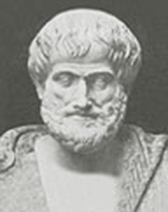
Aristotle
Born on -
Age: -
Profession: Philosopher, Scientist
Place of Birth: Stagira, Chalcidice, Macedonia
Aristotle was one of the most influential figures in the history of Western thought. With his work titled Poetics, he laid the foundations of contemporary political theory, and with his treatise On the Soul, he established the basis of modern psychology. As the intellectual father of numerous theories, Aristotle profoundly shaped philosophy, science, and human thought for centuries.
Aristotle was born in 384 BC on the island of Stagira in the Aegean Sea. His grandfather, Nicomachus, served as the court physician to the grandfather of Alexander the Great. This close connection to the Macedonian royal court played a decisive role in shaping Aristotle's life and intellectual development.
He began his education at the Academy founded by Plato, where he quickly became the most distinguished student of his teacher. After completing his studies, Aristotle married the sister of his close friend Hermias and had a son. When Hermias was crucified by the Persians, Aristotle honored his memory by composing an elegy.
At the time he was appointed as tutor to Alexander the Great, Aristotle was conducting research on marine life and other scientific subjects in Mytilene. In addition to educating Alexander, he taught the children of many noble families and established a school in Mieza known as the “Grove of the Nymphs.”
The meeting of Aristotle and Alexander the Great stands as one of the most significant encounters in history. One possessed the power and will to rule the world, while the other held the genius to explore it and reshape human thought. In recognition of Aristotle, King Philip II of Macedon rebuilt the city of Stagira, which had recently been destroyed in war, as a tribute to his son’s mentor.
Alexander’s admiration for Aristotle continued long after his education ended. Declaring, “I owe my life to my father, but my understanding of a meaningful life to Aristotle,” Alexander placed resources and personnel at his teacher’s disposal, enabling extensive research. He even provided rare manuscripts that Aristotle could not have obtained on his own.
When Alexander set out on his Asian campaign, Aristotle returned to Athens, then the cultural center of the world, and founded a school known as the Lyceum. Renowned as the greatest sage of his era, he attracted students from across the known world.
Biology was the starting point of Aristotle's philosophy, which remained firmly grounded in empirical observation and scientific inquiry. He often taught while walking with his students through nature, conducting extensive studies on living organisms.
After the death of Alexander the Great in Babylon, Aristotle lost his political protection and was accused of impiety. To avoid the fate of Socrates, he left Athens and sought refuge on the island of Chalcis, where he died shortly thereafter in 322 BC.
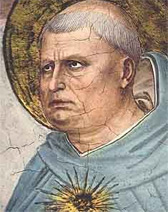
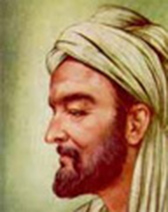
The philosophy of Aristotle deeply influenced major thinkers such as Thomas Aquinas, Dante Alighieri, Herbert Spencer, and Johann Wolfgang von Goethe. He became the intellectual foundation of medieval scholasticism and profoundly shaped both Christian theology and Islamic philosophy, influencing figures such as Al-Farabi, Avicenna, and Averroes.
Producing works across numerous disciplines, Aristotle illuminated virtually every field of human knowledge, leaving an unparalleled legacy in the history of thought.
Major Works
Logic
Organon (Collected works on logic):
Categories
On Interpretation
Prior Analytics
Posterior Analytics
Scientific Works
Physics
On the Soul
History of Animals
Scale of Nature
Parts of Animals
Movement of Animals
Generation of Animals
Mechanical Problems
Meteorology
Metaphysics
Metaphysics
Ethics and Politics
Nicomachean Ethics
Eudemian Ethics
Politics
Aesthetics
Rhetoric
Poetics
Source: Biyografiler.com
Frequently asked questions about Aristotle
Who is Aristotle?, Aristotle biography, Aristotle life story, Aristotle age, Aristotle facts, Aristotle birthplace, Aristotle photos, Aristotle videos, Aristotle career
Related Biographies

Lamine Yamal
Professional footballer

Kylian Mbappe
Professional footballer

Erling Haaland
Professional footballer

Sam Altman
Entrepreneur, Investor, CEO

Bad Bunny
Rapper, Songwriter

Brad Pitt
Actor


Hongjoong
Singer, Rapper, Songwriter, Composer

Ludacris
Rapper, Actor

Kwon Eunbi
Singer

Sarah Wayne Callies
Actress, Screenwriter, Producer, Director

LaTavia Roberson
Singer, Actress, Entrepreneur
Lamine Yamal
Professional footballer

Sadio Mane
Professional footballer

Austin Abrams
Actor
Erling Haaland
Professional footballer

James David Vance
Politician, Lawyer, Author

Pete Hegseth
Politician, Military Officer