
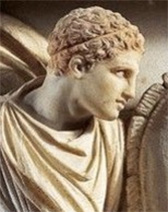
Alexander the Great
The Legendary Conqueror of the Ancient World
Born on -
Age: -
Profession: Military Commander
Place of Birth: Pella, Macedonia (Ancient Greece)
Alexander III of Macedon, universally known as Alexander the Great, was one of the greatest military commanders in history. Between 336 and 323 BC, he ruled as King of Macedonia and conquered nearly half of the known world in just thirteen years, defeating the powerful armies of the Persian Empire and laying the foundations of the Hellenistic world.
Alexander the Great was born to Philip II of Macedon and Olympias. According to legend, on the day of his birth, Philip received three momentous pieces of news: his general Parmenion had defeated the Illyrians, one of his horses had won at the Olympic Games, and his wife had given birth to a son. Seers foretold that the child would become an undefeated commander.
One of the most famous stories of Alexander’s youth involves the legendary horse Bucephalus. When no rider could tame the wild horse, the young prince realized it feared its own shadow. Turning the animal toward the sun, he calmed and mastered it. Witnessing this, Philip reportedly said, “Seek a kingdom worthy of yourself, for Macedonia is too small for you.”
Alexander received an exceptional education under the philosopher Aristotle. He studied philosophy, science, medicine, and literature, and carried a copy of Homer’s Iliad with him throughout his campaigns. By the age of sixteen, he had already proven his military skill by suppressing revolts in his father’s absence. In 338 BC, he commanded the decisive cavalry charge at the Battle of Chaeronea against Athens and Thebes.
After the assassination of Philip II, Alexander the Great ascended the throne before the age of twenty. He swiftly eliminated internal threats and restored order in Thessaly, Thrace, Illyria, and Thebes. At the Congress of Corinth, he was appointed supreme commander of the Greek forces for the planned campaign against Persia.
During his stay in Corinth, Alexander met the philosopher Diogenes of Sinope. When asked what gift he desired, Diogenes replied, “Stand out of my sunlight.” Alexander later remarked, “If I were not Alexander, I would wish to be Diogenes.”
The Conquest of Asia
In 334 BC, Alexander the Great crossed the Hellespont (modern Dardanelles) with approximately 30,000 infantry and 5,000 cavalry. His first major victory came at the Battle of the Granicus River, where he narrowly escaped death thanks to Cleitus the Black. Advancing through Asia Minor, city after city fell before him.
At Gordium, Alexander famously cut the Gordian Knot with his sword, fulfilling a prophecy that whoever solved it would rule Asia. After recovering from a near-fatal illness caused by bathing in the icy Cydnus River, he faced the Persian king Darius III at the Battle of Issus in 333 BC. Despite being vastly outnumbered, Alexander achieved a decisive victory, forcing Darius to flee and leaving his family behind. Alexander treated the captives with royal respect.
Rejecting Darius’ peace offers, Alexander marched south, capturing Syria and besieging the heavily fortified city of Tyre. After a brutal campaign, Tyre fell. He then conquered Egypt, where he founded the city of Alexandria, destined to become one of the greatest cultural and intellectual centers of the ancient world.
In 331 BC, Alexander met Darius again at the Battle of Gaugamela near Arbela. The Macedonian army won a crushing victory against overwhelming odds. Babylon, Susa, and Persepolis soon surrendered, and the Persian Empire collapsed. Darius was later betrayed and killed by his own men, thanking Alexander before his death for honoring his family.
The Conquest of India
Having secured Persia, Alexander the Great turned eastward toward the little-known lands of India. In 327 BC, he crossed into the region, gathering troops from conquered territories to strengthen his army. After crossing the Indus River, he encountered the forces of King Porus.
At the Battle of the Hydaspes, Alexander defeated Porus and took him captive. When asked how he wished to be treated, Porus replied, “Like a king.” Alexander restored his lands and made him a subordinate ruler, impressed by his courage and dignity.
Alexander’s advance into India ended not through defeat, but through the exhaustion and refusal of his own soldiers, who longed to return home after years of continuous warfare. Respecting their will, Alexander turned back toward Babylon.
In 323 BC, following a grand banquet in Babylon, Alexander the Great fell ill and died at the age of thirty-three. His sudden death left his vast empire without a clear successor, leading to prolonged struggles among his generals.
Alexander the Great is remembered not only as one of history’s greatest military geniuses, but also as a transformative figure who spread Greek culture, language, and ideas across three continents, shaping the course of world civilization for centuries.
Source: Biyografiler.com
Frequently asked questions about Alexander the Great
Who is Alexander the Great?, Alexander the Great biography, Alexander the Great life story, Alexander the Great age, Alexander the Great facts, Alexander the Great birthplace, Alexander the Great photos, Alexander the Great videos, Alexander the Great career
Related Biographies

Lamine Yamal
Professional footballer

Kylian Mbappe
Professional footballer

Erling Haaland
Professional footballer

Sam Altman
Entrepreneur, Investor, CEO

Bad Bunny
Rapper, Songwriter

Brad Pitt
Actor


Hongjoong
Singer, Rapper, Songwriter, Composer

Ludacris
Rapper, Actor

Kwon Eunbi
Singer

Sarah Wayne Callies
Actress, Screenwriter, Producer, Director

LaTavia Roberson
Singer, Actress, Entrepreneur

Austin Abrams
Actor
Lamine Yamal
Professional footballer

Sadio Mane
Professional footballer

Alexei Mordashov
Businessperson, Investor
Erling Haaland
Professional footballer

James David Vance
Politician, Lawyer, Author