
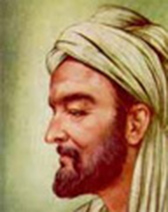
Avicenna
The Master Physician of Medieval Civilization
Born on ?? ??, 0980
Died on July 10, 1036
Age at death: 56
Profession: Physician, Philosopher, Scientist
Place of Birth: Afshana, near Bukhara (present-day Uzbekistan)
Place of Death: Hamadan (present-day Iran)
Avicenna, known in the Islamic world as Ebu Ali al-Husayn ibn Abdullah ibn Sina al-Balkhi and in the West as Avicenna, was a Persian Muslim polymath regarded as the greatest physician not only of the East but also of medieval Europe. The son of Abdullah ibn Sina, a respected scholar and a financial official of the Samanid court, Avicenna was born in 980 in Afshana, near Bukhara, in present-day Uzbekistan. Gifted with extraordinary intelligence, he memorized the Qur’an by the age of ten, an early indication of the exceptional intellectual capacity that would define his life.
Avicenna received his early medical training under a physician named Kuşyâr and continued his education in Bukhara, where he benefited from private lessons given by his father and prominent scholars of the era. His exceptional memory and analytical ability allowed him to surpass his teachers by the age of fourteen. He acquired deep knowledge in philosophy, literature, mathematics, and medicine. At sixteen, he returned his focus to medicine, not only mastering existing medical knowledge but also developing new treatments. By the age of nineteen, he earned the title of physician and began treating patients without charging fees.
After successfully curing the illness of the Samanid ruler Nuh ibn Mansur, Avicenna was granted unrestricted access to the royal library in Bukhara, one of the richest collections of books of the time. The works he studied there greatly expanded his knowledge and shaped his intellectual development. By the age of twenty-one, he was already considered one of the foremost physicians of his era.
Following the collapse of the Samanid dynasty by Mahmud of Ghazni, Avicenna left Bukhara and traveled to Khwarezm. His unconventional lifestyle angered Mahmud of Ghazni, forcing him to flee once more. He wandered through regions such as Jibal, Gurganj, Rayy, and Hamadan, practicing medicine intermittently. In Hamadan, he served as vizier to the Buyid ruler Shams al-Dawla, a position that eventually led to his imprisonment for political reasons. After his release, he continued to move from city to city to escape persecution, until he finally entered the court of Ala al-Dawla, the Kakuyid ruler of Isfahan.
During a military expedition with Ala al-Dawla, Avicenna fell ill and died of a severe stomach disorder on July 10, 1036, in Hamadan. He was buried there, leaving behind an intellectual legacy that would shape global knowledge for centuries.
One of Avicenna’s greatest works is The Book of Healing, an encyclopedic masterpiece that is considered the most comprehensive work ever written by a single individual in human history. This monumental text encompasses logic, physics, geometry, astronomy, mathematics, music, and metaphysics, compiling and systematizing the entire body of scientific knowledge of its time.
His most famous medical work, The Canon of Medicine, is a vast medical encyclopedia grounded both in the discoveries of Greek physicians and in Avicenna’s own observations and experiments. In the final years of his life, Avicenna summarized *The Book of Healing* into a more concise work titled The Book of Salvation. An even more condensed version, Remarks and Admonitions, represents the most refined expression of his philosophical system.
Distinguished across numerous fields including philosophy, mathematics, astronomy, physics, chemistry, medicine, and music, Avicenna made significant contributions to mathematical terminology and precise astronomical observation. Above all, he was a physician, and his medical writings—particularly those concerning the cardiovascular system—are among his most notable achievements.
The name Avicenna is inseparable from The Canon of Medicine, a work that served as a foundational medical text in Western universities until the sixteenth century and in Eastern institutions until the nineteenth century. Composed of five books, the encyclopedia covers anatomy and preventive medicine in its first volume, simple drugs in the second, pathology in the third, pharmacological and surgical treatments in the fourth, and compound medicines in the fifth.
Avicenna authored approximately 150 works, most of them written in Arabic, with only a few in Persian. His medical research was remarkably original and accurate, allowing him to dominate both Eastern and Western medicine for nearly six centuries. He anticipated the existence of microorganisms, proposing that invisible entities were responsible for the transmission of certain diseases—a remarkably advanced insight in an era before the invention of the microscope.
In medieval France, the most prestigious medical faculties, including those of Montpellier and Louvain, adopted The Canon of Medicine as their principal textbook. This continued until the mid-seventeenth century, making Avicenna Europe’s primary medical authority for nearly seven hundred years. Six centuries ago, among the nine core medical books held in the library of the Paris Faculty of Medicine, Avicenna’s *Canon* stood foremost.
Even today, when medical students gather in the main lecture hall near Boulevard Saint-Germain at the University of Paris, they are greeted by two large portraits displayed on the wall. These portraits belong to Avicenna and Al-Razi, symbolizing their enduring influence on the foundations of medical science.
Principal Works:
The Canon of Medicine (“The Law of Medicine”)
The Book of Salvation (“Kitab al-Najat”)
Treatise on Ethics (“Risala fi Ilm al-Akhlaq”)
Remarks and Admonitions (“Isharat wa al-Tanbihat”)
The Book of Healing (“Kitab al-Shifa”)
Source: Biyografiler.com
Frequently asked questions about Avicenna
Who is Avicenna?, Avicenna biography, Avicenna life story, Avicenna age, Avicenna facts, Avicenna birthplace, Avicenna photos, Avicenna videos, Avicenna career

Lamine Yamal
Professional footballer

Kylian Mbappe
Professional footballer

Erling Haaland
Professional footballer

Sam Altman
Entrepreneur, Investor, CEO

Bad Bunny
Rapper, Songwriter

Brad Pitt
Actor


Hongjoong
Singer, Rapper, Songwriter, Composer

Ludacris
Rapper, Actor

Kwon Eunbi
Singer

Sarah Wayne Callies
Actress, Screenwriter, Producer, Director

LaTavia Roberson
Singer, Actress, Entrepreneur

Austin Abrams
Actor
Lamine Yamal
Professional footballer

Sadio Mane
Professional footballer

Alexei Mordashov
Businessperson, Investor
Erling Haaland
Professional footballer

James David Vance
Politician, Lawyer, Author