

Alexis Tsipras
Former Prime Minister of Greece (2015–2019), former leader of SYRIZA, and a prominent figure in European left-wing politics during the Greek debt crisis.
Born on July 28, 1974
Age: 52
Profession: Politician, Former Prime Minister
Place of Birth: Athens, Greece
Alexis Tsipras, born on July 28, 1974, in Athens, is a Greek politician and civil engineer who served as Prime Minister of Greece from January to August 2015 and again from September 2015 to July 2019. He rose to international prominence as the leader of the left-wing SYRIZA party during the Greek sovereign debt crisis, campaigning against austerity measures imposed under international financial assistance programs. On January 26, 2015, at the age of forty, he became one of the youngest prime ministers in modern Greek history. His premiership was marked by difficult negotiations with the European Union, the European Central Bank, and the International Monetary Fund, as well as the controversial 2015 bailout referendum. After leaving office, he remained a major opposition figure, resigned as SYRIZA leader in 2023, and returned to active party politics with a new left-wing political initiative in 2026.
Early Life and Education
Alexis Tsipras was born on July 28, 1974, in Athens, Greece. His birth came shortly after the collapse of the Greek military dictatorship, which had ruled the country between 1967 and 1974.
He grew up during the restoration of parliamentary democracy and developed an interest in politics while attending secondary school.
Tsipras studied civil engineering at the National Technical University of Athens, also known as Athens Polytechnic. He graduated as a civil engineer and later pursued postgraduate studies in urban and regional planning.
During his university years, he became actively involved in student organizations and political movements. His participation in demonstrations and educational campaigns helped establish his reputation as a young activist.
Student Activism and Entry into Politics
Alexis Tsipras began his political activities in the late 1980s, joining the Communist Youth of Greece, the youth organization associated with the Communist Party of Greece.
In November 1990, at the age of sixteen, he became involved in widespread student protests against education reforms proposed by the conservative government of Prime Minister Constantine Mitsotakis.
The proposals included changes to school examinations, disciplinary regulations, and student conduct. Thousands of students occupied schools across Greece, and the demonstrations continued for approximately three months.
The period was marked by violent confrontations, including a deadly fire in Patras in January 1991 that killed five people.
Tsipras appeared on Greek television during the protests, explaining the students' demands and opposing the proposed reforms. These appearances brought him his first national public recognition.
Between 1995 and 1997, he served as an elected representative on the Central Council of the National Student Union of Greece.
After distancing himself from the Communist Party, he became involved in Synaspismos, the Coalition of the Left, Movements and Ecology, which later formed a central component of SYRIZA.
Rise Through Synaspismos and SYRIZA
During the late 1990s and early 2000s, Alexis Tsipras held organizational positions within the youth movement of Synaspismos. From 1999 to 2003, he served as secretary of its youth organization.
In 2006, Synaspismos nominated him as its candidate for mayor of Athens. Although he did not win, his campaign attracted attention, and he was elected to the Athens City Council.
In February 2008, at the age of thirty-three, Tsipras became president of Synaspismos, succeeding Alekos Alavanos in the party leadership.
He subsequently became the leading political figure within SYRIZA, a coalition of radical-left organizations that developed into a unified political party.
In the October 2009 parliamentary election, Tsipras was elected to the Hellenic Parliament for the first time.
As Greece entered a prolonged financial and sovereign debt crisis, SYRIZA gained support among voters dissatisfied with austerity policies, rising unemployment, and established political parties.
Leader of the Opposition and the Greek Debt Crisis
The financial crisis transformed the political environment in Greece. Following the global financial crisis of 2008, the country faced rising public debt, severe budget deficits, and increasing pressure from international lenders.
In 2010, Greece entered its first international financial assistance program, followed by a second bailout in 2012. The agreements required spending reductions, tax increases, pension reforms, and other austerity measures.
Alexis Tsipras became a prominent opponent of these policies, arguing that they intensified unemployment, poverty, and social inequality.
In the June 2012 parliamentary election, SYRIZA received approximately 27 percent of the vote and became the second-largest party in parliament. Tsipras consequently became leader of the main opposition.
His political profile expanded beyond Greece, and he became an influential figure in European left-wing politics. In 2014, he was the European Left's candidate for president of the European Commission.
Although his party's economic proposals differed from those of Greece's international creditors, Tsipras initially advocated renegotiating the country's debt obligations while maintaining membership in the eurozone.
Political Views and Public Image
Alexis Tsipras developed a reputation as a politician associated with democratic socialism, opposition to austerity, and increased social protections.
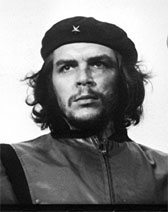
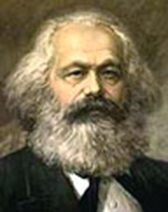
His political views were influenced by socialist and left-wing intellectual traditions, including the work of Antonio Gramsci, Rosa Luxemburg, and Karl Marx. He also expressed interest in historical figures such as Che Guevara and Mahatma Gandhi.
Some supporters referred to him as "Che-pras," a nickname combining his surname with the name of Che Guevara.
Tsipras also became known for his informal appearance, particularly his refusal to wear a necktie during the early years of his premiership. His interest in motorcycles and preference for direct interaction with voters contributed to his public image.
His political generation was notable because he was among the first major Greek party leaders born after the military dictatorship that ended in July 1974.
Political Ideals and Personal Views
In a 2008 interview with a youth magazine, Alexis Tsipras discussed his political ideals, personal habits, and views on public life. He emphasized political accessibility, civil liberties, and the importance of maintaining contact with ordinary citizens.
He explained that becoming a young party leader had significantly changed his daily life and reduced his opportunities for privacy.
He stated that he preferred informal relationships and disliked excessive distance between elected officials and the public.
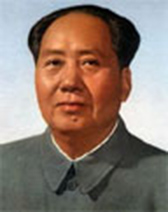
When discussing political and intellectual influences, Tsipras referred to Antonio Gramsci, Rosa Luxemburg, Che Guevara, and Mahatma Gandhi. He also discussed the ideas of Mao Zedong, American President Franklin D. Roosevelt, and economist Adam Smith, acknowledging that he found some of their arguments valuable despite their different ideological traditions.
He criticized aspects of Greek journalism and the treatment of public figures by the media.
In the same interview, he supported decriminalizing marijuana while stating that he had never used it himself because he was concerned about its possible consequences. He said he had friends who used marijuana.
He also supported same-sex marriage, while suggesting that questions concerning adoption and parenting required further discussion.
His personal remarks included comments about his appearance, fear of flying, childhood experiences, and opposition to compulsory military service.
He argued that compulsory military service should be abolished and replaced with opportunities for social service. He went further in expressing an idealistic preference for the abolition of standing armies.
He also recalled being caught stealing ice cream as a child, being taken to a police station, and being released after his family apologized. He described the incident as a continuing source of embarrassment.
The Thessaloniki Programme of 2014
On September 15, 2014, Alexis Tsipras presented SYRIZA's economic and social proposals in Thessaloniki. The platform, commonly known as the Thessaloniki Programme, formed a central part of the party's campaign for the January 2015 parliamentary election.
The proposals emphasized increased social protections, employment creation, debt restructuring, and measures intended to reduce poverty.
Public Debt Restructuring: SYRIZA advocated negotiating with European creditors to obtain partial cancellation of Greek public debt, lower interest rates, and extended repayment periods. The party cited the 1953 London Debt Agreement, which substantially reduced West Germany's external debt, as a historical example.
Electricity and Heating Assistance: The program proposed free electricity for a specified minimum level of consumption among households experiencing extreme poverty, alongside measures to improve access to heating.
Food and Housing Support: SYRIZA proposed food assistance and rent subsidies for low-income households, particularly those affected by unemployment and the economic crisis.
Healthcare and Pensions: The party promised improvements to public healthcare and measures to protect pensions and social security benefits. The program included broader social spending proposals intended to address the consequences of austerity.
Public Transportation: The program proposed special transportation assistance for people living below the poverty line and for the long-term unemployed.
Taxation: SYRIZA advocated restoring certain taxes affecting high-income individuals and increasing the income-tax-free threshold from approximately €5,000 to €12,000.
Employment: With overall unemployment exceeding 25 percent and youth unemployment above 50 percent during the crisis, the party proposed creating approximately 300,000 jobs over two years.
Private Debt Relief: The program included measures intended to assist households unable to repay bank loans and other financial obligations.
Minimum Wage: SYRIZA proposed increasing the minimum monthly wage to €751.
Democratic Reform: The platform emphasized increased public participation, institutional accountability, and greater transparency in government.
These proposals played a significant role in the party's appeal to voters affected by the economic crisis. Their implementation subsequently became constrained by negotiations with Greece's international creditors and the terms of the country's financial assistance agreements.
January 2015 Election and Appointment as Prime Minister
On January 25, 2015, SYRIZA won Greece's parliamentary election with approximately 36.3 percent of the vote, securing 149 of the 300 seats in the Hellenic Parliament.
The party fell two seats short of an absolute parliamentary majority and formed a coalition with the right-wing, anti-austerity Independent Greeks (ANEL), which held thirteen parliamentary seats.
On January 26, 2015, Alexis Tsipras was sworn in as Prime Minister of Greece in the presence of President Karolos Papoulias. The coalition government was appointed and took office immediately afterward.
Unlike most previous Greek prime ministers, Tsipras took a civil rather than a religious oath, consistent with his publicly expressed nonreligious beliefs.
He had previously stated that he respected religious institutions and their representatives while not personally believing in God.
His refusal to wear a necktie during the ceremony also attracted international attention.
One of his first symbolic acts as prime minister was to visit the memorial at Kaisariani, where approximately 200 Greek resistance members had been executed by Nazi occupation forces on May 1, 1944. He placed red flowers at the site in remembrance of the victims.
The 2015 Debt Negotiations and Referendum
Alexis Tsipras's first months in office were dominated by negotiations with Greece's international creditors concerning debt repayment, fiscal reforms, and financial assistance.
His government sought to renegotiate austerity conditions imposed through previous bailout agreements. Finance Minister Yanis Varoufakis played a central role in the early negotiations with European officials.
As negotiations intensified, Greece experienced severe financial pressure, including restrictions on bank withdrawals and the introduction of capital controls.
On July 5, 2015, Tsipras's government held a referendum on the terms of financial assistance proposed by international creditors.
Approximately 61.3 percent of participating voters rejected the proposed conditions.
Despite the referendum result, the Greek government subsequently agreed to a new financial assistance program with European institutions, requiring additional fiscal reforms and austerity measures.
The decision generated significant political controversy. Supporters of Tsipras argued that the agreement prevented a disorderly departure from the eurozone, while critics maintained that accepting the conditions contradicted his election promises.
Disagreements within SYRIZA caused several party members to withdraw their support for the government.
September 2015 Election and Second Government
On August 20, 2015, Alexis Tsipras announced his resignation, triggering an early parliamentary election.
Following a short period under caretaker Prime Minister Vassiliki Thanou-Christophilou, Greece held another election on September 20, 2015.
SYRIZA won approximately 35.5 percent of the vote and secured 145 parliamentary seats.
Tsipras renewed the coalition agreement with ANEL and returned as prime minister on September 21, 2015.
His second government continued implementing reforms associated with Greece's financial assistance program while introducing selected social measures intended to support vulnerable households.
The final international bailout program ended in August 2018, although Greece remained subject to post-program financial monitoring and continued to face substantial public debt obligations.
Foreign Policy and the Prespa Agreement
During his premiership, Alexis Tsipras participated in European Union negotiations, regional diplomacy, and international discussions concerning migration and economic cooperation.
One of his most significant foreign policy achievements was the Prespa Agreement, signed in June 2018 between Greece and the then-Republic of Macedonia.
Working with Macedonian Prime Minister Zoran Zaev, Tsipras supported an agreement intended to resolve the longstanding dispute over the country's name.
Under the agreement, the neighboring country adopted the constitutional name North Macedonia.
The agreement enabled progress toward North Macedonia's integration into European and transatlantic institutions but generated opposition among nationalist groups in both countries.
In recognition of their diplomatic efforts, Tsipras and Zaev received international attention and were nominated for the Nobel Peace Prize.
2019 Election Defeat and Resignation
In 2019, SYRIZA faced declining electoral support amid public dissatisfaction with economic conditions and government policies.
Following defeats in the European Parliament and local elections in May 2019, Alexis Tsipras announced that an early national election would be held.
On July 7, 2019, the opposition New Democracy party, led by Kyriakos Mitsotakis, won the parliamentary election.
Tsipras conceded defeat, and his tenure as prime minister ended on July 8, 2019, when Mitsotakis took office.
He subsequently became leader of the main parliamentary opposition.
Contrary to some contemporary reports describing his departure in June, his government remained in office until July 8, 2019.
Opposition Leadership and Later Political Activities
After leaving government, Alexis Tsipras continued leading SYRIZA, advocating social welfare policies, economic reforms, and opposition to the New Democracy government.
However, the party suffered further defeats in Greece's parliamentary elections in May and June 2023.
On June 29, 2023, Tsipras announced his resignation as SYRIZA leader, ending approximately fifteen years in the leadership of Synaspismos and its successor political organization.
He continued serving as a member of the Greek Parliament and remained involved in public discussions about economic policy, European integration, and international affairs.
In 2024, he founded the Alexis Tsipras Institute for Peace, Justice and Sustainable Growth, focusing on public policy and international cooperation.
On October 6, 2025, Tsipras resigned from the Hellenic Parliament, stating that he was not withdrawing from political life. The decision prompted speculation about establishing a new political organization.
On May 26, 2026, he announced the launch of the Greek Left Alliance, a new left-wing political party, returning to organized party politics ahead of the next Greek parliamentary election.
Personal Life and Family
Alexis Tsipras has maintained a longstanding relationship with Peristera Baziana, also known as Betty Baziana, whom he met during his school years.
The couple have not entered into a conventional marriage ceremony and have maintained a long-term domestic partnership.
They have two sons, Orpheus Ernesto Tsipras and Phoebus Tsipras.
The name Ernesto reflects the couple's interest in Che Guevara, whose full name was Ernesto Guevara.
Tsipras is known for his interest in motorcycles and has spoken publicly about his preference for informal social relationships and maintaining personal independence despite his political career.
Major Political Positions and Dates
1990–1991 – Participated in student protests against education reforms
1995–1997 – Elected representative on the Central Council of the National Student Union
1999–2003 – Secretary of the Synaspismos youth organization
2006 – Candidate for Mayor of Athens and elected city councilor
2008 – Elected President of Synaspismos
2009 – Elected to the Hellenic Parliament
2012 – Became leader of Greece's main parliamentary opposition
2013 – Elected President of SYRIZA at its founding congress
2014 – Presented the Thessaloniki Programme
January 25, 2015 – SYRIZA won the parliamentary election
January 26, 2015 – Became Prime Minister of Greece
July 5, 2015 – Held the Greek bailout referendum
August 2015 – Resigned and called an early election
September 21, 2015 – Returned as Prime Minister
June 2018 – Supported the Prespa Agreement with North Macedonia
August 2018 – Greece completed its third international bailout program
July 8, 2019 – Left office following the election victory of New Democracy
June 29, 2023 – Resigned as leader of SYRIZA
2024 – Founded the Alexis Tsipras Institute
October 6, 2025 – Resigned from the Greek Parliament
May 26, 2026 – Launched the Greek Left Alliance
Source: Biyografiler.com
Frequently asked questions about Alexis Tsipras
Who is Alexis Tsipras?, Alexis Tsipras biography, Alexis Tsipras life story, Alexis Tsipras age, Alexis Tsipras facts, Alexis Tsipras birthplace, Alexis Tsipras photos, Alexis Tsipras videos, Alexis Tsipras career
Related Biographies


Lamine Yamal
Professional footballer

Erling Haaland
Professional footballer

Keanu Reeves
Actor

Kylian Mbappe
Professional footballer

Austin Abrams
Actor

Bad Bunny
Rapper, Songwriter

Alex Konanykhin
Entrepreneur, Investor

Alexis Tsipras
Politician, Former Prime Minister

Alan Arkin
Actor, Film Director

Alain Resnais
Film Director, Screenwriter

Alain Prost
Formula 1 Driver

Akon
Singer, Rapper

Adewale Akinnuoye-Agbaje
Actor, Former Model

John Healey
Politician
Erling Haaland
Professional footballer
Lamine Yamal
Professional footballer

Ursula von der Leyen
Politician, Physician

Christine Lagarde
Lawyer, Politician