
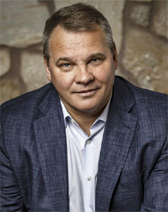
Alex Konanykhin
Russian-born entrepreneur and former banking executive, known for his business career during the collapse of the Soviet Union, his political asylum cases in the United States, and his 2022 offer of a $1 million reward for the arrest of Russian President Vladimir Putin.
Born on September 25, 1966
Age: 60
Profession: Entrepreneur, Investor
Place of Birth: Ostashkov, Russian SFSR, Soviet Union
Alex Konanykhin, born Alexander Pavlovich Konanykhin on September 25, 1966, is a Russian-born entrepreneur, former banker, and technology executive. He became wealthy during the final years of the Soviet Union after establishing financial institutions and businesses that benefited from economic liberalization. In the early 1990s, he was associated with the All-Russian Exchange Bank and a network of companies reportedly valued at approximately $300 million. After leaving Russia in 1992, he became involved in prolonged legal disputes concerning Russian embezzlement allegations and his immigration status in the United States, where he received political asylum in 1999 and again in 2007. He later established technology companies including KMGi and TransparentBusiness. In March 2022, following Russia's full-scale invasion of Ukraine, Alex Konanykhin attracted international attention by publicly offering $1 million to Russian officers who would arrest President Vladimir Putin and bring him to justice under Russian and international law.
Early Life and Education
Alex Konanykhin was born on September 25, 1966, in Ostashkov, a town in the Russian Soviet Federative Socialist Republic, then part of the Soviet Union.
In 1983, he enrolled at the Moscow Institute of Physics and Technology, where he studied subjects associated with space research and engineering.
He left the institution in 1986 after being expelled under circumstances that have been described differently in biographical accounts.
Rather than continuing his academic education, Konanykhin entered business during a period when Soviet economic policies were beginning to change.
He initially established a student construction cooperative, an enterprise permitted under the gradually liberalizing Soviet economic system. He subsequently expanded into banking, securities trading, real estate, and other commercial activities.
Business Career During Perestroika
During the late 1980s, Alex Konanykhin benefited from the economic reforms introduced by Soviet leader Mikhail Gorbachev under the policies of Perestroika and Glasnost.
The reforms gradually expanded opportunities for private enterprise and cooperative businesses, creating new commercial possibilities for entrepreneurs outside the traditional Soviet state-controlled economy.
Konanykhin established several companies and became involved in financial transactions, currency exchange, and property investments.
In 1991, he founded and became chairman and co-owner of the All-Russian Exchange Bank, also known as the Russian Exchange Bank.
The institution operated during a period when privately controlled banking and foreign currency transactions were becoming increasingly important in the Soviet and post-Soviet economy.
According to accounts of his business activities, the bank became one of the first Russian financial institutions authorized to conduct foreign currency trading.
By the beginning of the 1990s, Konanykhin had developed a business network reportedly encompassing more than one hundred companies, including financial institutions, commodity exchanges, and real estate businesses.
Rise as a Russian Banking Entrepreneur
Following the dissolution of the Soviet Union in December 1991, Alex Konanykhin emerged as a prominent young entrepreneur in the rapidly changing Russian economy.
His companies operated in sectors undergoing privatization and market liberalization, including banking, securities, currency exchange, and real estate.
By 1992, the combined value of businesses associated with him was reportedly approximately $300 million, although such valuations were difficult to verify independently during the period of economic transition.
His growing financial influence brought him into contact with Russian political and business figures, including associates of President Boris Yeltsin.
In 1992, Konanykhin participated in a Russian business delegation connected with Yeltsin's official visit to Washington, D.C., where the Russian president met American President George H. W. Bush.
The delegation also participated in international engagements associated with relations between Russia and Western countries, including contacts involving Canadian Prime Minister Brian Mulroney.
These activities reflected the growing role of private Russian entrepreneurs in the country's international economic relationships.
Dispute Over His Russian Business Empire
In 1992, Alex Konanykhin became involved in a major dispute concerning the ownership and control of his business interests in Russia.
According to his account, he was threatened during a business trip to Budapest, Hungary, by individuals connected with the former Soviet security services.
Konanykhin alleged that armed men associated with the KGB attempted to force him to surrender control of companies and financial assets, including the All-Russian Exchange Bank.
He maintained that the individuals demanded legal documents transferring ownership of his businesses and threatened him with violence if he refused.
In his description of the incident, the men took him to his hotel to arrange the necessary documentation. He reportedly escaped after an opportunity arose to leave the hotel in a friend's vehicle.
These allegations became an important part of his later political asylum proceedings in the United States. However, the precise circumstances of the alleged attempted takeover were disputed, and the account should be understood as Konanykhin's description rather than an independently established judicial finding.
Following the incident, he and Elena Gratcheva, his former secretary and later his wife, left Russia in 1992.
Departure from Russia and Embezzlement Allegations
After leaving Russia, Alex Konanykhin became the subject of allegations by Russian prosecutors concerning financial transactions associated with his former banking operations.
Russian authorities accused him of misappropriating more than $8 million from the All-Russian Exchange Bank and sought his return to Russia to face criminal proceedings.
He denied the accusations, arguing that the prosecution was connected with the seizure of his business interests and the activities of individuals associated with Russian security services.
Russian authorities placed him on a wanted list, and reports described him as one of the country's most prominent internationally sought financial suspects.
Konanykhin maintained that returning to Russia would expose him to political persecution and potentially serious threats to his personal safety.
His legal situation became particularly complicated because he was simultaneously facing immigration proceedings in the United States.
Detention in the United States and First Asylum Case
In June 1996, Alex Konanykhin and Elena Gratcheva were detained by American immigration authorities over allegations involving their immigration documents and visa status.
Konanykhin was held in a detention facility in Virginia for approximately thirteen months while the authorities examined his case.
Gratcheva was released on bond, while Konanykhin remained detained because immigration officials considered him a potential flight risk.
He applied for political asylum, arguing that the criminal accusations against him in Russia were politically motivated and that he faced danger if returned to his home country.
His proceedings included testimony concerning organized crime, Russian banking networks, and the relationship between business and political power during the transition from Soviet rule.
In August 1997, a federal court found serious irregularities in his detention and ordered compensation in connection with actions taken by American immigration authorities.
Political Asylum Granted in 1999
On February 23, 1999, Alex Konanykhin and Elena Gratcheva were granted political asylum in the United States.
The ruling followed legal proceedings in which Konanykhin argued that he had been targeted because of his business activities and conflicts with powerful individuals in Russia.
Testimony from individuals familiar with Russian intelligence and organized crime contributed to the evaluation of his asylum request.
Immigration Judge John M. Bryant determined that the evidence supported his fear of persecution if returned to Russia.
The decision allowed Konanykhin to remain in the United States and continue developing his business activities.
Nevertheless, his immigration difficulties did not end, as American authorities subsequently challenged the ruling.
Founding KMGi and Technology Ventures
While living in the United States, Alex Konanykhin redirected his entrepreneurial activities toward digital advertising, web development, and internet technology.
In 1997, he founded KMGi in New York with Nikolai Mentchokov and Elena Gratcheva.
The company's name was derived from the initials of its founders' surnames.
Initially operating as an advertising and interactive media agency, KMGi subsequently specialized in website design, digital marketing, and internet-based business services.
Its early offices were located in the Empire State Building in New York City.
During the rapid expansion of the internet economy, the company developed a range of digital products and services intended for corporate clients.
Konanykhin later became associated with additional technology ventures, including TransparentBusiness, a cloud-based platform designed for workforce management, remote collaboration, and business transparency.
His business career increasingly focused on software development and technology entrepreneurship rather than banking.
Renewed Immigration Dispute in 2003
On November 20, 2003, the United States Board of Immigration Appeals overturned the earlier ruling granting asylum to Alex Konanykhin.
The decision reopened the possibility that he and Elena Gratcheva could be removed from the United States and returned to Russia.
The ruling occurred during a period of renewed international attention to Russian political and business conflicts, including the October 2003 arrest of businessman Mikhail Khodorkovsky.
Konanykhin argued that the timing of the decision increased his concerns about political persecution.
In December 2003, the couple traveled toward the Canadian border, where they hoped to avoid deportation and seek protection.
On December 18, 2003, American Department of Homeland Security agents detained them near the Peace Bridge connecting the United States and Canada.
They were subsequently transferred into federal custody while immigration authorities prepared to deport them to Russia.
Federal Court Intervention in 2004
In December 2003, Alex Konanykhin and Elena Gratcheva were temporarily protected from deportation after emergency proceedings in federal court.
A judge ordered a stay of removal shortly before the couple was scheduled to be placed on a flight to Moscow.
The intervention prevented their immediate return to Russia and allowed further examination of their legal situation.
On January 26, 2004, a federal judge ruled that aspects of Konanykhin's detention were unlawful and permitted the couple to remain temporarily in the United States while their immigration appeals continued.
The court also addressed compensation associated with the actions of immigration authorities.
These proceedings attracted attention because they involved competing claims concerning Russian criminal investigations, political asylum, and the responsibilities of American immigration authorities.
Charges Dropped and Second Asylum Decision
In 2005, the remaining criminal allegations against Alex Konanykhin in Russia were reported to have been dropped.
The development reduced one element of the legal dispute that had followed him since the early 1990s.
However, questions concerning his immigration status in the United States continued for several years.
On September 18, 2007, Konanykhin was granted political asylum for the second time following proceedings in a federal immigration court in Alexandria, Virginia.
The decision provided renewed legal protection against his forced return to Russia.
By that stage, he had established a substantial portion of his professional and personal life in the United States, where he continued working as a technology entrepreneur.
Personal Life and Marriages
Alex Konanykhin was married to Elena Gratcheva, who had previously worked as his secretary and later became his business partner.
Gratcheva played an important role in the development of KMGi and accompanied Konanykhin during the legal and immigration disputes that followed their departure from Russia.
She died on March 30, 2007.
Konanykhin subsequently married Argentine entrepreneur Silvina Moschini, a businesswoman associated with digital technology, entrepreneurship, and workforce-management platforms.
The couple became involved in business initiatives connected with software development and remote employment technology.
2022 Offer of a $1 Million Reward for Putin's Arrest
On March 2, 2022, shortly after Russia launched its full-scale invasion of Ukraine on February 24, Alex Konanykhin attracted international media attention by announcing a $1 million reward related to Russian President Vladimir Putin.
In statements published through social media, he offered to pay Russian military or law enforcement officers who arrested Putin and brought him to justice under Russian and international law.
Konanykhin described the offer as a response to Russia's invasion of Ukraine and expressed his belief that Putin should face legal accountability for the conduct of the war.
His announcement circulated widely through international news organizations and social media platforms.
Some reports initially described the offer as a bounty on Putin's life. Konanykhin subsequently clarified that he was calling for Putin's lawful arrest and prosecution, not his assassination.
He also criticized Putin's political legitimacy, Russian electoral practices, and the treatment of political opponents. These statements represented Konanykhin's political position and allegations rather than independent legal determinations.
His announcement reflected his longstanding opposition to the Russian government and attracted renewed attention to his earlier disputes with Russian authorities.
Later Public Activities
Following the international attention generated by his 2022 announcement, Alex Konanykhin continued speaking publicly about Russian politics, the war in Ukraine, and political accountability.
In March 2023, following the issuance of an arrest warrant for Vladimir Putin by the International Criminal Court, he reiterated his support for Putin's arrest and extended his public reward proposal to Maria Lvova-Belova, Russia's presidential commissioner for children's rights, who was also named in an International Criminal Court arrest warrant.
The warrants concerned alleged war crimes involving the unlawful deportation and transfer of Ukrainian children. Konanykhin's reward proposal was a private initiative rather than an official judicial or governmental program.
Alongside his political statements, he remained associated with technology and entrepreneurial activities.
Major Dates and Career Milestones
1966 – Born in Ostashkov, Soviet Union
1983 – Entered the Moscow Institute of Physics and Technology
1986 – Left the institute and began developing business activities
Late 1980s – Established a construction cooperative and expanded into finance and real estate
1991 – Founded and became chairman of the All-Russian Exchange Bank
1992 – Participated in international business activities associated with President Boris Yeltsin
1992 – Reported an attempted forced takeover of his business interests in Budapest
1992 – Left Russia with Elena Gratcheva
1996 – Detained by American immigration authorities
1997 – Co-founded KMGi in New York
1999 – Granted political asylum in the United States
2003 – Political asylum decision overturned by the Board of Immigration Appeals
December 2003 – Detained near the Canadian border and temporarily protected from deportation
2004 – Federal court intervened in his immigration proceedings
2005 – Russian criminal allegations against him were reported to have been dropped
2007 – Death of his wife Elena Gratcheva
September 2007 – Granted political asylum in the United States for the second time
2010s – Expanded technology-related business activities, including TransparentBusiness
March 2022 – Offered $1 million for the lawful arrest of President Vladimir Putin
March 2023 – Reiterated his reward proposal following International Criminal Court arrest warrants
Source: Biyografiler.com
Frequently asked questions about Alex Konanykhin
Who is Alex Konanykhin?, Alex Konanykhin biography, Alex Konanykhin life story, Alex Konanykhin age, Alex Konanykhin facts, Alex Konanykhin birthplace, Alex Konanykhin photos, Alex Konanykhin videos, Alex Konanykhin career
Related Biographies

Lamine Yamal
Professional footballer

Erling Haaland
Professional footballer

Keanu Reeves
Actor

Kylian Mbappe
Professional footballer

Austin Abrams
Actor

Bad Bunny
Rapper, Songwriter

Alex Konanykhin
Entrepreneur, Investor

Alexis Tsipras
Politician, Former Prime Minister

Alan Arkin
Actor, Film Director

Alain Resnais
Film Director, Screenwriter

Alain Prost
Formula 1 Driver

Akon
Singer, Rapper

Adewale Akinnuoye-Agbaje
Actor, Former Model

John Healey
Politician
Erling Haaland
Professional footballer
Lamine Yamal
Professional footballer

Ursula von der Leyen
Politician, Physician

Christine Lagarde
Lawyer, Politician