
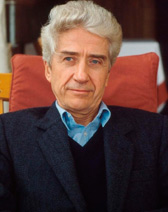
Alain Resnais
French filmmaker and pioneer of modern European cinema, internationally recognized for Night and Fog, Hiroshima Mon Amour, and Last Year at Marienbad, and his innovative exploration of memory, time, and human consciousness.
Born on June 3, 1922
Died on March 1, 2014
Age at death: 92
Profession: Film Director, Screenwriter
Place of Birth: Vannes, Morbihan, Brittany, France
Place of Death: Paris, France
Alain Resnais (June 3, 1922 – March 1, 2014) was a French film director, editor, and documentary filmmaker widely regarded as one of the influential figures of modern European cinema. He achieved international recognition with Night and Fog (1955), Hiroshima Mon Amour (1959), and Last Year at Marienbad (1961), works that challenged conventional cinematic storytelling through fragmented chronology, subjective memory, and experimental editing. Although his emergence as a feature-film director coincided with the French New Wave, he was more closely associated with the Left Bank group of filmmakers and writers, including Chris Marker, Agnès Varda, Marguerite Duras, and Alain Robbe-Grillet. Over a career spanning more than six decades, he received major international honors, including the Golden Lion at the Venice Film Festival, the Cannes Film Festival Grand Prix, and multiple César Awards.
Early Life and Background
Alain Resnais was born on June 3, 1922, in Vannes, a town in the Morbihan department of Brittany, France. His father, Pierre Resnais, was a pharmacist who also served as mayor of Treffléan from 1934 to 1962.
Because he suffered from bronchial asthma during childhood, Resnais initially received private education at home. He later attended the Jesuit Lycée Saint-François-Xavier in Vannes.
From an early age, he developed interests in cinema, photography, painting, comic books, literature, and theater. At approximately twelve years old, he received a Kodak 8 mm film camera and began producing amateur short films, including an adaptation inspired by the fictional criminal Fantômas.
His childhood interest in moving images gradually developed into an ambition to work professionally in cinema, although he initially considered becoming an actor.
Education and Early Artistic Career
In 1939, Alain Resnais moved to Paris to pursue acting. He became an assistant to theater director Georges Pitoëff at the Théâtre des Mathurins and developed experience in theatrical rehearsals and performance.
His chronic asthma affected his eligibility for military service during World War II. During the German occupation of France, he continued developing his artistic interests, particularly theater and film. He later expressed regret about not becoming involved in the French Resistance.
In 1943, Resnais entered the Institut des hautes études cinématographiques (IDHEC), the French national film school that later became part of La Fémis. He studied filmmaking and editing before leaving the institution in 1944.
Following the war, he worked as an actor, camera operator, and editor. In 1946, he participated in the Théâtre aux Armées in Germany under André Voisin and became associated with documentary production in Paris. He was also interested in the documentary Paris 1900 (1947), although claims that he formally worked as an assistant editor on the film have been disputed.
Early Documentaries and Artistic Short Films
During the late 1940s, Alain Resnais began making short documentaries about painters and visual artists. His early subjects included Vincent Van Gogh, Paul Gauguin, and artists associated with modern European painting.
He produced short films examining the work of Oscar Domínguez, Lucien Coutaud, Hans Hartung, Félix Labisse, César Domela, and Henri Goetz. He also traveled through France by bicycle, developing documentary projects about architecture and the visual arts, including Châteaux de France (1948).
His professional breakthrough in documentary filmmaking came with Van Gogh (1948), a short film using paintings, editing, and camera movements to explore the artist's life and work. The film won the Academy Award for Best Short Subject (Two-Reel) at the 1950 ceremony.
In Guernica (1950), made with Robert Hessens, Resnais explored Pablo Picasso's painting and the destruction of the Spanish town of Guernica during the Spanish Civil War. The film combined visual art with historical and political themes.
He subsequently collaborated with Chris Marker on Statues Also Die (1953), a documentary examining African sculpture, colonialism, and the treatment of non-European art in Western museums. The film won the Prix Jean Vigo in 1954.
Night and Fog (1955)
In 1955, Alain Resnais directed Night and Fog, originally titled Nuit et brouillard, a documentary examining the Nazi concentration and extermination camps during World War II.
The film was written by Jean Cayrol, a poet and former prisoner of the Mauthausen concentration camp, and featured music composed by Hanns Eisler.
Resnais combined contemporary color footage of abandoned concentration camp sites with black-and-white archival photographs and wartime film material. The contrast between peaceful present-day landscapes and historical images of mass suffering became central to the documentary's structure.
Rather than presenting a conventional chronological history, the film investigated the relationship between historical evidence, collective memory, and the dangers of forgetting past atrocities.
Night and Fog received international recognition and became one of the important early cinematic examinations of the Holocaust and Nazi concentration camp system. It received the Prix Jean Vigo in 1956.
Hiroshima Mon Amour (1959)
In 1959, Alain Resnais made his first feature-length fiction film, Hiroshima Mon Amour, from a screenplay by French novelist Marguerite Duras.
The film starred Emmanuelle Riva as a French actress visiting Hiroshima and Eiji Okada as a Japanese architect with whom she develops a relationship.
Their conversations gradually reveal memories of personal loss, wartime trauma, and the atomic bombing of Hiroshima. Through nonlinear editing and transitions between different periods, Resnais explored how individual experience intersects with historical catastrophe.
The film was presented at the Cannes Film Festival and received international critical recognition, including the FIPRESCI Prize. Duras's screenplay received an Academy Award nomination for Best Original Screenplay.
Hiroshima Mon Amour established Resnais as a major figure in modern cinema and demonstrated his innovative approach to cinematic time, memory, and narrative structure.
Last Year at Marienbad and the French New Wave
In 1961, Alain Resnais directed Last Year at Marienbad, originally titled L'Année dernière à Marienbad, from a screenplay by Alain Robbe-Grillet.
The film starred Delphine Seyrig, Giorgio Albertazzi, and Sacha Pitoëff. Set in an elaborate European hotel, its story follows a man who attempts to convince a woman that they met the previous year.
The narrative deliberately blurs the boundaries between memory, imagination, and reality. Repeated dialogue, symmetrical compositions, and uncertain chronology create a film in which events can be interpreted in different ways.
Last Year at Marienbad won the Golden Lion at the 1961 Venice Film Festival, becoming one of Resnais's most internationally recognized achievements.
Although his work emerged alongside directors associated with the French New Wave, including Jean-Luc Godard and Francois Truffaut, Resnais developed a distinct approach to filmmaking.
He was more closely associated with the Left Bank group, whose members included Chris Marker, Agnès Varda, and writers interested in literary experimentation and political engagement.
Memory, Politics, and Experimental Cinema
Following his first two feature films, Alain Resnais continued exploring memory, history, and psychological experience.
In Muriel, or the Time of Return (1963), he examined the impact of the Algerian War on French society through the experiences of individuals attempting to confront unresolved memories.
In The War Is Over (1966), written by Jorge Semprún and starring Yves Montand, he portrayed a Spanish political activist involved in resistance to the dictatorship of Francisco Franco. The film received the Prix Louis Delluc.
Resnais also participated in the collective documentary Far from Vietnam (1967), which examined the Vietnam War through the perspectives of several filmmakers.
In Je t'aime, je t'aime (1968), he combined science fiction with psychological drama, following a man participating in an experimental time-travel procedure. The film investigated memory through a fragmented structure in which personal experiences repeatedly reappeared.
His emphasis on montage and formal repetition distinguished his cinema from conventional narrative filmmaking. Rather than presenting past and present as separate realities, his films frequently depicted memory as an active influence on human consciousness.
Major Films from the 1970s to the 1990s
During the 1970s, Alain Resnais expanded his work into historical drama and English-language cinema. In Stavisky (1974), starring Jean Paul Belmondo, he examined the life of a French financial swindler whose activities contributed to a political scandal during the Third Republic.
In Providence (1977), his first English-language feature film, he directed John Gielgud, Dirk Bogarde, and Ellen Burstyn in a psychological drama concerning an aging writer and his family. The film won several César Awards in 1978, including Best Film and Best Director.
My American Uncle (1980), starring Gérard Depardieu, Nicole Garcia, and Roger Pierre, combined fictional stories with ideas drawn from the behavioral research of Henri Laborit. It received the Grand Prix at the Cannes Film Festival.
His subsequent films included Life Is a Bed of Roses (1983), Love Unto Death (1984), Mélo (1986), and I Want to Go Home (1989), demonstrating his continued interest in theatrical performance, relationships, artistic expression, and unconventional narrative forms.
In 1993, Resnais directed Smoking/No Smoking, a two-part adaptation of plays by British dramatist Alan Ayckbourn. The production starred Sabine Azéma and Pierre Arditi, who portrayed multiple characters in different variations of the same story. It won the Prix Louis Delluc and major César Awards in 1994.
His 1997 musical comedy Same Old Song, originally titled On connaît la chanson, incorporated recorded popular songs into the characters' dialogue. The film received the Prix Louis Delluc and seven César Awards, including Best Film.
Later Career and Final Films
In the final years of his career, Alain Resnais continued directing films that combined theatrical conventions, musical elements, comedy, and reflections on human relationships.
His later works included Not on the Lips (2003), an adaptation of a French operetta, and Private Fears in Public Places (2006), adapted from a play by Alan Ayckbourn. The latter earned him the Silver Lion for Best Director at the Venice Film Festival.
In 2009, he directed Wild Grass, based on a novel by Christian Gailly. The film was presented at Cannes, where Resnais received a Special Jury Prize recognizing his career and contribution to cinema.
He followed it with You Ain't Seen Nothin' Yet! (2012), inspired by plays by Jean Anouilh and featuring an ensemble cast of actors who had frequently worked with him.
His final feature film, Life of Riley (2014), originally titled Aimer, boire et chanter, was adapted from a play by Alan Ayckbourn. The film received the Alfred Bauer Prize at the Berlin International Film Festival shortly before Resnais's death.
Artistic Style and Collaborations
Alain Resnais was known for his innovative use of editing, nonlinear storytelling, repeated images, and the relationship between sound and visual composition. His films frequently examined how memories shape individual identity and influence the perception of present events.
Rather than adhering to a single cinematic style, he worked across documentary, historical drama, psychological fiction, science fiction, comedy, and musical cinema.
His creative partnerships were especially important. Early collaborations with Marguerite Duras, Alain Robbe-Grillet, Jean Cayrol, and Chris Marker connected cinema with contemporary literature and political thought.
In later decades, he worked with writers including Jean-Pierre Bacri and Agnès Jaoui, while actors such as Sabine Azéma, Pierre Arditi, and André Dussollier appeared regularly in his productions.
His films frequently blurred the boundaries between theatrical performance and cinema, using elaborate sets, stylized dialogue, and experimental narrative techniques.
International Recognition and Istanbul Retrospective
Throughout his career, Alain Resnais received recognition from international film festivals and national cinema institutions.
In addition to major awards at Cannes and Venice, he received an Honorary Golden Bear at the 1998 Berlin International Film Festival.
On December 14, 2012, the Pera Museum in Istanbul, operated by the Suna and İnan Kıraç Foundation, organized an event titled Alain Resnais Days, celebrating his films and contribution to modern cinema.
Personal Life and Marriages
In 1969, Alain Resnais married Florence Malraux, the daughter of French writer and politician André Malraux and Clara Malraux. Florence worked as his assistant and collaborator on several films. Their relationship ended during the 1980s.
Resnais had a daughter, Camille Bordes-Resnais, who became a television director and screenwriter.
In 1998, he married French actress Sabine Azéma, who had become one of his most frequent collaborators. Their marriage continued until his death in 2014.
Death
Alain Resnais died on March 1, 2014, in Paris, France, at the age of 91.
His death occurred shortly before the French theatrical release of his final film, Life of Riley. He was buried at Montparnasse Cemetery in Paris.
Awards and Honors
1950 – Academy Award for Best Short Subject (Two-Reel) – Van Gogh
1954 – Prix Jean Vigo – Statues Also Die
1956 – Prix Jean Vigo – Night and Fog
1959 – FIPRESCI Prize, Cannes Film Festival – Hiroshima Mon Amour
1960 – French Film Critics' Award, Best Film – Hiroshima Mon Amour
1961 – Golden Lion, Venice Film Festival – Last Year at Marienbad
1966 – Prix Louis Delluc – The War Is Over
1978 – César Award, Best Film and Best Director – Providence
1980 – Grand Prix, Cannes Film Festival – My American Uncle
1993 – Prix Louis Delluc – Smoking/No Smoking
1994 – César Award, Best Film and Best Director – Smoking/No Smoking
1994 – Silver Bear for Outstanding Artistic Contribution, Berlin International Film Festival – Smoking/No Smoking
1997 – Prix Louis Delluc – Same Old Song
1998 – César Award, Best Film – Same Old Song
1998 – Honorary Golden Bear, Berlin International Film Festival
2006 – Silver Lion for Best Director, Venice Film Festival – Private Fears in Public Places
2009 – Special Jury Prize, Cannes Film Festival – Wild Grass
2014 – Alfred Bauer Prize, Berlin International Film Festival – Life of Riley
Filmography
Feature Films:
1959 – Hiroshima Mon Amour
1961 – Last Year at Marienbad
1963 – Muriel, or the Time of Return
1966 – The War Is Over
1968 – Je t'aime, je t'aime
1974 – Stavisky
1977 – Providence
1980 – My American Uncle
1983 – Life Is a Bed of Roses
1984 – Love Unto Death
1986 – Mélo
1989 – I Want to Go Home
1993 – Smoking/No Smoking
1997 – Same Old Song
2003 – Not on the Lips
2006 – Private Fears in Public Places
2009 – Wild Grass
2012 – You Ain't Seen Nothin' Yet!
2014 – Life of Riley
Short Films, Documentaries and Other Productions:
1936 – L'aventure de Guy (Amateur short film)
1946 – Schéma d'une identification
1946 – Ouvert pour cause d'inventaire
1947 – Visite à Oscar Domínguez (Short documentary)
1947 – Visite à Lucien Coutaud
1947 – Visite à Hans Hartung
1947 – Visite à Félix Labisse
1947 – Visite à César Domela
1947 – Portrait d'Henri Goetz
1947 – Le lait Nestlé
1947 – La bague
1947 – L'alcool tue (Short film)
1947 – Journée naturelle
1947 – Van Gogh I (Short film)
1948 – Van Gogh II (Short film)
1948 – Malfray (Short documentary)
1948 – Les jardins de Paris (Short film)
1948 – Châteaux de France (Documentary)
1950 – Guernica (Short film)
1950 – Gauguin (Short film)
1950–1951 – Pictura: An Adventure in Art ("Goya" segment; documentary)
1953 – Statues Also Die (Short documentary)
1955 – Night and Fog (Short documentary)
1956 – All the World's Memory (Short documentary)
1957 – The Mystery of Workshop Fifteen (Short documentary)
1958 – The Song of Styrene (Short documentary)
1967 – Far from Vietnam (Collective documentary, "Claude Ridder" segment)
1968 – Cinétracts (Collective short-film project)
1973 – L'An 01 ("New York Sequence" segment)
1991 – Contre l'oubli ("Pour Esteban González Cuba" segment)
1992 – Gershwin (Documentary)
Source: Biyografiler.com
Frequently asked questions about Alain Resnais
Who is Alain Resnais?, Alain Resnais biography, Alain Resnais life story, Alain Resnais age, Alain Resnais facts, Alain Resnais birthplace, Alain Resnais photos, Alain Resnais videos, Alain Resnais career
Related Biographies

Lamine Yamal
Professional footballer

Erling Haaland
Professional footballer

Keanu Reeves
Actor

Kylian Mbappe
Professional footballer

Austin Abrams
Actor

Bad Bunny
Rapper, Songwriter

Alex Konanykhin
Entrepreneur, Investor

Alexis Tsipras
Politician, Former Prime Minister

Alan Arkin
Actor, Film Director

Alain Resnais
Film Director, Screenwriter

Alain Prost
Formula 1 Driver

Akon
Singer, Rapper

Adewale Akinnuoye-Agbaje
Actor, Former Model

John Healey
Politician
Erling Haaland
Professional footballer

Ursula von der Leyen
Politician, Physician

Christine Lagarde
Lawyer, Politician
Lamine Yamal
Professional footballer