
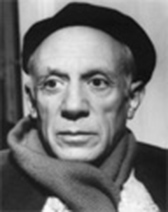
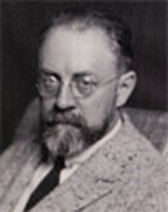
Pablo Picasso
Founder of Cubism and one of the most prolific and influential artists of the 20th century
Born on October 25, 1881
Died on April 8, 1973
Age at death: 92
Profession: Painter, Sculptor
Place of Birth: Málaga, Spain
Place of Death: Mougins, France
Pablo Picasso, whose full name was Pablo Ruiz Picasso, was a Spanish painter and one of the most productive and influential artists of the twentieth century. According to the Guinness Book of Records, he created approximately 13,500 paintings, 100,000 prints, 34,000 book illustrations, and over 300 sculptures, along with numerous ceramics and drawings. In 1973, the estimated total value of his works was believed to be around 750 million dollars. Picasso was a pioneer of the Cubist movement, which he developed together with Georges Braque.
Pablo Picasso was born on October 25, 1881, in Málaga, Spain, as the first child of José Ruiz Blasco, an art teacher and museum curator, and María Picasso López, of Italian descent. On the day of his birth, Picasso narrowly escaped death when the midwife believed he was stillborn and focused her attention on his mother. He was saved thanks to the calm intervention of his uncle, Dr. Don Salvador. His sisters, Dolores and Concepción, were born in 1884 and 1887 respectively.
Picasso grew up in a family deeply connected to art, with painters on both sides of his family. His artistic talent emerged at a very early age; his first spoken word was reportedly “Piz,” a shortened form of the Spanish word for pencil, lápiz. He received his earliest artistic training from his father and later attended the Academia de San Fernando. The first ten years of his life were spent in Málaga, where the family struggled financially. In 1894, the family moved north after his father received a better-paying position. That same year, the death of his sister Concepción from diphtheria profoundly affected Picasso’s outlook on life and art.
Initially influenced by his father’s style, Pablo Picasso amazed those around him with his artistic maturity by the age of thirteen. His father was so impressed by a painting of pigeons that he handed over all his painting materials to his son, declaring that Picasso had surpassed him, and never painted again.
In early 1895, the Ruiz Blasco family moved to Barcelona. Despite lacking formal preparation, Picasso was admitted at the age of fourteen to the prestigious Llotja School of Fine Arts. His intolerance for rigid discipline and his obsessive attention to drawing exercises defined his school years. During this period, he befriended modernist artists and wealthy patrons, as well as his close friend Carles Casagemas, who would later play a crucial role in his artistic development.
After a summer in Málaga in 1897, Picasso moved to Madrid and enrolled in one of Spain’s most respected art academies. Initially, he copied the works of classical masters, absorbing their styles before gradually developing his own unique artistic language.
In 1900, Pablo Picasso held his first solo exhibition at Galerie Vollard and made his first visit to Paris. The suicide of his close friend Carlos Casagemas marked the beginning of a new artistic phase known as the Blue Period (1901–1903). Dominated by shades of blue, this period focused on themes of poverty, old age, despair, and death. Works such as The Old Guitarist, La Vie, and The Two Sisters exemplified the emotional depth of this era. During this time, Picasso also began creating his first sculptures, influenced by the works of Auguste Rodin.
In 1904, Picasso settled permanently in Paris, sharing living space with poet and journalist Max Jacob and meeting his future partner Fernande Olivier. This marked the transition to the Rose Period, characterized by warmer tones and a focus on line and form. Harlequins, acrobats, and circus performers became central motifs, reflecting a lighter emotional atmosphere. One of the most significant works of this period was Family of Saltimbanques (1905).
From 1905 onward, Pablo Picasso’s work began to take on a more classical tone, influenced by artists such as Henri Matisse and Henri Rousseau. By the end of 1906, he had gained recognition not only as a painter but also as a sculptor and printmaker. The simplified, angular forms of this period signaled the imminent birth of Cubism, a movement that would permanently transform the course of modern art.
After meeting Gertrude Stein, Pablo Picasso developed a close friendship with her and, in 1906, painted her portrait, a work that would later be regarded as a pivotal example of his transition toward a more abstract and structurally simplified style.
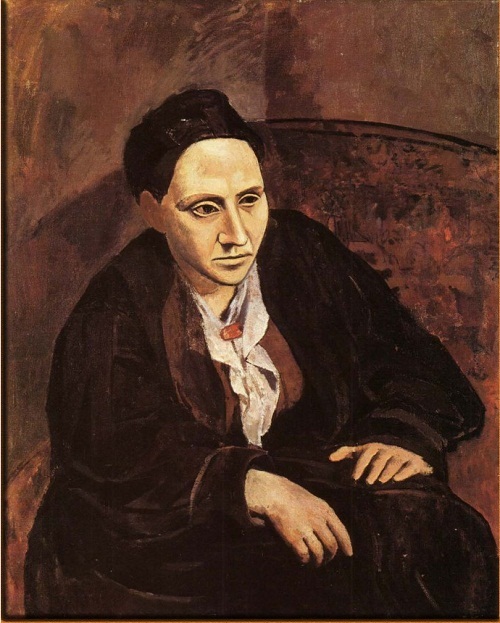
This period marked a time when Pablo Picasso showed his paintings only to a very small circle of close friends, a practice that continued until he completed his first Cubist works. During this phase, the artist began layering three-dimensional forms on a flat surface and reinterpreting human anatomy in ways that departed radically from natural appearance. Together with his close friend Georges Braque, Picasso initiated the Cubist movement in 1907, opening an entirely new chapter in art history. The first definitive example of Picasso’s Cubist vision was the painting Les Demoiselles d’Avignon, completed in the same year.
Among the most famous works Picasso produced during this period were Man with a Pipe (1911), the collage-based Still Life with Chair Caning (1912), and the charcoal drawing Bottle, Glass, and Violin. Because Picasso and Braque were working simultaneously within the same artistic framework, their Cubist works often resembled one another so closely that distinguishing between them could be difficult. A defining characteristic of Cubist painting was the use of geometry and geometric forms: depicted objects were simplified or fragmented into geometric shapes. Another fundamental aspect of Cubism was the attempt to translate three-dimensional objects in space onto a two-dimensional surface. To achieve this, Picasso divided forms into their lateral planes and presented them simultaneously on the flat canvas. As a result, figures in his portraits were often shown both in profile and frontal view at the same time.
From 1910 onward, Picasso and Braque began pushing Cubism into a new phase known as “Analytical Cubism.” In this stage, objects were broken down into their constituent parts. The goal was not to imitate appearances, but to reveal the underlying reality of the object. Important works from this period included The Guitar Player (1910), Portrait of Ambroise Vollard (1910), Accordionist (1911), and Aficionado (1912).
In 1912, Picasso and Braque advanced Cubism to another stage known as “Synthetic Cubism.” Considered an extreme approach to translating reality onto the canvas, this phase emphasized the use of assembled fragments and collage elements. Notable works from Picasso’s Synthetic Cubist period included Guitar and Violin (1912), Glass and Bottle of Suze (1912), Clarinet and Violin (1913), and The Italian Girl (1917).
With the outbreak of World War I, Picasso’s collaboration with Braque came to an end. After the war, he began reflecting social disintegration and the terror created by technological violence in his works, while simultaneously returning to a more classical style. During the years he spent in Rome with Jean Cocteau, Picasso also worked as a stage designer. Shortly after meeting the dancer Olga Khokhlova, he married her. He produced numerous portraits of his wife and their son Paulo, and during the 1930s he increasingly came under the influence of Surrealism.
In January 1927, Picasso met and fell in love with Marie-Thérèse Walter, while his marriage to Olga had become deeply troubled. He painted countless portraits of Marie-Thérèse and maintained the relationship for many years. As tensions with Olga became unbearable and Marie-Thérèse became pregnant, their daughter Maya was born. Unable to separate from Olga, Picasso experienced severe emotional strain and found it difficult to focus on his work. In one letter, he wrote, “This is the worst period of my life.” Isolating himself from others, he turned to writing poetry.
In 1931, Pablo Picasso purchased a country house near Paris and, encouraged by his friends Louis Fort and Gonzales, established workshops dedicated to engraving and sculpture, marking another significant expansion of his artistic practice.
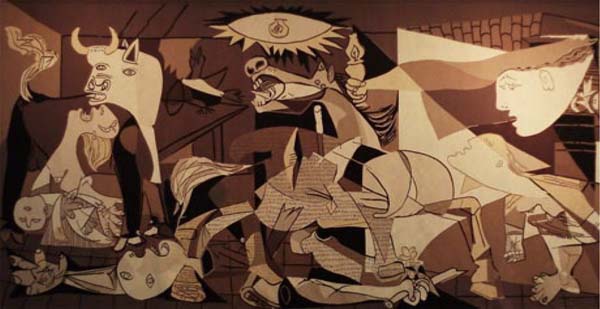
The bombing of the town of Guernica on April 27, 1937, during a German attack deeply affected Pablo Picasso. After this event, Picasso completed a work and gave it the title Guernica. An interesting incident is associated with this painting. While Picasso was in his studio finishing Guernica, a German officer entered, stared at the canvas for a long time, and then asked Picasso, “Did you paint this?” The famous artist replied, “No, you did.” Guernica is regarded as Picasso’s most famous work. Symbolizing the German bombardment during the Spanish Civil War, this monumental painting reflects the inhuman, hopeless, and despicable nature of war.
The painting remained for many years at the Museum of Modern Art in New York and, at Picasso’s request, was not exhibited in his homeland of Spain, as Picasso was dissatisfied with the political system practiced there. Only in 1981 did the painting return to Spanish soil, where it was first displayed at the Cason del Buen Retiro. When the Reina Sofia Museum opened in Madrid in 1992, Guernica was transferred there and became the most important piece of the museum’s collection.
Some of the most significant works Picasso produced during this period included Woman-Flower (1946), Portrait de Sylvette (1954), and Don Quixote (1955).
Although he was opposed to war throughout his life, Pablo Picasso was constantly forced to live with it. One of his closest friends, Max Jacob, died in 1944 in a Jewish concentration camp after being taken there by the Germans. In the autumn of 1945, Picasso began living with the painter Françoise Gilot, whom he had known for two years. Settling in southern France, he created countless portraits of his companion Françoise.
In 1949, Picasso was asked by the Communist Party, of which he was a member, to design a poster for the Peace Congress held in Paris. He created the image of a dove, which has since become a symbol of peace, and his work covered walls across cities throughout Europe. After Claude, Picasso named his second child with Françoise Gilot Paloma, meaning “dove” in Spanish. He continued his political activities until 1956, when Hungary was invaded by the Soviet Union.
Exceptionally productive, Pablo Picasso developed a strong interest in ceramics and pottery in Vallauris, where he had lived since 1948, producing highly creative works in this field. Despite being seventy years old, the artist was happy, lively, and energetic. However, after Françoise Gilot left him, taking their two children with her, Picasso returned to his former depressive state. Exhausted by journalists who followed him like a movie star, the artist withdrew from public life and began living in seclusion with his new companion Jacqueline Roque at a seaside villa overlooking Cannes called “La Californie,” seeing only close friends.
On March 14, 1961, Pablo Picasso married Jacqueline Roque and settled on a farmhouse on a hill near Mougins, a small town located about eight kilometers from Cannes.
On May 1, 1970, an exhibition of the works he had produced in his later years was held at the Papal Palace in Avignon. With the help of his close friend Jaime Sabartés, Picasso donated all of his early works to the Picasso Museum in Barcelona.
Having achieved a form of immortality through his works during his lifetime, Pablo Picasso died on April 8, 1973. Spending the final twenty years of his life in the most productive phase of his career, he is undoubtedly one of the most important artists of the twentieth century. Picasso’s turbulent love life and artistic personality were portrayed in the film Surviving Picasso, in which the painter was played by Anthony Hopkins. It is also said that Picasso gifted one of his works to Ara Güler, who had the opportunity to photograph him.
Source: Biyografiler.com
Frequently asked questions about Pablo Picasso
Who is Pablo Picasso?, Pablo Picasso biography, Pablo Picasso life story, Pablo Picasso age, Pablo Picasso facts, Pablo Picasso birthplace, Pablo Picasso photos, Pablo Picasso videos, Pablo Picasso career
Related Biographies

Lamine Yamal
Professional footballer

Erling Haaland
Professional footballer

Kylian Mbappe
Professional footballer

Austin Abrams
Actor

Bad Bunny
Rapper, Songwriter

Sam Altman
Entrepreneur, Investor, CEO


Hongjoong
Singer, Rapper, Songwriter, Composer

Ludacris
Rapper, Actor

Kwon Eunbi
Singer

Sarah Wayne Callies
Actress, Screenwriter, Producer, Director

LaTavia Roberson
Singer, Actress, Entrepreneur

Amber Heard
Actress, Model
Lamine Yamal
Professional footballer
Bad Bunny
Rapper, Songwriter
Erling Haaland
Professional footballer
Kylian Mbappe
Professional footballer
Austin Abrams
Actor