
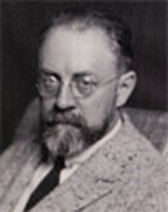
Henri Matisse
Founder of Fauvism and Master of Color
Born on December 31, 1869
Died on November 2, 1954
Age at death: 85
Profession: Painter
Place of Birth: Le Cateau-Cambrésis, France
Place of Death: Nice, France
Henri Matisse was a French painter and the founder of the Fauvist movement. Renowned for his radical use of color and expressive freedom, he is regarded as one of the key figures in the development of modern art. Alongside Pablo Picasso, Matisse is considered a pioneer of twentieth-century painting, redefining the emotional and structural possibilities of color.
Henri Matisse was born on December 31, 1869, in Le Cateau-Cambrésis, France, as the son of a grain merchant. His full name was Henri Émile Benoît Matisse. He remained in Le Cateau-Cambrésis until completing high school, after which he moved to Paris to study law. Between 1887 and 1888, he pursued legal education for one year, then returned to his hometown to work as a court clerk. Until the age of twenty-one, he had no involvement with painting or the visual arts.
In 1890, at the age of twenty-one, Matisse suffered from a serious illness. During his recovery at home, his mother gave him a set of oil paints to help pass the time. Painting immediately captivated him, and he began receiving lessons from art enthusiasts. In 1891, after persuading his father, he returned to Paris to study art formally. He first enrolled at the Académie Julian and in 1892 attended evening courses at the School of Decorative Arts, where he became friends with Albert Marquet.
In 1895, Gustave Moreau took an interest in Matisse’s work and admitted him without examination to his studio, where talented artists such as Georges Rouault, Albert Desvallières, Henri Evenepoel, Charles Camoin, Jean Puy, Henri Manguin, Paul Flandrin, and Georges Linaret were also working. This environment allowed Matisse to develop his artistic vision and technical skills. In 1896 and 1897, he exhibited his first works, which were cautious experimental attempts. Around this time, he stayed on the island of Belle-Île as a guest of the Impressionist painter John Russell, through whom he met Auguste Rodin and Camille Pissarro.
In January 1898, Matisse married Amélie Parayre, who had previously modeled for him. That same year, he traveled to London to study the works of J.M.W. Turner, then stayed in Corsica and Toulouse before returning to Paris. Despite severe financial difficulties, he continued his artistic research independently, avoiding strict adherence to any single movement. He attended an art academy on Rue de Rennes, focusing on figure studies, where he met painters such as André Derain and Jean Puy. Under the guidance of Antoine-Louis Barye and Auguste Rodin, he also worked on sculpture.
From 1901 onward, Matisse regularly submitted works to the “Salon des Indépendants” and, after its establishment in 1903, to the “Salon d’Automne.” In 1904, he held a solo exhibition at the gallery of art dealer Ambroise Vollard. While in Saint-Tropez, he met Paul Signac and Henri-Edmond Cross, adopting their pointillist techniques. These experiments led him toward the bold color language that would define Fauvism, and he soon emerged as the leading figure of the Fauves.
In 1906, Matisse exhibited The Joy of Life at the Salon des Indépendants and later held another solo exhibition at the Druet Gallery. He also worked extensively with engraving and lithography. Around this time, he met Pablo Picasso at the home of the Stein family, beginning one of the most influential artistic rivalries of modern art.
An avid traveler, Matisse visited Algeria in 1906, Italy in 1907, Germany in 1908 and 1909, Spain in 1910, Moscow in 1911, and Morocco between 1912 and 1913. In 1908, he founded a private academy, which he closed in 1911. In 1909, he moved to Issy-les-Moulineaux outside Paris. Many of the works he produced there until 1917 were purchased by Russian collectors Sergei Shchukin and Ivan Morozov.
In 1917, Matisse traveled with his friend Albert Marquet to Marseille and then settled in Nice, where he encountered the Mediterranean light and color he had long imagined. From 1921 onward, while maintaining his Paris residence, he lived primarily on the Mediterranean coast, spending the second half of his life in relative calm and prosperity. His travels continued, taking him to England, Italy, the United States, Polynesia, and eventually on a world tour. Between 1930 and 1934, he created mural paintings for the Barnes Collection in Pennsylvania.
Matisse also designed ballet sets and costumes in 1920 and 1939 and later worked on the decoration of the Dominican Chapel in Vence. He married Amélie Parayre in 1898; they separated in 1939. He had one daughter and two sons.
Henri Matisse died on November 2, 1954, at the age of eighty-five, in Cimiez near Nice, France. Today, he is remembered as a founding figure of modern painting. While Pablo Picasso revolutionized form, Matisse transformed the expressive freedom of color, securing his place as one of the greatest artists of the twentieth century.
Source: Biyografiler.com
Frequently asked questions about Henri Matisse
Who is Henri Matisse?, Henri Matisse biography, Henri Matisse life story, Henri Matisse age, Henri Matisse facts, Henri Matisse birthplace, Henri Matisse photos, Henri Matisse videos, Henri Matisse career
Related Biographies

Lamine Yamal
Professional footballer

Erling Haaland
Professional footballer

Kylian Mbappe
Professional footballer

Austin Abrams
Actor

Bad Bunny
Rapper, Songwriter

Sam Altman
Entrepreneur, Investor, CEO


Hongjoong
Singer, Rapper, Songwriter, Composer

Ludacris
Rapper, Actor

Kwon Eunbi
Singer

Sarah Wayne Callies
Actress, Screenwriter, Producer, Director

LaTavia Roberson
Singer, Actress, Entrepreneur
Bad Bunny
Rapper, Songwriter

Margot Robbie
Actress
Kylian Mbappe
Professional footballer

Neymar
Professional footballer

Pedro Sanchez
Politician

Ronaldinho
Professional footballer