

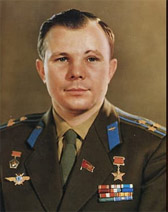
Aleksey Leonov
Soviet cosmonaut who became the first person to perform a spacewalk on March 18, 1965, during Voskhod 2. He later commanded the Soviet spacecraft in the historic Apollo–Soyuz Test Project in July 1975.
Born on May 30, 1934
Died on October 11, 2019
Age at death: 85
Profession: Astronaut
Place of Birth: Listvyanka, West Siberian Krai, Russian SFSR, Soviet Union (present-day Kemerovo Oblast, Russia)
Place of Death: Moscow, Russia
Aleksey Leonov (May 30, 1934 – October 11, 2019), also known as Alexei Leonov, was a Soviet cosmonaut, military pilot, aerospace administrator, and painter. On March 18, 1965, he became the first human to leave a spacecraft and perform an extravehicular activity, commonly known as a spacewalk, during the Voskhod 2 mission. His spacewalk lasted 12 minutes and 9 seconds and nearly ended in disaster when his spacesuit expanded in the vacuum of space, preventing him from re-entering the spacecraft's airlock. A decade later, Leonov commanded Soyuz 19 during the Apollo–Soyuz Test Project (1975), the first joint human spaceflight mission between the Soviet Union and the United States. He was also involved in Soviet lunar exploration planning, served in leadership positions within the cosmonaut corps, and pursued painting throughout his life.
Early Life and Family Background
Aleksey Leonov, whose full name was Aleksey Arkhipovich Leonov, was born on May 30, 1934, in the village of Listvyanka in the West Siberian Krai of the Soviet Union, now part of Kemerovo Oblast, Russia.
He was the eighth of nine children in a large family. His father, Arkhip Leonov, worked in local administration, while his mother, Yevdokiya Leonova, was a teacher.
Leonov grew up in difficult economic conditions during the Soviet period. From childhood, he demonstrated interests in both drawing and mechanical engineering.
He learned to repair mechanical equipment and became interested in aircraft engines, aviation technology, and the principles of flight.
One of his older brothers worked in aviation technology and helped introduce him to aircraft construction and aeronautical mechanics.
In 1948, his family moved to Kaliningrad, where he continued his schooling. He graduated from secondary school in 1953.
Leonov initially considered studying art but decided to pursue aviation after examining the cost of formal artistic education.
Military Aviation Training
In 1953, Aleksey Leonov entered military aviation training in the Soviet Union.
He completed initial pilot training at the Kremenchuk aviation school in 1955 and subsequently continued his education at the Chuguyev Higher Military Aviation School in Ukraine.
He graduated in 1957 as a fighter pilot and entered operational service with the Soviet Air Force.
During the following years, he served in military aviation units and developed experience flying jet aircraft.
His training included advanced flight procedures, physical conditioning, parachuting, and preparation for operating aircraft under demanding conditions.
In 1960, Leonov was selected for the Soviet Union's first group of cosmonauts, a class that included Yuri Gagarin, Gherman Titov, and Andriyan Nikolayev.
Selection and Training as a Cosmonaut
Following his selection in March 1960, Aleksey Leonov began an intensive training program for human spaceflight.
His preparation included medical examinations, centrifuge training, parachute exercises, survival procedures, and instruction in spacecraft systems.
He also participated in experiments designed to prepare cosmonauts for weightlessness and other conditions encountered during orbital flight.
During the early 1960s, Soviet engineers began developing equipment that would allow a cosmonaut to leave a spacecraft while it remained in orbit.
Leonov became involved in this program and participated in preparations for the first human extravehicular activity.
The mission required a specialized pressure suit, an inflatable airlock, and procedures for safely returning a cosmonaut to the spacecraft.
Voskhod 2 and the First Spacewalk
On March 18, 1965, Aleksey Leonov launched aboard Voskhod 2 with mission commander Pavel Belyayev.
The spacecraft lifted off from the Baikonur Cosmodrome in the Soviet Union, now located in Kazakhstan.
The principal objective was to demonstrate that a human could leave a spacecraft and operate in the vacuum of space while protected by a pressurized spacesuit.
The Voskhod spacecraft was equipped with an inflatable airlock because the entire cabin could not safely be depressurized during the operation.
On the second orbit, Leonov entered the airlock, secured his tether, and opened the external hatch.
He then floated outside the spacecraft, becoming the first person in history to conduct a spacewalk.
Leonov remained in open space for 12 minutes and 9 seconds, observing his surroundings and testing movement in weightlessness.
He was connected to Voskhod 2 by a tether that allowed him to move several meters away from the spacecraft.
The mission was monitored by Pavel Belyayev, who remained inside the capsule.
Spacesuit Emergency During the Spacewalk
During the spacewalk, Aleksey Leonov encountered an emergency caused by the expansion of his spacesuit.
The pressure difference between the inside of the suit and the vacuum of space caused the suit to become rigid and inflated.
As a result, Leonov had difficulty moving his arms and legs, operating his equipment, and preparing to re-enter the airlock.
When he attempted to return, he discovered that the inflated suit prevented him from passing through the opening as planned.
Without immediate guidance from ground controllers, he decided to release air from the suit through a pressure valve.
This reduced the internal pressure enough to restore some flexibility and allowed him to enter the airlock headfirst.
He subsequently had to turn around inside the confined space to close the hatch and return to the spacecraft cabin.
The maneuver required considerable physical effort. Leonov later described excessive perspiration and exhaustion during the emergency.
He succeeded in re-entering Voskhod 2, but the problems demonstrated the difficulties of performing work outside a pressurized spacecraft.
Difficult Return to Earth
The return journey of Voskhod 2 also presented difficulties.
After Leonov had returned to the cabin, the crew experienced problems involving the spacecraft's systems and the preparations for re-entry.
The automatic landing system did not operate as intended, requiring Pavel Belyayev to carry out a manually controlled descent.
During the return through Earth's atmosphere, the spacecraft's modules did not immediately separate as designed, causing the vehicle to rotate before the connection finally broke.
On March 19, 1965, Voskhod 2 landed in a remote forested region of the Ural Mountains, far from its planned recovery area.
The crew survived the landing but had to remain in difficult winter conditions before rescue teams reached them.
Leonov and Belyayev spent the night in the forest and were evacuated after recovery personnel arrived.
The mission lasted approximately 26 hours and included the first human spacewalk in history.
Recognition After the First Spacewalk
On March 23, 1965, Aleksey Leonov was awarded the title Hero of the Soviet Union for his participation in the Voskhod 2 mission.
He also received the Gold Star Medal and the Order of Lenin.
The first spacewalk formed part of the competition between the Soviet Union and the United States during the Space Race.
On June 3, 1965, American astronaut Edward H. White II performed the first American spacewalk during the Gemini 4 mission.
Leonov subsequently participated in public events, international visits, and professional discussions concerning the development of extravehicular activity.
Soviet Lunar Program
Following Voskhod 2, Aleksey Leonov was selected for training connected with Soviet plans to send cosmonauts around the Moon and eventually land on its surface.
He became associated with the Soviet crewed lunar landing program, which developed the N1 launch vehicle and the LK Lunar Module.
Leonov was among the leading candidates for a Soviet lunar landing mission and was considered for the role of lunar module pilot.
However, Soviet engineers faced technical difficulties, including repeated failures of the N1 rocket.
After the United States completed the first human Moon landing with Apollo 11 in July 1969, the Soviet lunar program continued for a limited period but was eventually abandoned.
Leonov therefore never traveled to the Moon, despite his preparation for a possible landing mission.
In 1968, he graduated from the Zhukovsky Air Force Engineering Academy, completing advanced studies in military aviation and aerospace engineering.
Soyuz 11 and the Crew Replacement
In 1971, Aleksey Leonov was selected to command the Soviet mission intended to visit Salyut 1, the world's first space station.
His original crew for Soyuz 11 included Valeri Kubasov and Pyotr Kolodin.
Shortly before the planned launch, medical examinations revealed an abnormality in Kubasov's chest X-ray.
Doctors suspected tuberculosis and declared him medically unfit to fly. The diagnosis was subsequently found to be incorrect.
Under Soviet crew assignment procedures, the entire original crew was replaced by the backup team.
The replacement crew consisted of Georgy Dobrovolsky, Vladislav Volkov, and Viktor Patsayev.
Soyuz 11 launched on June 6, 1971, and successfully docked with Salyut 1.
The three cosmonauts spent more than three weeks aboard the station, completing scientific and technical activities.
During the return to Earth on June 30, 1971, a pressure-equalization valve opened prematurely, causing the spacecraft cabin to lose its atmosphere.
All three cosmonauts died from decompression before landing.
Leonov had avoided the fatal mission because of the last-minute medical decision to replace his crew.
Apollo–Soyuz Test Project
In July 1975, Aleksey Leonov commanded the Soviet spacecraft in the Apollo–Soyuz Test Project (ASTP), the first joint human spaceflight mission between the Soviet Union and the United States.
Leonov flew with Soviet cosmonaut Valeri Kubasov aboard Soyuz 19, which launched from the Baikonur Cosmodrome on July 15, 1975.
On the same day, an American Apollo spacecraft launched from the Kennedy Space Center in Florida, carrying astronauts Thomas P. Stafford, Vance Brand, and Deke Slayton.
On July 17, 1975, the two spacecraft docked in Earth orbit using a specially developed international docking system.
Leonov and Stafford participated in the first ceremonial handshake between American astronauts and Soviet cosmonauts in space.
During the mission, the crews visited each other's spacecraft, exchanged gifts, conducted scientific experiments, and participated in joint television broadcasts.
Leonov presented the American astronauts with portraits he had drawn during the flight.
The Soviet spacecraft returned to Earth on July 21, 1975, completing Leonov's second and final space mission.
The Apollo–Soyuz mission took place during a period of improved diplomatic relations between the United States and the Soviet Union, commonly described as détente.
Leadership in the Soviet Cosmonaut Program
After the Apollo–Soyuz mission, Aleksey Leonov continued working within the Soviet space program.
From 1976 until January 1982, he served in senior leadership positions within the Soviet cosmonaut corps and at the Yuri Gagarin Cosmonaut Training Centre near Moscow.
His responsibilities included supervising cosmonaut preparation, participating in technical discussions, and contributing to the organization of future missions.
He also worked as deputy director of the training center and held the rank of major general in the Soviet Air Force.
Leonov was involved in the publication of Neptune, a magazine concerned with spaceflight and cosmonaut activities.
He received honors from the Soviet government and from other countries for his contributions to space exploration.
Painting and Artistic Work
Throughout his life, Aleksey Leonov maintained an interest in drawing and painting.
He became a member of the Union of Artists of the USSR in 1965, the same year as his first spaceflight.
His paintings depicted spacecraft, planetary landscapes, cosmic phenomena, and scenes inspired by his experiences in orbit.
He also worked with Soviet science fiction artist Andrei Sokolov on illustrated books and collections of space-themed paintings.
Leonov produced more than 200 paintings and participated in exhibitions in Russia and other countries.
He carried colored pencils and paper during space missions and produced drawings based on his observations of Earth and the surrounding space environment.
In 2004, he became an honorary member of the Russian Academy of Arts.
Retirement and Business Career
Aleksey Leonov retired from active military and cosmonaut service in 1991, following the final years of the Soviet Union.
He subsequently entered the private sector and worked in business management.
He served as vice president of Alfa-Bank, a major Russian commercial bank based in Moscow.
He continued participating in events related to aerospace history, international cooperation, and space education.
Leonov also gave interviews and published accounts of his experiences during the early decades of human space exploration.
Personal Life
Aleksey Leonov married Svetlana Dozenko, who worked in publishing and editorial activities.
The couple had two daughters, Viktoria Leonova and Oksana Leonova.
Leonov and his family lived in Moscow during the later years of his life.
Alongside his professional activities, he continued painting and participating in cultural events connected with aviation and space exploration.
Death
Aleksey Leonov died on October 11, 2019, in Moscow, Russia, at the age of 85.
He was buried at the Federal Military Memorial Cemetery in Mytishchi, near Moscow.
On the day of his death, NASA astronauts Christina Koch and Andrew Morgan were conducting a spacewalk outside the International Space Station.
Awards and Honors
1965 – Hero of the Soviet Union, first award
1965 – Gold Star Medal and Order of Lenin
1975 – Hero of the Soviet Union, second award
1975 – Gold Star Medal and Order of Lenin
1975 – Major General of Aviation
2004 – Honorary Member of the Russian Academy of Arts
2011 – Order of Friendship, Russia
Space Missions
1965 – Voskhod 2 (Pilot; March 18–19, 1965; first human spacewalk)
1975 – Soyuz 19 (Commander; July 15–21, 1975; Apollo–Soyuz Test Project)
Selected Historical Dates
1934 – Born in Listvyanka, Soviet Union
1948 – Moved with his family to Kaliningrad
1953 – Completed secondary education
1955 – Completed initial military aviation training
1957 – Graduated from the Chuguyev Military Aviation School
1960 – Selected for the first Soviet cosmonaut group
1965 – Became the first person to perform a spacewalk
1965 – Awarded the title Hero of the Soviet Union
1968 – Graduated from the Zhukovsky Air Force Engineering Academy
1971 – Removed from the Soyuz 11 crew following a medical concern involving a fellow cosmonaut
1975 – Commanded Soyuz 19 during the Apollo–Soyuz Test Project
1976–1982 – Served in senior leadership positions within the Soviet cosmonaut program
1991 – Retired from military and cosmonaut service
2004 – Became an honorary member of the Russian Academy of Arts
2019 – Died in Moscow at the age of 85
Source: Biyografiler.com
Frequently asked questions about Aleksey Leonov
Who is Aleksey Leonov?, Aleksey Leonov biography, Aleksey Leonov life story, Aleksey Leonov age, Aleksey Leonov facts, Aleksey Leonov birthplace, Aleksey Leonov photos, Aleksey Leonov videos, Aleksey Leonov career
Related Biographies

Lamine Yamal
Professional footballer

Kylian Mbappe
Professional footballer

Erling Haaland
Professional footballer

Keanu Reeves
Actor

Bad Bunny
Rapper, Songwriter

Ronaldinho
Professional footballer

Andre Gide
Novelist, Essayist

Andreas Papandreu
Former Prime Minister, Politician, Economist

Andrea Mantegna
Painter

Andrea del Verrocchio
Sculptor, Painter

Andrea del Sarto
Painter

Andrea Bargnani
Former Professional Basketball Player

Vladimir Putin
Politician, , Head of State

Ursula von der Leyen
Politician, Physician
Kylian Mbappe
Professional footballer

Marco Rubio
Politician, Diplomat

Donald Tusk
Politician, Historian

Helen McCrory
Actress