
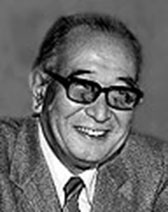
Akira Kurosawa
The Emperor of Cinema
Born on March 23, 1910
Died on September 6, 1998
Age at death: 88
Profession: Director, Producer, Screenwriter
Place of Birth: Tokyo, Japan
Place of Death: Tokyo, Japan
Akira Kurosawa — known as the “Emperor” — was a director, producer, and screenwriter who became a true pioneer of world cinema by introducing and mastering numerous techniques for the first time. He famously used multiple cameras simultaneously, created masterpieces that made the Western world envious, and revealed his genius even in low-budget productions. Considered one of the greatest directors of all time, his most important films include Seven Samurai, Ran, Dreams, Rashomon, Yojimbo, and Dersu Uzala. As the most frequently imitated director by the American film industry in terms of both screenplays and films, Kurosawa lived through two world wars and experienced the atomic bomb catastrophe. In an increasingly darkening world, he believed that human sensitivity would not die, and throughout his films he elevated the light of this hope.
Akira Kurosawa was born on March 23, 1910, in Tokyo, Japan, as one of eight children of Isamu Kurosawa and Shima Kurosawa. He had three brothers and four sisters. His father was the headmaster of a military school and conducted research on samurai warfare. Encouraged during his student years because of his talent for drawing, Kurosawa would later sketch the storyboards for every one of his films during the screenplay stage. He was deeply affected by the Great Kantō Earthquake of 1923. Japan’s rigid social structure and authoritarian rules were also reflected within his family life, and Akira struggled to adapt to the strict, samurai-rooted discipline imposed by his father.
Although Kurosawa experienced a relatively calm childhood, his brother Heigo Kurosawa worked as a *benshi* — a narrator for silent films in Japan. Through Heigo’s guidance, Kurosawa had the opportunity to watch many cinema classics and simultaneously developed a close interest in painting. The suicide of his brother Heigo, followed a few months later by the loss of his eldest brother, introduced Kurosawa to severe trauma at a young age. He also had a strong relationship with words; his radically styled writings were published in several magazines. Although he did not define himself as a communist at the time, he later acknowledged this inclination in subsequent statements.
Driven by his passion for cinema, Kurosawa entered the film industry in 1936, working as an assistant director at one of Japan’s leading studios, PLC. Trained under Kajiro Yamamoto, he collaborated with the director on Uma in 1941. The following year, he continued as an assistant director on Tsubasa no Gaika and Seishun no Kiryu. In 1943, Kurosawa stepped behind the camera for his first feature-length film, Sugata Sanshiro, which was subjected to censorship. Films made under government control contained nationalist themes; for example, The Most Beautiful functioned as propaganda, portraying women working in a military factory. Judo Saga 2 carried anti-American tendencies, while his first post-modern war film, No Regrets for Our Youth, criticized the former Japanese regime.
Addressing contemporary Japan in films such as Drunken Angel and Stray Dog, Kurosawa gained international recognition with Rashomon, released in 1950 — a film that earned him the Golden Lion at the Venice Film Festival. When Rashomon became an Oscar nominee in 1952, Western audiences turned their attention to Japanese cinema, marking a major breakthrough. The film presents a single crime — the murder of a samurai and the rape of his wife — from multiple perspectives: the bandit, the samurai, the woman, and the woodcutter who witnessed the event. Through this structure, Kurosawa explored the relativity of truth, and his innovative shooting and narrative techniques revealed the full scope of his directorial power.
In 1945, Kurosawa married Yoko Yaguchi, with whom he had two children: Hisao Kurosawa and Kazuko Kurosawa.
After adapting Fyodor Dostoevsky’s novel *The Idiot* for the screen as The Idiot, Kurosawa directed Ikiru (1952) and, in 1954, Seven Samurai, which once again earned him an Oscar nomination. Widely regarded as one of the most important films in Japanese cinema history, the film tells the story of seven samurai hired to protect a village from bandits. Following its success, John Sturges directed The Magnificent Seven with Yul Brynner, Eli Wallach, and Charles Bronson, a production closely resembling Kurosawa’s screenplay in many respects.
Kurosawa went on to adapt William Shakespeare’s *Macbeth* as Throne of Blood (1957), Maxim Gorky’s work as The Lower Depths (1957), and later directed The Hidden Fortress (1958), which would inspire Star Wars. In 1961, he returned behind the camera for Yojimbo, once again providing Hollywood with an extraordinary concept later adapted as A Fistful of Dollars.
Known for working with the same collaborators, Kurosawa frequently featured music by Fumio Hayasaka and cinematography by Asakazu Naki. Actors Takashi Shimura and Toshiro Mifune starred in leading roles in many of his films. In the late 1960s, Kurosawa traveled to Hollywood for Tora! Tora! Tora!, but returned to Japan before its completion. He later directed Dersu Uzala, depicting the friendship between a Russian officer and a Mongolian hunter — a film that won him the Academy Award for Best Foreign Language Film in 1976.
In 1980, with the support of admirers Francis Ford Coppola and George Lucas, Kurosawa directed the epic samurai film Kagemusha, which won the Grand Prix at the Cannes Film Festival. He later completed Ran (1985), Dreams (1990), and Madadayo (1993). Kurosawa’s extraordinary life came to an end on September 6, 1998, in Tokyo.
Having inspired countless filmmakers, Akira Kurosawa is regarded by many cinema authorities as one of the greatest directors of all time. His works are truly timeless.
From Kurosawa
A good director can create masterpieces with a good screenplay; with the same screenplay, an average director can only make an ordinary film. But even a great director cannot make a good film from a bad screenplay. According to a cinematic maxim, the camera and the microphone must pass through fire and water together. Only then can a true film be made, and the power lies largely in the screenplay.
Source: Biyografiler.com
Frequently asked questions about Akira Kurosawa
Who is Akira Kurosawa?, Akira Kurosawa biography, Akira Kurosawa life story, Akira Kurosawa age, Akira Kurosawa facts, Akira Kurosawa birthplace, Akira Kurosawa photos, Akira Kurosawa videos, Akira Kurosawa career
Related Biographies

Lamine Yamal
Professional footballer

Sam Altman
Entrepreneur, Investor, CEO

Erling Haaland
Professional footballer

Kylian Mbappe
Professional footballer

Alice Weidel
Politician, Economist

Giorgia Meloni
Politician, Journalist


Hongjoong
Singer, Rapper, Songwriter, Composer

Ludacris
Rapper, Actor

Kwon Eunbi
Singer

Sarah Wayne Callies
Actress, Screenwriter, Producer, Director

LaTavia Roberson
Singer, Actress, Entrepreneur

Friedrich Nietzsche
Philosopher, Writer

Eva Mendes
Actress, Model

Alexandra Daddario
Actress

Janet Jackson
Singer, Songwriter

Michael J. Fox
Actor, Activist

Morgan Freeman
Actor