
Gadi Eisenkot Tasked with Forming Israel's New Government
Saturday 07 November 2026
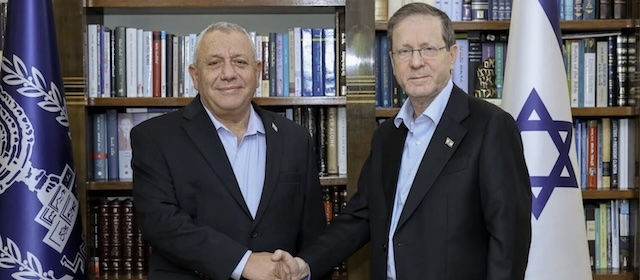
Israeli President Isaac Herzog has decided to task opposition leader Gadi Eisenkot, head of the Yashar Party, with forming a new government following the early parliamentary elections held on October 27, 2026. The decision was announced on November 7, with the official appointment ceremony scheduled for Sunday, November 8. Prime Minister Benjamin Netanyahu's governing alliance lost its parliamentary majority, opening the way for coalition negotiations.
Gadi Eisenkot to Receive 28 Days to Form a Government
According to a statement from the Israeli Presidency, Isaac Herzog decided to give former military chief Gadi Eisenkot the mandate to form the country's next government. Eisenkot will begin coalition negotiations after formally receiving the appointment.
Under Israeli law, a lawmaker tasked with forming a government is initially given 28 days. The president may grant an extension of up to 14 additional days.
Eisenkot must assemble a coalition capable of securing parliamentary confidence. A government generally requires the support of at least 61 members in Israel's 120-seat parliament, the Knesset.
Benjamin Netanyahu's Alliance Loses Its Majority
In the October 27 parliamentary elections, the Likud Party, led by Benjamin Netanyahu, won 27 seats. Together with its religious and nationalist allies, Netanyahu's bloc secured 53 seats, falling short of the 61 required for a parliamentary majority.
The four-party opposition alliance led by Gadi Eisenkot won 48 seats. Neither political bloc secured enough seats to govern independently.
Following the election, President Isaac Herzog held consultations with representatives of the parties elected to parliament.
During these consultations, parties representing 67 lawmakers recommended Eisenkot for the premiership, while 46 lawmakers supported Netanyahu. Seven lawmakers declined to recommend either candidate.
Herzog subsequently decided to give Eisenkot the first opportunity to form a government.
Arab Parties Could Play a Decisive Role in Coalition Negotiations
Political parties representing Arab voters in Israel won a combined 19 seats in the parliamentary elections. The United Arab List and the Joint List supported the decision to assign Gadi Eisenkot the task of forming a government.
However, recommending a candidate to the president does not necessarily mean agreeing to join that candidate's government or support it in a parliamentary confidence vote.
Some parties within Eisenkot's alliance oppose forming a government with Arab political parties. In particular, Avigdor Lieberman, leader of Yisrael Beiteinu, has expressed opposition to such an arrangement.
To secure a parliamentary majority, Eisenkot will need either the support of Arab parties or agreements with other political groups outside his existing alliance.
Benjamin Netanyahu Calls for a National Unity Government
Prime Minister Benjamin Netanyahu called for the formation of a national unity government before the president announced his decision.
Netanyahu opposed the possibility of establishing a government dependent on Arab parties, criticizing their positions on national security. Eisenkot's party responded critically to Netanyahu's remarks.
Netanyahu will remain in office as caretaker prime minister until a new government is formed.
If Eisenkot fails to assemble a coalition, the mandate could be offered to another member of parliament.
Who Is Gadi Eisenkot?
Gadi Eisenkot was born on May 19, 1960, in Tiberias, Israel. He served in the Israeli military for several decades and was Chief of the General Staff of the Israel Defense Forces from 2015 to 2019.
After retiring from military service, Eisenkot entered politics and was elected to the Knesset in 2022.
Following the Hamas-led attacks on Israel on October 7, 2023, he joined the emergency war cabinet as an observer.
In June 2024, Eisenkot and Benny Gantz withdrew from Netanyahu's emergency government amid disagreements over the conduct of the war in Gaza.
Eisenkot subsequently established his own political movement and became leader of the Yashar Party.
He contested the October 27, 2026, elections as one of the principal figures in the opposition alliance seeking to replace Netanyahu's government.
Coalition Talks Will Determine Israel's Next Government
Following President Isaac Herzog's decision, coalition negotiations are expected to focus on potential governing arrangements, military service obligations, security policy and the war in Gaza.
If Gadi Eisenkot cannot secure sufficient parliamentary support within the initial 28-day period, the president may grant an extension or assign the mandate to another lawmaker.
Should successive attempts to form a government fail, Israel could face another parliamentary election.
Because no political alliance won an outright majority in the October 27 election, the formation of a new government will depend on the outcome of coalition negotiations in the coming weeks.
Related Biographies
Related News
Popular
New
Trending

Lamine Yamal
Professional footballer,

Kylian Mbappe
Professional footballer,

Keanu Reeves
Actor,

Erling Haaland
Professional footballer,

Brad Pitt
Actor,

Leonardo DiCaprio
Actor,

Anton Dvorak
Composer

Antoine Lavoisier
Chemist

Antoine Bourdelle
Sculptor

Anthony van Dyck
Painter

Anthony Stewart Head
Actor, Singer

Antoni Gaudi
Architect

Susie Wiles
Political Consultant

Elizabeth Taylor
Actress

Gadi Eisenkot
Politician, Military Commander

Alberto Ascari
Formula 1 Driver

Michael Jordan
Professional Basketball Player

Stephen Miller
Consultant