
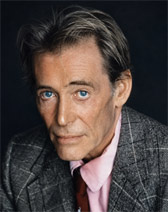
Peter O'Toole
The British-Irish actor who delivered one of cinema’s defining performances as T. E. Lawrence in Lawrence of Arabia and received eight Academy Award nominations for Best Actor
Born on August 2, 1932
Died on December 14, 2013
Age at death: 81
Profession: Actor
Place of Birth: Leeds, England
Place of Death: London, England
Peter O'Toole, born on August 2, 1932, was a British-Irish stage and screen actor whose career lasted for almost six decades. Internationally celebrated for his commanding voice, striking physical presence, piercing blue eyes and highly expressive acting style, Peter O'Toole became a global star when David Lean cast him as T. E. Lawrence in the 1962 epic Lawrence of Arabia. His performance became one of the most recognizable screen portrayals in film history. Over the course of his career, he received eight competitive Academy Award nominations for Best Actor without winning, before being presented with an Academy Honorary Award in 2003. His other major films included Becket, The Lion in Winter, Goodbye, Mr. Chips, The Ruling Class, The Stunt Man, My Favorite Year and Venus.
Early Life and Family Background
Peter O'Toole was born on August 2, 1932. Leeds in England is generally given as his birthplace, although O'Toole himself sometimes described uncertainty surrounding whether he had been born in Leeds or in Ireland. His family background strongly connected him with Ireland, and throughout his life he identified closely with Irish culture.
His father, Patrick Joseph O'Toole, was an Irish bookmaker and metal plater, while his mother, Constance Jane Ferguson, was of Scottish descent. His father's occupation meant that the family was closely connected with horse racing and betting culture, an environment that exposed the young O'Toole to colorful personalities and unconventional lifestyles from an early age.
Peter O'Toole spent much of his childhood in and around Leeds. He was educated at Catholic schools and did not initially follow a conventional academic route toward acting. Instead, his first serious professional interest was journalism.
Journalism and Early Interest in Theatre
As a teenager, Peter O'Toole worked for the Yorkshire Evening Post as a trainee journalist, photographer and reporter. The experience required him to observe people closely, conduct interviews and move between very different social environments.
Although he successfully entered journalism, theatre increasingly attracted his attention. He began appearing in amateur productions and discovered that performing on stage offered a kind of intensity and freedom he did not find in newspaper work.
By his late teens, Peter O'Toole had decided that acting rather than journalism would become the central profession of his life.
Royal Navy Service
Before beginning formal acting training, Peter O'Toole completed National Service in the Royal Navy. He served for approximately two years, working as a signals operator.
The structured military environment contrasted sharply with the theatrical life he would later embrace. O'Toole subsequently described the experience as reinforcing his desire to pursue acting rather than a conventional institutional career.
Royal Academy of Dramatic Art
After leaving the Navy, Peter O'Toole won a scholarship to the Royal Academy of Dramatic Art, commonly known as RADA, in London. The period became fundamental to the development of his technique.
His contemporaries included Albert Finney, Alan Bates and Sylvia Syms, all of whom would become important figures in British stage and screen acting. The generation emerging from British drama schools during the 1950s helped reshape postwar theatre by combining classical technique with a less formal, more psychologically direct style.
O'Toole's training emphasized voice, movement, classical text and character construction. His ability to handle long passages of dialogue, particularly in the works of William Shakespeare, became one of the defining features of his later stage career.
Bristol Old Vic and Theatre Career
Peter O'Toole began his professional stage career in the 1950s and became closely associated with the Bristol Old Vic. The repertory system allowed him to perform a large number of roles in rapid succession, giving him practical experience across comedy, tragedy and classical drama.
He appeared in works by William Shakespeare and other major playwrights, gradually earning a reputation as one of Britain's most exciting young stage actors. His early Shakespearean roles included productions connected with Hamlet, The Taming of the Shrew, The Merchant of Venice and other classics.
The theatre remained central to Peter O'Toole's artistic identity even after he became an international film star. He repeatedly returned to the stage and continued to regard classical theatre as the foundation of his acting technique.
Early Film Roles
Before becoming internationally famous, Peter O'Toole appeared in several relatively small film roles. His early screen work included Kidnapped and The Day They Robbed the Bank of England.
These appearances did not immediately establish him as a leading film actor. His transformation into an international star would occur almost overnight after one of the most important casting decisions in British cinema.
Lawrence of Arabia
The defining breakthrough of Peter O'Toole's career came when director David Lean cast him as British officer and archaeologist T. E. Lawrence in Lawrence of Arabia, released in 1962.
The role had been considered for other actors, including Marlon Brando and Albert Finney, before O'Toole was selected. At the time, he was relatively unknown to international cinema audiences. His unusual combination of physical elegance, intensity and vulnerability convinced the filmmakers that he could embody the complex and contradictory Lawrence.
The production took place under difficult desert conditions in locations including Jordan, Morocco and Spain. O'Toole had to master camel riding, long periods of physical exposure and highly demanding location work. The vast landscape photographed by cinematographer Freddie Young became inseparable from his portrayal of Lawrence.
His performance combined arrogance, idealism, theatricality, psychological fragility and an increasingly disturbing attraction to violence. Rather than presenting Lawrence simply as a heroic adventurer, Peter O'Toole created a figure whose identity appeared unstable and constantly changing.
Lawrence of Arabia made him an international star and earned him his first Academy Award nomination for Best Actor. The film itself became one of the most celebrated epics in cinema history and remained the role most strongly associated with his career. The British Film Institute later described his Lawrence as one of the most enduring images of British cinema.
Becket
In 1964, Peter O'Toole portrayed King Henry II of England in Becket, opposite Richard Burton as Thomas Becket. The film dramatized the complicated friendship and eventual political conflict between the king and the Archbishop of Canterbury.
O'Toole played Henry as impulsive, passionate, authoritarian and emotionally dependent upon Becket. His performance contrasted effectively with Burton's controlled and intellectual interpretation of the archbishop.
Both actors received Academy Award nominations for Best Actor. The film received eleven Oscar nominations overall, with O'Toole earning the second Best Actor nomination of his career.
The Lion in Winter
Four years later, Peter O'Toole returned to the role of Henry II of England in the 1968 historical drama The Lion in Winter. This time he played an older version of the king opposite Katharine Hepburn as Eleanor of Aquitaine.
The film centered on family rivalry, succession, political manipulation and the deeply destructive relationship between Henry and Eleanor. O'Toole's performance was more mature and emotionally layered than his portrayal in Becket, reflecting a monarch increasingly aware of age, mortality and the instability of his dynasty.
His work earned another Academy Award nomination for Best Actor. Katharine Hepburn won the Academy Award for Best Actress for the same film.
Goodbye, Mr. Chips
In 1969, Peter O'Toole starred as Arthur Chipping in Goodbye, Mr. Chips, playing a reserved schoolteacher whose life is transformed through love, loss and decades of teaching.
The role required him to portray the character across many years, using physical changes, vocal restraint and subtle emotional development rather than the explosive theatrical energy associated with some of his earlier performances.
His portrayal brought him another Academy Award nomination for Best Actor. At the 1970 ceremony, he competed against Richard Burton, Dustin Hoffman, Jon Voight and eventual winner John Wayne.
The Ruling Class
One of the most unconventional roles of Peter O'Toole's career came in the 1972 satire The Ruling Class. He portrayed Jack Gurney, an English aristocrat suffering from severe delusions who initially believes himself to be Jesus Christ and later identifies with Jack the Ripper.
The film combined black comedy, political satire, psychological drama and criticism of the British class system. O'Toole delivered an intentionally extravagant performance that alternated between absurd humor and menace.
His work earned him another Academy Award nomination, reinforcing his reputation as an actor willing to take artistic risks rather than restrict himself to conventional heroic roles.
Man of La Mancha
Also in 1972, Peter O'Toole appeared in Man of La Mancha as Miguel de Cervantes and Don Quixote. The adaptation of the stage musical required him to move between the writer Cervantes and the idealistic fictional knight.
The role represented another example of O'Toole's fascination with larger-than-life characters whose identities blur the boundary between performance and reality.
Health Problems and Alcohol
During the 1960s and 1970s, Peter O'Toole became almost as famous for his private life as for his performances. Along with friends and contemporaries such as Richard Harris and Richard Burton, he developed a reputation for heavy drinking, unpredictable behavior and extravagant nights out.
By the mid-1970s, however, his health had deteriorated severely. He underwent major surgery after serious illness affecting his digestive system and pancreas. Much of his pancreas and part of his stomach were removed.
The health crisis significantly changed his lifestyle. Peter O'Toole largely abandoned the extreme drinking habits that had characterized the earlier part of his career and became more cautious about his physical health.
The Stunt Man
In 1980, Peter O'Toole achieved one of the strongest comebacks of his career with The Stunt Man. He played Eli Cross, an eccentric, manipulative film director whose behavior constantly blurs the boundaries between cinematic illusion and reality.
The character allowed O'Toole to combine charm, cruelty, humor and theatrical unpredictability. Eli Cross became one of his most acclaimed later roles.
The performance earned him another Academy Award nomination for Best Actor.
My Favorite Year
In 1982, Peter O'Toole starred in My Favorite Year as Alan Swann, a once-famous movie star whose drinking, personal disorder and fading celebrity create chaos when he appears on a live television comedy program.
The role drew humor from the traditions of classic Hollywood adventure stars and also reflected aspects of O'Toole's own public reputation. His ability to mock the kind of flamboyant persona with which he had long been associated gave the performance unusual warmth and self-awareness.
His portrayal earned another Academy Award nomination for Best Actor.
Film and Television Work in Later Decades
During the 1980s and 1990s, Peter O'Toole continued working across film, television and theatre. His films included Supergirl, The Last Emperor, Wings of Fame, King Ralph and FairyTale: A True Story.
In Bernardo Bertolucci's The Last Emperor, he portrayed Scottish tutor Reginald Johnston, who served at the court of China's last emperor Puyi.
Television also became increasingly important. O'Toole appeared in the 1981 miniseries Masada as Roman commander Lucius Flavius Silva and later portrayed Bishop Pierre Cauchon in Joan of Arc.
In Hitler: The Rise of Evil in 2003, he played German president Paul von Hindenburg, the elderly statesman whose political decisions contributed to Adolf Hitler becoming Chancellor of Germany.
Academy Honorary Award
Despite receiving seven Best Actor nominations by the early 1980s, Peter O'Toole had never won a competitive Oscar. The Academy of Motion Picture Arts and Sciences therefore selected him for an Academy Honorary Award recognizing his career and contribution to film.
The award was officially associated with the 75th Academy Awards cycle and was presented at the 2003 ceremony. O'Toole initially reacted with reluctance, arguing that he was still active and might yet win a competitive Oscar.
He eventually accepted the honor, which was presented to him by Meryl Streep. The Academy's official records list him among the honorary award recipients for the 2002 awards year.
Venus and His Eighth Oscar Nomination
In 2006, Peter O'Toole gave one of the most acclaimed performances of his later career in Venus. He played Maurice Russell, an elderly actor who develops a complicated relationship with a much younger woman.
The film explored aging, desire, loneliness, mortality and the loss of physical independence without reducing its protagonist to sentimentality. O'Toole's performance drew heavily upon the accumulated experience of an actor who had spent his entire adult life on stage and screen.
The role earned him his eighth competitive Academy Award nomination for Best Actor. At the 2007 ceremony, he was nominated alongside Ryan Gosling, Will Smith, Leonardo DiCaprio and eventual winner Forest Whitaker.
Ratatouille
In 2007, Peter O'Toole introduced his distinctive voice to a new generation through the Pixar animated film Ratatouille. He voiced Anton Ego, an intimidating Parisian restaurant critic whose reputation can determine the fate of chefs and restaurants.
O'Toole's deep, controlled delivery gave the character an immediate sense of authority. Anton Ego's transformation during the film's final act, particularly his emotional response to a simple dish of ratatouille, became one of the production's most memorable sequences.
The performance demonstrated how effectively Peter O'Toole could create a fully developed character using only his voice.
Troy, Stardust and Late Career Roles
Among his prominent films during the 2000s was Troy in 2004, in which Peter O'Toole portrayed King Priam of Troy. The film featured Brad Pitt as Achilles, Eric Bana as Hector, Orlando Bloom as Paris and Diane Kruger as Helen.
One of O'Toole's strongest scenes occurs when Priam enters Achilles' tent to beg for the body of his son Hector. The sequence allowed the elderly actor to rely on restraint, grief and dignity rather than theatrical spectacle.
He later appeared in Lassie, Stardust, Dean Spanley and For Greater Glory.
Theatre Throughout His Career
Although international audiences knew him primarily through cinema, Peter O'Toole continued to regard himself fundamentally as a theatre actor. His stage work extended from the repertory system of the 1950s to major productions in London.
Notable later performances included Waiting for Godot and Uncle Vanya. The National Portrait Gallery records these productions among the significant stage achievements of his career.
His approach to Shakespeare and classical drama emphasized language, rhythm and physical authority. Even during periods when his film career fluctuated, his theatrical reputation remained formidable.
Friendship with Richard Harris and Richard Burton
Peter O'Toole was frequently associated with fellow actors Richard Harris and Richard Burton. All three came from strong theatrical traditions and became famous during a period when British and Irish actors were increasingly prominent in international cinema.
The men were known for powerful voices, intense acting styles and highly publicized drinking. Their private lives contributed to a romanticized image of the hard-living actor that became closely associated with the era.
O'Toole's relationship with Richard Harris could be both competitive and affectionate, while his partnership with Richard Burton in Becket produced one of the most celebrated screen pairings of the 1960s.
Acting Style
Peter O'Toole's acting remained deeply influenced by classical theatre. He was capable of sustaining long passages of dialogue through changes in rhythm, volume and emotional intensity, while using posture and movement as strongly as speech.
His extraordinary appearance also contributed to his screen presence. Tall and slender, with angular facial features and exceptionally vivid blue eyes, he became visually inseparable from the image of Lawrence in Lawrence of Arabia.
Yet his range extended considerably beyond romantic or aristocratic heroes. Peter O'Toole could move from historical drama to satire, black comedy, psychological disturbance and self-parody. His tendency toward highly expressive performance was balanced by technical precision, allowing him to approach roles that might have overwhelmed a less disciplined actor.
Marriage and Children
In 1959, Peter O'Toole married Welsh actress Siân Phillips. Their marriage became one of the most discussed theatrical relationships of its era and lasted until their divorce in 1979.
The couple had two daughters, Kate O'Toole and Patricia O'Toole. Kate O'Toole followed her parents into acting and developed her own career in theatre and film.
Peter O'Toole later had a son, Lorcan O'Toole, born in 1983 from his relationship with Karen Brown.
Retirement
In 2012, Peter O'Toole announced his retirement from acting. He described a career that had brought both extraordinary fulfillment and considerable hardship and concluded that the time had come to withdraw from professional performance.
His announcement marked the effective end of a stage and screen career that had lasted close to sixty years.
Death
Peter O'Toole died on December 14, 2013, at the Wellington Hospital in London, following a long illness. He was 81 years old. His death was announced publicly the following day by his family.
Tributes came from across the international film and theatre world. Filmmakers, actors and political figures remembered him as one of the most distinctive performers of the twentieth century, particularly emphasizing the influence of Lawrence of Arabia and his long association with classical theatre.
Academy Award Record
Peter O'Toole received eight competitive nominations for the Academy Award for Best Actor without winning the category, one of the most famous Oscar records in acting history. His nominations spanned forty-four years, from Lawrence of Arabia to Venus.
1963 – Lawrence of Arabia – Best Actor1965 – Becket – Best Actor
1969 – The Lion in Winter – Best Actor
1970 – Goodbye, Mr. Chips – Best Actor
1973 – The Ruling Class – Best Actor
1981 – The Stunt Man – Best Actor
1983 – My Favorite Year – Best Actor
2007 – Venus – Best Actor
Major Awards Won
1963 – BAFTA Awards – Best British Actor – Lawrence of Arabia1963 – Golden Globe Awards – New Star of the Year – Actor – Lawrence of Arabia
1965 – Golden Globe Awards – Best Actor in a Motion Picture – Drama – Becket
1969 – Golden Globe Awards – Best Actor in a Motion Picture – Drama – The Lion in Winter
1970 – Golden Globe Awards – Best Actor in a Motion Picture – Musical or Comedy – Goodbye, Mr. Chips
2003 – Academy Honorary Award – Career Achievement
Films
1960 – Kidnapped – Robin MacGregor1960 – The Day They Robbed the Bank of England – Captain Monty Fitch
1962 – Lawrence of Arabia – T. E. Lawrence
1964 – Becket – King Henry II of England
1965 – Lord Jim – Jim
1965 – What's New Pussycat? – Michael James
1966 – How to Steal a Million – Simon Dermott
1966 – The Bible: In the Beginning... – Three Angels
1967 – The Night of the Generals – General Tanz
1968 – The Lion in Winter – King Henry II of England
1969 – Goodbye, Mr. Chips – Arthur Chipping
1971 – Murphy's War – Murphy
1972 – The Ruling Class – Jack Gurney
1972 – Man of La Mancha – Don Quixote / Miguel de Cervantes
1975 – Rosebud – Larry Martin
1976 – Foxtrot – Liviu
1979 – Caligula – Tiberius
1980 – The Stunt Man – Eli Cross
1982 – My Favorite Year – Alan Swann
1984 – Supergirl – Zaltar
1987 – The Last Emperor – Reginald Johnston
1990 – Wings of Fame – Cesar Valentin
1991 – King Ralph – Sir Cedric Willingham
1997 – FairyTale: A True Story – Arthur Conan Doyle
2003 – Bright Young Things – Colonel Blount
2004 – Troy – King Priam
2005 – Lassie – The Duke
2006 – Venus – Maurice Russell
2007 – Ratatouille – Anton Ego, voice
2007 – Stardust – King of Stormhold
2008 – Dean Spanley – Fisk Senior
2012 – For Greater Glory – Father Christopher
Major Television Work
1981 – Masada – Lucius Flavius Silva1999 – Joan of Arc – Bishop Pierre Cauchon
2003 – Hitler: The Rise of Evil – Paul von Hindenburg
2008 – The Tudors – Pope Paul III
Marriage and Children
1959–1979 – Siân Phillips – Wife, actressKate O'Toole – Daughter, actress
Patricia O'Toole – Daughter
Lorcan O'Toole – Son, from his relationship with Karen Brown
Most Memorable Roles
T. E. Lawrence – Lawrence of ArabiaKing Henry II of England – Becket
King Henry II of England – The Lion in Winter
Arthur Chipping – Goodbye, Mr. Chips
Jack Gurney – The Ruling Class
Eli Cross – The Stunt Man
Alan Swann – My Favorite Year
King Priam – Troy
Maurice Russell – Venus
Anton Ego – Ratatouille
Source: Biyografiler.com
Peter O'Toole Movies
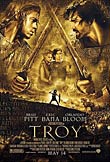
Troy
Release Date: May 14, 2004
Director: Wolfgang Petersen
Writer: David Benioff
Cast: Brad Pitt, Eric Bana, Orlando Bloom, Diane Kruger, Brendan Gleeson, Brian Cox, Sean Bean, Peter O'Toole, Saffron Burrows
Frequently asked questions about Peter O'Toole
Who is Peter O'Toole?, Peter O'Toole biography, Peter O'Toole life story, Peter O'Toole age, Peter O'Toole facts, Peter O'Toole birthplace, Peter O'Toole photos, Peter O'Toole videos, Peter O'Toole career
Related Biographies


Lamine Yamal
Professional footballer

Erling Haaland
Professional footballer

Austin Abrams
Actor

Keanu Reeves
Actor

Kylian Mbappe
Professional footballer

Bad Bunny
Rapper, Songwriter


Hongjoong
Singer, Rapper, Songwriter, Composer

Ludacris
Rapper, Actor

Kwon Eunbi
Singer

Sarah Wayne Callies
Actress, Screenwriter, Producer, Director

LaTavia Roberson
Singer, Actress, Entrepreneur
Erling Haaland
Professional footballer
Lamine Yamal
Professional footballer

Sadio Mane
Professional footballer
Keanu Reeves
Actor

Ma Huateng
Entrepreneur, Inventor

Giorgia Meloni
Politician, Journalist