
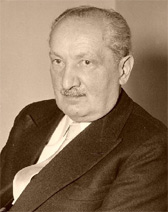
Martin Heidegger
A central figure of existential ontology whose inquiry into Being reshaped twentieth-century philosophy.
Born on September 26, 1889
Died on May 26, 1976
Age at death: 87
Profession: Philosopher, Professor
Place of Birth: Meßkirch, Baden-Württemberg, Germany
Place of Death: Freiburg im Breisgau, Germany
Martin Heidegger was a German philosopher and one of the leading figures of existential philosophy, whose work introduced a radically new perspective that later deeply influenced postmodern thought. Born on September 26, 1889, in the town of Meßkirch in the German state of Baden-Württemberg, he was the son of a Catholic sacristan. From an early age, he was raised with a strong inclination toward religion and philosophy. Alongside his philosophical work, Heidegger became one of the most controversial thinkers of the twentieth century due to his political positions.
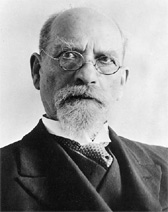
Martin Heidegger studied Catholic theology and Christian philosophy at the University of Freiburg. In 1914, he attracted attention with his doctoral dissertation titled “The Theory of Judgment in Psychologism.” His academic career advanced steadily, and in 1923 he was appointed professor at the University of Marburg. Heidegger’s early philosophical development shows clear traces of phenomenology, particularly through the influence of his teacher Edmund Husserl.
In 1927, Heidegger published his most influential work, Being and Time. From the moment of its publication, this book became a turning point not only for existential philosophy but for philosophical debates as a whole. In this work, Heidegger sought to redirect philosophy toward the fundamental question of Being (Sein, Being). He examined the meaning of Being, how Being is able to be, how it reveals itself through existence, and how human beings can understand their own Being among other beings. His aim was to challenge what he described as the historical “forgetfulness of Being” and to reestablish ontology as the central task of philosophy.
From 1933 onward, Heidegger became a member of the Nazi Party and served as rector of the University of Freiburg. Because of the political stance he adopted during this period, his philosophical work was often overshadowed by intense criticism. In 1945, due to his association with National Socialism, he was dismissed from the university and remained barred from teaching for several years. He was able to return to academic life only in 1952. Although he later acknowledged that his political choices had been mistaken, the controversies surrounding this period never fully faded. Nevertheless, the theoretical value of his philosophical work continued to be recognized and preserved its central place in modern philosophy.
Heidegger’s philosophy is deeply marked by the influence of Edmund Husserl, yet it transforms phenomenology by reinterpreting it within the context of the question of Being. He introduced concepts such as anxiety, boredom, curiosity, fear, and death into philosophical analysis. According to Heidegger, the human being is “thrown” into the world. This notion of thrownness deepens the foundations of existential philosophy in several respects. Human beings do not choose the conditions of their existence; they find themselves already placed within them.
In Heidegger’s thought, the human being exists as Dasein, a being that is thrown into the midst of existence without choice or prior decision. Within this thrownness, however, humans are compelled to shape their lives through decisions and choices. This results in what can be described as a necessary experience of freedom: human beings are forced to realize their freedom by continually choosing and projecting themselves toward possibilities, all the way to death. Death occupies a central position in Heidegger’s philosophy, as it represents the unavoidable horizon against which authentic existence must be understood and realized.
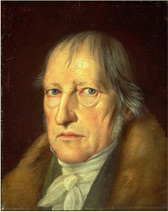
The “question of Being” stands as the essence and unifying core of all Heidegger’s philosophical work. His thought begins with an objection to the neglect of Being in the history of philosophy and proceeds through a sustained attempt to restore its centrality. Heidegger acknowledged the influence of Immanuel Kant, Georg Wilhelm Friedrich Hegel, and Edmund Husserl on his thinking, while also maintaining a critical engagement with Friedrich Nietzsche. He explicitly stated that his philosophy was misunderstood by Jean-Paul Sartre and argued that the term “existentialism” was not an accurate description of his own thought.
Martin Heidegger died on May 26, 1976, in Freiburg im Breisgau, Germany, at the age of 87.
Selected Works:
1927 – Being and Time (Sein und Zeit)
On Time and Being
What Is Philosophy?
The Essence of Humanism
What Is Metaphysics?
The Question Concerning Technology
Two Lectures on Science
The Concept of Time
Nietzsche’s “God Is Dead” and the Age of the World Picture
The Origin of the Work of Art
Identity and Difference
On the Way to Language
Introduction to Metaphysics
Letter on Humanism
Source: Biyografiler.com
Frequently asked questions about Martin Heidegger
Who is Martin Heidegger?, Martin Heidegger biography, Martin Heidegger life story, Martin Heidegger age, Martin Heidegger facts, Martin Heidegger birthplace, Martin Heidegger photos, Martin Heidegger videos, Martin Heidegger career
Related Biographies

Lamine Yamal
Professional footballer

Sam Altman
Entrepreneur, Investor, CEO

Erling Haaland
Professional footballer

Kylian Mbappe
Professional footballer

Alice Weidel
Politician, Economist

Giorgia Meloni
Politician, Journalist


Hongjoong
Singer, Rapper, Songwriter, Composer

Ludacris
Rapper, Actor

Kwon Eunbi
Singer

Sarah Wayne Callies
Actress, Screenwriter, Producer, Director

LaTavia Roberson
Singer, Actress, Entrepreneur

Sydney Sweeney
Actress

Austin Abrams
Actor

Ma Huateng
Entrepreneur, Inventor
Lamine Yamal
Professional footballer

Silvio Berlusconi
Politician, Businessperson

Kevin Warsh
Economist